
Share the page
Côte d'Ivoire
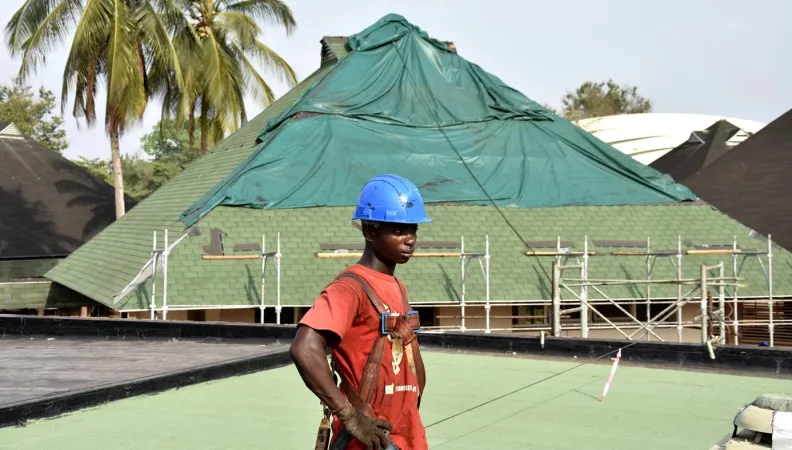
In Côte d’Ivoire, AFD invests in line with the government’s National Development Plan (PND).
With an active portfolio of nearly €3 billion, AFD finances close to 80 projects across the following sectors: agriculture, biodiversity, education, health, urban development, transport, water and sanitation, energy, governance, culture, and entrepreneurship.
Context
With a population of nearly 32 million and one of the highest average growth rates in the world over the past decade, Côte d’Ivoire is the second-largest economy in ECOWAS after Nigeria.
The country has strong assets: a young population; a dynamic and diversified economy, particularly a powerful agricultural sector, as the world’s leading producer of cocoa and cashew nuts; a 520 km coastline; significant potential in mining and hydrocarbons; and high-quality road and port infrastructure.
However, Côte d’Ivoire continues to face significant socioeconomic and regional disparities. Access to quality social services, including education and health care, remains concentrated in major urban centers, as do economic and employment opportunities for young people. The current structure of the economy, which is heavily dependent on a largely non-mechanized agricultural sector with limited local processing, combined with a large informal sector and still-low productivity levels, does not generate sufficient domestic value added. Lastly, Côte d’Ivoire faces major headwinds, including climate change, subregional tensions, and security and terrorist threats.
In this uncertain context, the government has developed a National Development Plan (PND) for 2026–2030, structured around five strategic pillars: (i) modernizing agriculture, strengthening rural land tenure security, increasing productivity, and reinforcing agricultural value chains; (ii) promoting private investment, national champions, and reducing informality; (iii) developing human capital and skills, and creating decent jobs; (iv) developing strategic infrastructure and regional economic hubs, advancing the green transition, strengthening climate resilience, and promoting a circular economy; and (v) promoting good governance and modernizing the state.
As the country’s leading bilateral donor by volume of financing, AFD Group deploys all its instruments in support of national public policies. Its interventions focus on: (i) developing human capital and promoting employment; (ii) fostering balanced regional development with a strong emphasis on environmental protection and climate action; and (iii) strengthening governance and modernizing the state.
The AFD office in Côte d’Ivoire reports to the Gulf of Guinea Regional Office.
Our approach
AFD, partner of an emerging and inclusive Côte d’Ivoire.
In Côte d’Ivoire, 4 to 6 million young people are out of school, unemployed, or struggling to integrate into the labor market. To address this challenge, AFD supports the country’s strategy to expand access to quality education and training, as well as to decent jobs.
In the education sector, AFD supports the rollout of local lower secondary schools, which help expand access to education for underserved groups, particularly girls in rural areas. This has resulted in the construction of more than 200 schools, representing 2,500 classrooms and benefiting over 100,000 students. At the same time, education quality is being improved through ongoing training for teachers and school leaders, as well as support for the rollout of "Bonamas", a pilot textbook rental scheme.
AFD also supports vocational training and higher education, for example through the construction or rehabilitation of facilities, training for instructors and researchers, the expansion of work-study programs, the development of preparatory classes, and the digitalization of higher education.
To promote youth employment, AFD supports and strengthens public programs across the country that improve employability and entrepreneurship, as well as initiatives supporting the reintegration of the most vulnerable and volunteer programs. Since 2018, nearly 70,000 young people, half of them women, have benefited from this support.
In Côte d’Ivoire, there are fewer than 2 doctors per 10,000 people, maternal mortality remains high at 480 deaths per 100,000 live births, and life expectancy stands at 62 years. In partnership with Côte d’Ivoire’s Ministry of Health, Public Hygiene and Universal Health Coverage, AFD is working to sustainably strengthen the country’s health system.
AFD supports improvements in the availability and quality of maternal and child health services, including the construction or rehabilitation of around ten hospitals, the rehabilitation of 60 health centers, and the training of 2,000 health workers on the main causes of maternal and child mortality.
To address staffing shortages, AFD supports five regional training schools, enabling the training of an additional 3,000 midwives, nurses, and laboratory technicians each year. Curricula have been revised to align with international standards, strengthen practical training, and integrate sexual and reproductive health.
Finally, AFD supports the strengthening of the pharmaceutical system through the creation of a regulatory authority, improved quality control, and better availability of medicines through new decentralized distribution centers, reducing delivery times from 43 to 7 days.
Côte d’Ivoire’s growth trajectory, particularly strong over the past decade, has been accompanied by significant progress in access to essential services. Today, 64% of the population has access to electricity and nearly 66% to drinking water.
AFD has chosen to support this momentum by investing first in the energy sector. Through projects such as the rehabilitation of the Buyo and Soubré hydropower plants, the financing of 250,000 social connections, and the electrification of 350 villages with more than 500 inhabitants, more than 3 million additional people gained access, or improved access, to the electricity grid in 2025.
AFD is also working to expand access to sanitation and drinking water services. To date, more than 2.2 million people have gained access to the drinking water network, and 600,000 people are expected to benefit from sanitation services by 2030.
Finally, AFD invests in urban centers. In Abidjan, it finances public transport, the upgrading of the neighborhoods of Abobo, Koumassi, and Yopougon, and the construction of the Yopougon market. In Bouaké, it is investing in the largest covered market in West Africa, which hosts 8,000 traders, as well as in urban mobility. In San Pedro, it is supporting the upgrading of the Bardot neighborhood, which has been heavily affected by flooding.
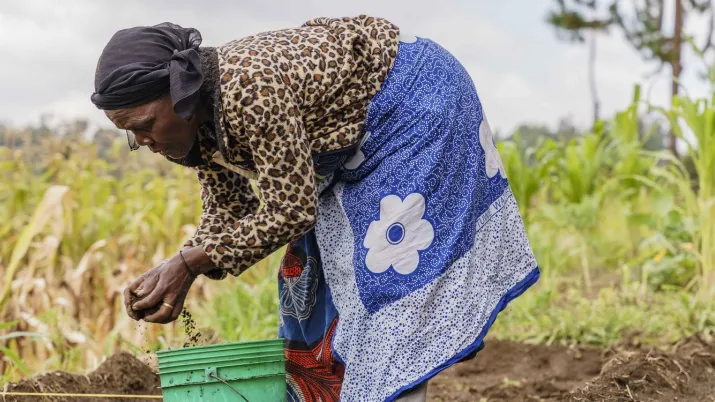
The agricultural sector plays a key role in Côte d’Ivoire’s economy, accounting for 22% of GDP and employing 56% of the workforce. It is also the main driver of deforestation: since 1960, the country’s forests have shrunk by 82%.
In response to this challenge, AFD structures its interventions around four closely linked pillars: agriculture, forestry, biodiversity, and land certification. It promotes sustainable agriculture that balances productivity, resilience, and environmental protection, through projects in agroecology, integrated soil fertility management, and local value addition.
AFD also aims to preserve existing natural resources, including protected areas and water resources. It supports the Ivorian Office of Parks and Reserves in managing seven protected areas and works with the Ministry of Water and Forests and NGOs on the sustainable management of classified forests.
Finally, AFD supports Côte d’Ivoire’s land policy by financing the issuance of land certificates, which are essential for securing producers’ investments and reducing conflict. To date, 76,000 hectares have been certified, with a further 500,000 hectares planned.
With a tax-to-GDP ratio of less than 15%, the Ivorian authorities have limited fiscal space to deliver quality public services and sustainably finance public policies.
AFD is therefore working alongside the Ministry of Finance on a program aimed at raising the tax-to-GDP ratio to 20%, a target considered necessary to support the rollout of a modern public administration and the delivery of quality public services across the country.
AFD also invests in the justice sector to: (i) expand the territorial coverage of judicial services (Bingerville Court of First Instance, courts of appeal in Korhogo and Bouaké, and the Abidjan Commercial Court complex); (ii) improve living conditions for detainees (Guiglo detention facility); (iii) train judicial personnel (national judicial training institutes); and (iv) strengthen access to justice through legal aid, benefiting 15,000 people.
Finally, AFD contributes to reducing inequalities in access to basic services and promoting social cohesion in the northern border regions (Bounkani, Tchologo, and Poro), which face an investment deficit and are under significant social and environmental pressure.
Small and medium-sized enterprises (SMEs) in Côte d’Ivoire account for 98% of formal businesses and employ 23% of the workforce. However, they face challenges in accessing finance, due in particular to fragmented support mechanisms and financing offers from banks that are not well suited to their needs. This situation inevitably affects the country’s economic momentum.
The AFD Group therefore supports the development of private enterprises through a range of instruments.
On the AFD side, the Choose Africa initiative, which reflects France’s commitment to supporting entrepreneurship and innovation in Africa, is helping structure a one-stop shop for SME development. This project will provide a comprehensive package of technical support and financing to 60,000 Ivorian entrepreneurial projects.
On the Proparco side, AFD’s private sector financing arm, a wide range of instruments is deployed, including loans, equity investments, guarantees, and technical assistance. The companies supported operate mainly in agro-industry, services, energy, and infrastructure. Bank guarantees have enabled the deployment of nearly €600 million in lending to SMEs through partner financial institutions (SGCI, Ecobank, BICICI, SIB, ALIOS, NSIA, Advans, etc.).
Côte d’Ivoire is a major creative hub, and the economic weight of the cultural and creative industries (CCI) is growing rapidly, from 2.3% of GDP in 2012 to over 5% today. However, the sector faces significant challenges, including limited training opportunities, difficulties accessing finance, the prevalence of informal and precarious employment, and a strong imbalance between Abidjan and other cities in terms of professional opportunities and infrastructure.
Since 2022, AFD has been investing in the sector to: (i) make culture more accessible by targeting young people and strengthening cultural offerings across the country; (ii) support the professionalization of the sector through training, business incubation for entrepreneurs, and stronger networks between artists and financiers; and (iii) promote the empowerment of young people and women through cultural entrepreneurship.
These efforts have supported around one hundred marginalized young people from juvenile observation centers and the Civic Service Agency in engaging in artistic practices such as dance. Starting in 2026, they will also enable the rehabilitation of the Bouaké Cultural Center, the country’s second-largest city, and provide technical and financial support to 140 cultural entrepreneurs in the fashion, music, and film industries.
In the field
Projects

News & Press Releases
From local venues to screens worldwide, Africa’s cultural industries are booming
Published on May 7, 2026

Reshaping European and African partnerships to advance the agroecological transition
Published on February 25, 2025
Publications & Media
Key figures
-
Almost €3 billion in financing underway
-
Nearly 80 projects under implementation