Share the page
From the Sahel to Mongolia’s grassland plains: on the milk road with AFD Group
Published on
From August 17 to 28, Mongolia is hosting COP17 of the United Nations Convention to Combat Desertification, in the midst of this International Year of Rangelands and Pastoralists. The challenge is not only to recognize the value of pastoralism, but to generate tangible income for herders, with milk an essential part of this strategy.
One herd moves across the Mongolian-Manchurian grassland, while another heads northward through the Sahel ahead of the rainy season. Following the same pattern, repeated for millennia but constantly reinvented over the years. Moving on, taking only what the land can provide, then giving nature time to regenerate. In these regions with the harshest of farming conditions, this constant movement is often the only way to feed the population without depleting the land’s natural resources.
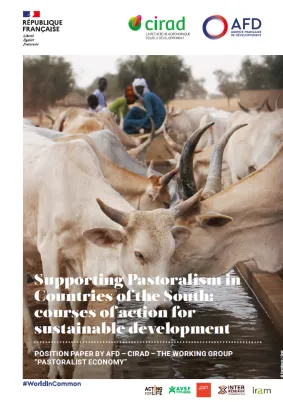
This form of livestock farming is known as pastoralism. Over 500 million people from around 100 countries worldwide depend on this practice to make a living. At various points across the production cycle, these herders cross savannas, grassland plains, arid regions, and mountainous areas that cover more than 54% of the Earth’s land surface. These regions account for one-sixth of global food production and are home to nearly one-third of the Earth’s carbon reserves. Today, close to half of these pastoral grazing lands are reported to be degraded.

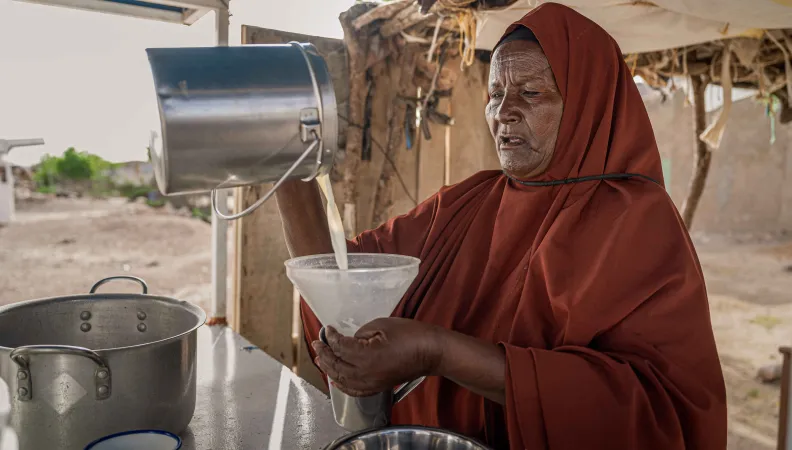
Recognizing the importance of shepherds and herders is not enough: they must be able to earn a decent income from their profession. In many West African countries, 80% of people work in livestock farming, and 70% of the milk produced is estimated to come from mixed farming. And yet, this milk is rarely sold in retail stores. Produced in remote areas, far away from distribution networks, in small volumes across dispersed locations, and by herds that are often on the move, it has long been viewed as unmarketable. In major cities, where consumption is rising rapidly, most of the milk consumed comes from imported powdered milk. It is only taxed at about 5% upon entry to the Economic Community of West African States (ECOWAS), compared to more than 50% in Kenya, which has taken a stronger stance on protecting domestic milk production.
Local milk on the offensive
AFD Group initially focused its efforts on improving conditions for pastoral herd movement, some of which produce this milk. In Chad, AFD has been supporting an integrated approach for several decades now, combining pastoral water infrastructure (increasing the number of water points and modernizing livestock watering systems), animal and human health, education initiatives for nomadic populations, and local governance.
This initiative has been scaled at the regional level, mainly through the Regional Observatory of Mobile Livestock Systems in West Africa and the Sahel (OSEMAOS), which now provides reliable data on pastoral systems to inform public decision-making.
AFD is also involved in the Milk Offensive Support Project in West Africa (PAOLAO), which has a budget of €11 million, and support the “Local Milk Offensive” adopted under ECOWAS’s regional agricultural policy in 2020. The goal is to double local milk production and increase the share of local dairy products used in the food industry to 25%, while developing milk value chains.
At the Africa Forward summit held in Nairobi, the ECOWAS Commission launched the “Continental Local Milk Coalition” with support from public and private partners including AFD, focused on structuring supply chains, investment in collection and processing infrastructure, and quality labels. In Tanzania, AFD and the International Fund for Agricultural Development (IFAD) are promoting development across the entire dairy value chain, with support for small-scale and women producers in particular.

Developing sustainable milk and cashmere value chains
In Mongolia, the French Facility for Global Environment (FFEM) is leading a similar initiative, implemented by Agronomes et Vétérinaires sans Frontières (AVSF), which has developed the country’s first sustainable value chain for cashmere, where producer remuneration is tied to responsible grazing practices. Whether cashmere or milk, generating economic value from pastoral products is key to sustainable rangeland management.
Mongolia has made pastoralism a priority theme of COP17 of the UNCCD, building on the decisions made at COP16 and the momentum gained in Nairobi. At a time when food and climate crises continue to mount, support for pastoralism and milk production is crucial. This means building resilient food systems, striking a balance in rural areas, and, ultimately, restoring degraded land.