Share the page

Neonatal and child health in Gaza and the West Bank
Project

-
Project start date
-
Status
Ongoing
-
Project end date
-
-
Project duration
-
4 years
-
AFD financing amount
-
€ 9 000 000
-
Country and region
-
Location
-
Gaza, Cisjordanie
-
Type of financing
-
Beneficiaries
-
UNICEF
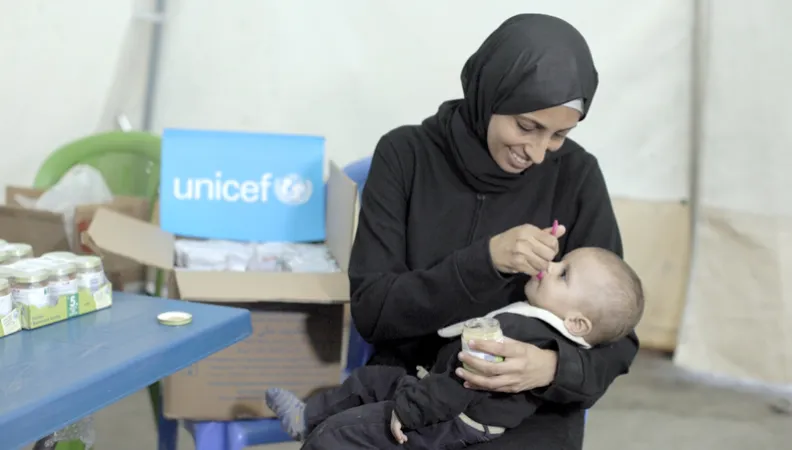
The project supports the strengthening of reproductive, maternal, neonatal and child health (RMNCH) services in Gaza and the West Bank, with a focus on quality of services, emergency care, and the needs of women and girls.
Context
In Gaza, the health system remains severely degraded: no hospital is fully functional, and 98% of primary healthcare centres are partially or completely destroyed. Shortages of medicines, equipment and fuel, difficulties in humanitarian access, and deteriorating water and sanitation conditions severely constrain continuity of care. In the West Bank, escalating violence, military operations and movement restrictions are seriously disrupting access to health facilities and supply chains for medicines and equipment. Around 830,000 people are in need of healthcare, while the Palestinian Authority’s severe budget constraints are affecting the financing of salaries and operating costs.
Description
This second phase of the joint UNICEF-UNFPA-WHO programme (2024-2028) aims to restore and strengthen neonatal and child health services in the Gaza Strip and the West Bank. It strengthens emergency preparedness mechanisms to ensure continuity of services in targeted facilities and communities. In 2026, priorities include the rehabilitation of primary healthcare centres and medical points, support to frontline staff, deployment of mobile teams, and equipping neonatal and paediatric services. Finally, the project aims to better address the specific needs of women and girls in accessing health services.
Impacts
The project aims to achieve three main results: strengthen emergency preparedness mechanisms to ensure continuity of RMNCH services in targeted facilities and communities; enable women, newborns and young children to access a comprehensive package of quality, gender-sensitive reproductive, maternal, neonatal and child health services; and reduce the specific barriers faced by women and girls in accessing healthcare. Implementation is underway in 2026: procurement of medicines and consumables is progressing, and an initial group of 30 primary healthcare centres has been assessed in the West Bank. In Gaza, additional resources mobilised by UNICEF are expected to extend support to 20 additional primary healthcare centres.
Sustainable Development Goals
Good Health and Well-being
Goal 3 seeks to guarantee health and well-being by improving reproductive, maternal, and child health and by reducing the main communicable, noncommunicable, environmental, and mental diseases. Progress depends on prevention systems to reduce health risks, universal access to health coverage and services, investment in research and development of vaccines and medicines, and stronger risk-management capacities in developing countries.