Share the page

Water Supply In the greater Banjul area - WASIB Project
Project

-
Project start date
-
Status
Ongoing
-
Project end date
-
-
Project duration
-
7 years
-
AFD financing amount
-
€ 29 000 000
-
Country and region
-
Location
-
Greater Banjul Area
-
Type of financing
-
Beneficiaries
-
Ministry of Finance and Economic Affairs
-
Type of beneficiary
-
State
Facing a current coverage of the water distribution network at less than 50% of the population in the Greater Banjul Area, the WASIB project aims to respond to the short and medium term needs. On the long term, the elaboration of decision-making tools and drafting of a master plan will allow planning water demand for the future, with related investments.
Context
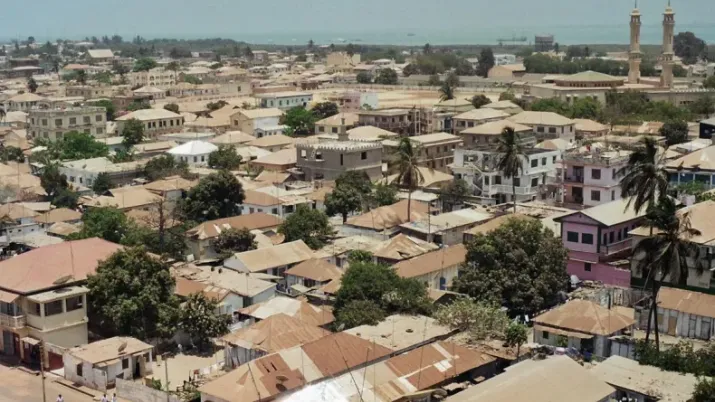
The population of the Greater Banjul Area (GBA) is estimated at 1.2 million (KMC, 2020), representing half of the total population of the country. Population growth and rapid urbanization have led to high water stress far beyond NA-WEC's capacity: busy with emergency measures to contain water cuts, the development of the distribution network in urban areas could not be done at the same pace; while urbanization has increased by 4.5% per year between 2000 and 2017 (World Bank, 2020). According to the NAWEC re-ports, the water distribution network currently covers less than 50% of the population in the GBA. Coupled with high Non-Revenue Water (NRW) losses of about 31%, there still exist a huge gap between the production capacity and the existing demand for the covered areas.
Description
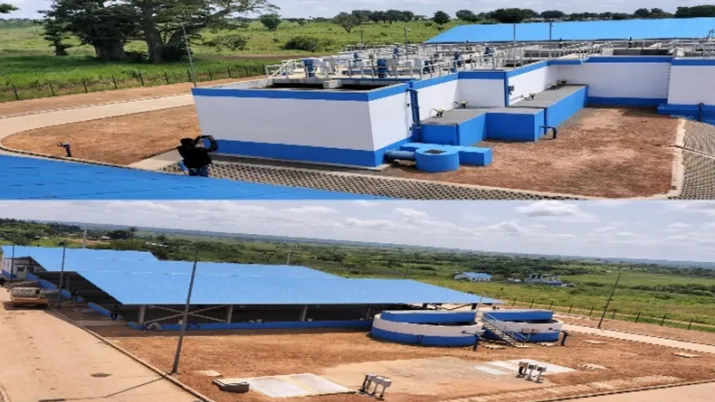
The WASIB project aims to meet the Greater Banjul Area’s short- and medium- term water demand by increasing production capacity, expanding the distribution network, and reducing water losses (NRW). The programme also supports the development of a Water Supply & Sanitation Master Plan to forecast demand up to 2050 and guide NAWEC’s longterm planning.
WASIB I (€16.5M, 2020–2022) is structured in three parts:
- Short-term: urgent rehabilitation of key infrastructure (pumps, tanks, boreholes, pipelines, meters, and treatment systems) to stabilize supply.
- Medium-term: expansion of production capacity by 25–30%, reinforcement of networks, and development of GIS and hydraulic modelling tools, alongside new household connections and standpipes.
- Long-term: preparation of a 2050 master plan to guide future investments and sector strategy.
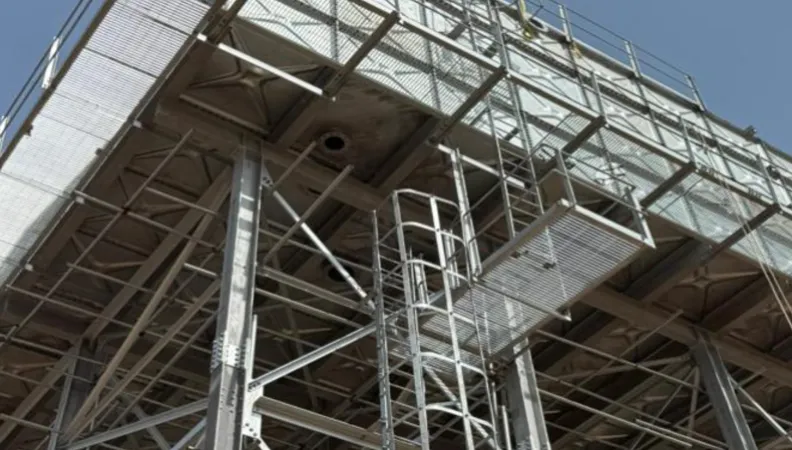
WASIB II (€12.5M, 2022) focuses on infrastructure reinforcement, including a 20 km transmission main between Brikama and Faji Kunda, the rehabilitation of three elevated water tanks, and a system optimization to improve pressure, reliability, and continuity of service.
Impacts
The WASIB programme is expected to significantly improve water access for around 250,000 people under WASIB I and a further 50,000 under WASIB II. It will increase production capacity, enhance distribution efficiency, and reduce service interruptions, leading to a more reliable network. The project also delivers key planning tools, including a GIS, hydraulic model, and a 2050 master plan, strengthening NAWEC’s long-term planning capacity. In addition, WASIB II will enable the conveyance of an extra 7,000 m³ of water per day, improving pressure and service continuity.
Sustainable Development Goals
Clean Water and Sanitation
Goal 6 seeks to achieve universal and equitable access to safe drinking water, hygiene, and sanitation by 2030, especially for vulnerable populations. It also calls for sustainable water management and reducing the number of people affected by water scarcity.
The goal includes the concept of transboundary water management, which is key not only to sustainable governance but also to peace and cooperation.