
Share the page
Gambia
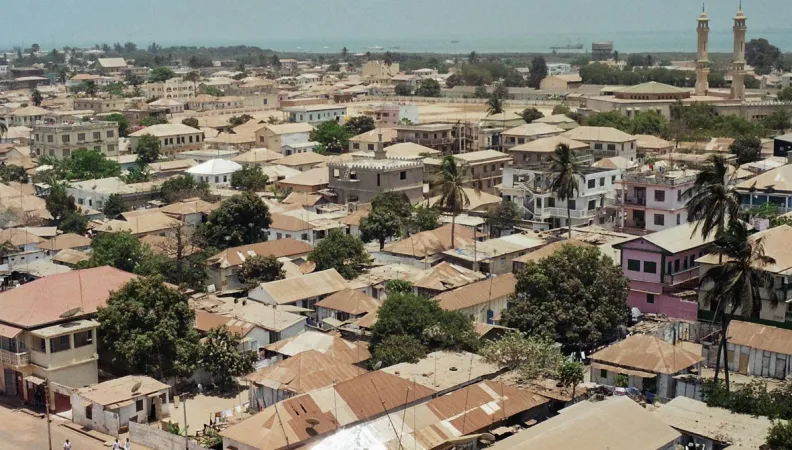
The Gambia, the smallest country on mainland Africa, is one of France’s priority countries for development assistance. Faced with high public debt, the country also faces major challenges in infrastructure and public services. AFD supports the Gambian government in its efforts to promote economic stabilization, food security, sustainable territorial development, and biodiversity conservation.
Context
With an area of 11,300 km², The Gambia is the smallest country on mainland Africa. Surrounded by Senegal and bordered by the Atlantic Ocean to the west, the country stretches along the Gambia River. Classified as a low-income country, it ranks 170th out of 188 countries on the Human Development Index (HDI), with a per capita income of USD 2,812. Its population, estimated at 2.4 million inhabitants according to the 2024 census, includes 17.2% of people living below the extreme poverty line, on less than USD 2.15 per day.
After 22 years of authoritarian rule, The Gambia experienced its first democratic transition in 2016. The new government inherited a critical economic situation: a heavily indebted country facing major gaps in infrastructure and public services, as well as recession and high inflation. The authorities must now manage public debt while reviving development and protecting fragile ecosystems that are highly vulnerable to climate-related challenges.
The National Development Plan (2018) aimed to promote good governance, social cohesion, and national reconciliation in order to revitalize and transform the economy. The subsequent Recovery Focused National Development Plan (2023–2027) incorporates the macroeconomic impacts of the Covid-19 pandemic and international conflicts, which threaten the country’s main sources of revenue, particularly tourism and trade. The objective is to strike a balance between addressing current socioeconomic challenges and building resilience to future shocks despite limited resources.
Since 2018, when The Gambia became one of France’s priority countries for development assistance, new opportunities for AFD engagement have emerged. The objective is to support the country’s economic stabilization, growth, and sustainable development.
AFD's Gambia office is directly attached to the Greater Sahel regional office in Ouagadougou.
Our approach
AFD and The Gambia: Promoting Growth and Territorial Resilience
Rapid population growth and urban expansion in the Greater Banjul area have placed intense pressure on water resources, leading to frequent shortages. In 2018, fewer than 50% of the population had regular access to drinking water, often limited to just a few hours per day. In this context of inadequate infrastructure and an insufficiently structured sector, access to drinking water became a major challenge.
Given this situation and drawing on its experience in the urban water sector in West Africa, AFD is focusing its support on drinking water services in the Greater Banjul area. The objectives of the WASIB project are to improve access to drinking water and the quality of service provided by the public utility National Water & Electricity Company (NAWEC), restore the sector’s financial balance, and support NAWEC in planning public water services across the Greater Banjul area.
The project is part of The Gambia’s climate strategy and promotes the sustainable management of water resources. In response to additional financing needs to maximize the impact of this priority project, and at the request of the Gambian authorities, AFD adopted a partnership-based approach that led to cofinancing from the European Investment Bank in December 2025.
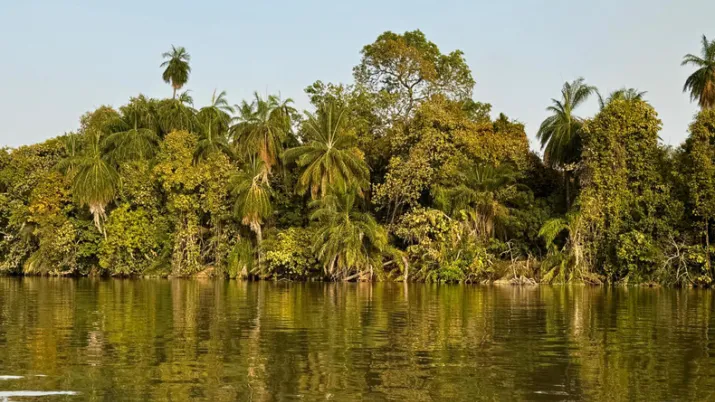
The Gambia is home to rich coastal and river biodiversity, particularly within the mangrove ecosystems along the coast and estuary of the Gambia River. These ecosystems play a major ecological role while also supporting the livelihoods and well-being of local communities that depend on them. However, these areas are facing growing pressure, mainly due to human activity and the effects of climate change, which are disrupting the environmental, economic, and social balance of these territories.
To help preserve this natural capital, AFD supports The Gambia through the Resilience Gambia Project, implemented within the Gambian Ministry of Environment. The project aims to support the preservation and restoration of mangrove ecosystems in marine protected areas, including the creation of two new protected areas. It will also promote income-generating activities in these zones and strengthen the legal framework and institutional capacities of the Gambian authorities on climate change issues.
In the long term, the project will help establish a clear strategic and technical approach to strengthening the resilience of coastal communities and natural ecosystems.
The agricultural sector is a major challenge for nutrition and food security in The Gambia. Agricultural production meets less than half of the country’s consumption needs, while 73.9% of the rural population lives below the poverty line. White rice, the country’s staple food, accounts for an annual consumption of 117 kg per person. However, only 17% of this annual consumption is produced locally.
To improve food security and increase rice production, AFD supports the construction and rehabilitation of hydro-agricultural infrastructure. Led by the International Fund for Agricultural Development, the ROOTS project (Resilience of Organizations for Transformative Smallholder Agriculture) aims to reach 40,000 farming households, representing 14% of the population. The project also seeks to support the gradual development of a more entrepreneurial and inclusive agricultural sector, particularly for young people and women, by strengthening the capacities of farmers’ organizations.
The Gambia is drawing on its rich natural capital to position itself as a key player in the climate transition in West Africa. Through its AdaptAction facility, AFD plays a catalytic role by supporting the Gambian government in implementing its commitments, particularly the adaptation component of its Nationally Determined Contribution (NDC).
An initial technical assistance program aims to strengthen the capacities of the Ministry of Environment in developing a Monitoring, Evaluation, and Learning system for The Gambia’s NDC. This support helps finalize the country’s NDC 3.0, with a particular focus on adaptation, while also strengthening the Climate Change Secretariat’s monitoring and evaluation capacities. These efforts contribute to more transparent and effective management of the country’s climate policies.
At the same time, AFD is supporting the Ministry of Water Resources in designing a national licensing system for water extraction, a key reform for the sustainable management of this vital resource. The project is strategically important because it forms part of the International Monetary Fund’s Resilience and Sustainability Facility (RSF), combining technical assistance with financial leverage. In a context marked by groundwater salinization, coastal erosion, and declining rainfall, the licensing system provides a concrete response to securing water resources and strengthening the country’s climate resilience.
In partnership with the International Monetary Fund, The Gambia’s new authorities launched an ambitious program of economic reforms aimed at stabilizing the country’s financial situation, restoring citizens’ trust in public institutions, and strengthening democratic foundations. These reforms reflect a determination to break with past imbalances and build a more resilient economy.
From 2018 onward, AFD supported these efforts through financing that helped facilitate the transition toward a new IMF program, including support for the launch of audits of public enterprises and technical assistance for negotiations with external creditors. Part of the funding was also allocated to essential health sector expenditures, reflecting AFD’s integrated approach.
To reduce dependence on external financing, AFD provided two financing operations aimed at improving domestic resource mobilization. Managed by the Gambia Revenue Authority, these funds form part of the government’s tax reform agenda. The objective is significant: financing the National Development Plan by strengthening the state’s capacity to collect its own revenues, a key condition for sustainable and self-reliant growth.
In Kanifing, The Gambia’s largest municipality, a pilot initiative was launched after the city won a call for projects under the Innovation Fund for Development. Developed in collaboration with international research teams, the project is based on three major innovations:
- A digital addressing system to accurately identify taxpayers,
- GPS tracking for waste collection trucks, combined with a bonus system to reward the most efficient drivers,
- A mechanism linking property tax payments to the quality of public services delivered, in order to encourage citizens to meet their tax obligations.
In the field
Below, find the country's projects, news, publications, and contact details in one click
Projects


Publications & Media
Key figures
-
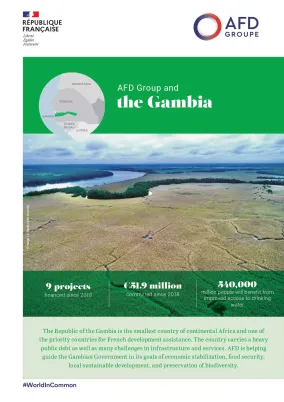
9 projects financed since 2018
-
€51.9 M committed since 2018
-
540,000 people will benefit from improved access to drinking water