Publications and media
The challenges of the demographic dividend for African countries
The implementation of population related public policies in Africa will only have the anticipated effects if a certain number of issues are tackled: harmful traditional practices, the stereotypes rega...
Published on
Estimating the distributional incidence of healthcare spending on maternal health services in Sub-Saharan Afri...
Improving access to maternal health services is a critical policy concern, especially in Sub-Saharan Africa (SSA) where maternal mortality rates remain very high, particularly so among the poorest seg...
Published on
Estimating the distributional incidence of healthcare spending on curative health services in Sub-Saharan Afri...
Sub-Saharan African countries have been experiencing a persistently high level of inequality in access to healthcare services. Following the global call to eliminate health inequalities worldwide, dif...
Published on
Social Protection and Intrahousehold Resource Allocation: Evidence from Three Large-scale Programs
Social-protection schemes have become a popular form of government intervention in developing countries. The empirical evidence is still scant on their effectiveness in reducing within-household inequ...
Published on
Social Protection and Inequality: Evidence from Ethiopia, India and Peru
Do antipoverty programs reduce inequality? Evidence from Ethiopia, We examine trends of consumption inequality among culturally and socially defined groups in Ethiopia, India and Peru during the pe...
Published on
Burkina Faso: corporate citizens facing Covid-19
Like many countries, Burkina Faso is confronted with the Covid-19 pandemic. This health crisis has had a major impact on household income. In response, social support measures have been taken, such as...
Published on
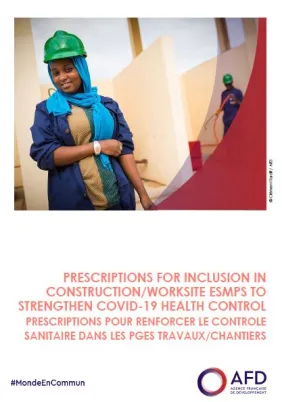
Prescriptions for inclusion in construction/worksite ESMPS to strengthen Covid-19 health control
This document provides prescriptions to be integrated into the health and safety sections of environmental and social management plans and systems of projects financed by the French Agency for Develop...
Published on
Health and social protection - 2019 Activity report
Health and social protection are central to sustainable development. These sectors are fundamental pillars for the development of human capital. The lack of access to health care, its poor quality and...
Published on
Dr. Thu Zar Myint Than and the knowledge for better disease control in Myanmar
The ECOMORE II project, coordinated by the Institut Pasteur and funded by the AFD, is investigating changes in the environment and in the human activities behind the emergence of infectious diseases i...
Published on
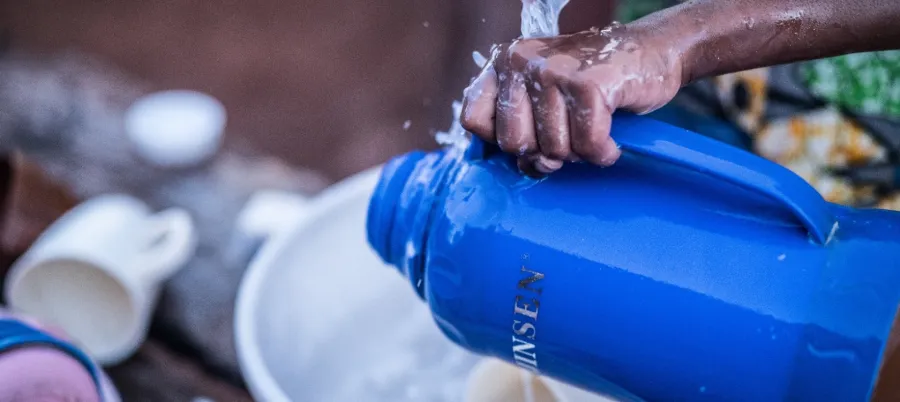
Resources for Managing Water & Sanitation during the Coronavirus Pandemic
Covid-19: Resources for the Water and Sanitation sector Water and sanitation services constitute a key front in the battle against the Coronavirus pandemic. AFD will regularly share resources and...
Published on
Innovation towards the Access to Essential Therapeutic Products
Almost a billion people (one person out of nine) suffer from malnutrition and almost two billion people do not have access to essential medical products. In light of this urgency, some initiatives div...
Published on
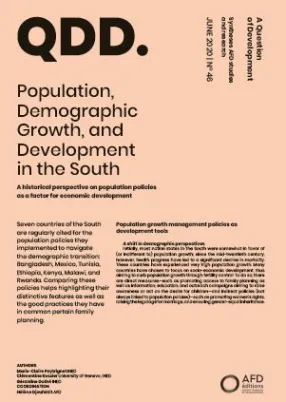
Population, Demographic Growth, and Development in the South
Seven countries of the South are regularly cited for the population policies they implemented to navigate the demographic transition: Bangladesh, Mexico, Tunisia, Ethiopia, Kenya, Malawi, and Rwanda....
Published on
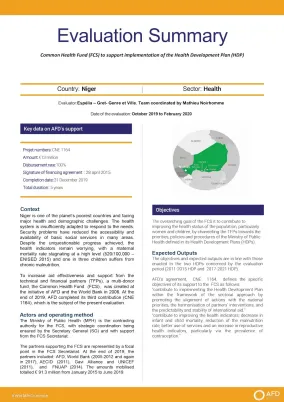
Evaluation Summary - Common Health Fund (FCS), Niger
In order to strengthen aid effectiveness, a multi-donor fund, the Common Health Fund (CHF), was created on the initiative of AFD and the World Bank in 2006, joined by other technical and financial par...
Published on
Denis Mukwege: Sexual violence is a fearsome weapon
Rape and sexual slavery are routinely practiced by armed groups with an ever-increasing number of victims, leading over time to the breakdown of family and social models. For affected women, access to...
Published on

The sanitation challenge in Mauritania
In Mauritania, only 15% of the rural population has access to sanitation. As part of the Sahel Alliance, AFD and the European Union are supporting the Mauritanian authorities to raise awareness of go...
Published on
Making Food a “Common Good”: Lessons From Three Experiences to Fight Malnutrition
Food supply is caught in a powerful paradox. The right to food is one of the most established and codified human rights. However, almost a billion people – one person out of nine – currently suffer fr...
Published on
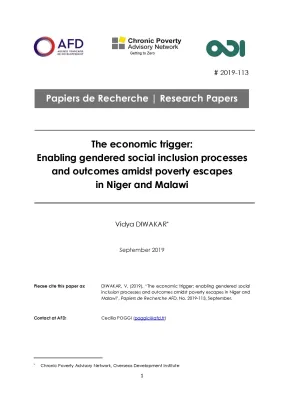
The economic trigger: Enabling gendered social inclusion processes and outcomes amidst poverty escapes in Nige...
This mixed methods paper explores social inclusion of poor women and children in Niger and Malawi. We identify social inclusion outcomes focused primarily on access to education and health, and suppor...
Published on
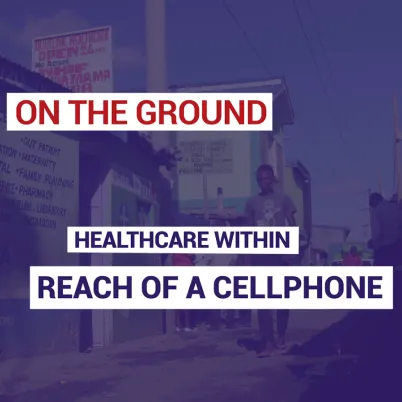
Kenya: healthcare within reach of a cellphone
In Kenya, where 93% of the population did not have access to health coverage until recently, patients can now subscribe to health insurance and pay for their care at a large network of hospitals using...
Published on
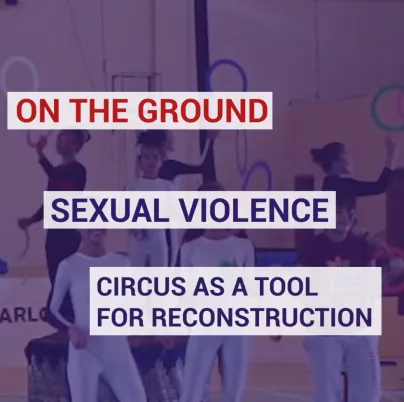
Sexual violence : Circus as a tool for reconstruction
In the Philippines, one in five children reported to have experienced sexual violence, according to the Council on the Welfare of Children. Most of these abuses take place at home or in the community....
Published on
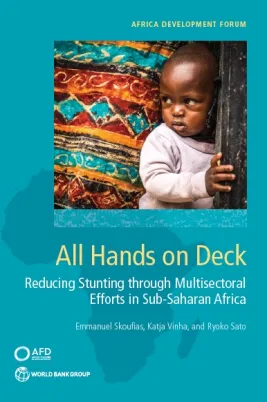
All Hands on Deck : Reducing Stunting through Multisectoral Efforts in Sub-Saharan Africa
The prevalence of stunting in Sub-Saharan Africa has been declining significantly. Yet, because of high fertility rates, this is the only region in the world with a growing number of children under th...
Published on
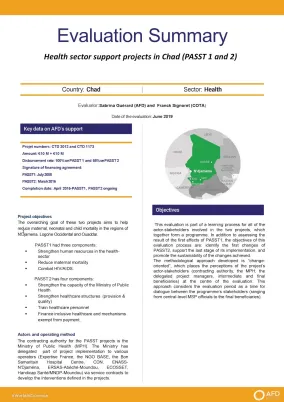
Evaluation Summary - Health Sector Support Projects in Chad (PASST 1 and 2)
In Chad, for the health sector, two successive health sector support projects were evaluated in 2019. The methodological approach developed for this evaluation was "change" oriented, putting at the he...
Published on