
 Legal notice EU (project) Does the use of stimulus programs and social grants by beneficiaries have an impact on the South African economy? Conducted by Infusion Knowledge as part of the Extension of the EU-AFD Research Facility on Inequalities, this research project examined the purchasing habits of stimulus beneficiaries and analyzed how the new "post-stimulus" environment impacts the trade and decision-making of commercial entities and some of their customers.
Context
In July 2019, Infusion Knowledge Hub conducted a study on opportunities for wholesale in Stock Road in Philippi in the Western Cape Province on behalf of a large South African supermarket chain. The purpose of the study was to understand the trading environment in the informal and small business market to elicit a value-added cash and carry shopping proposition (Vawda, Prinsloo and Prinsloo, 2019).
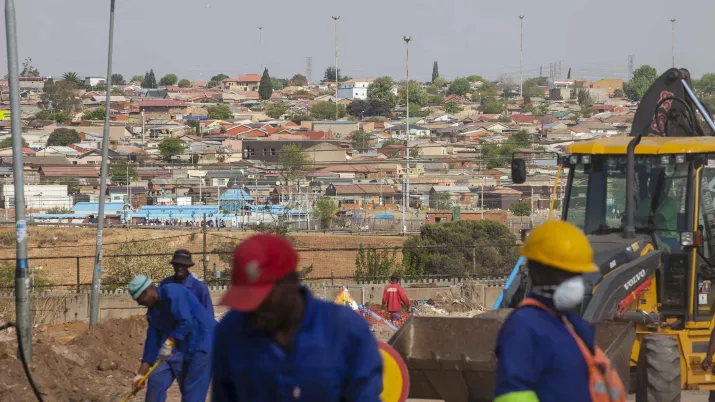
In June 2022, as part of a research program launched by the Presidency of South Africa and Agence Française de Développement, funded by the European Union, Infusion Knowledge Hub replicated the study to determine whether there are shifts in purchasing behaviour amongst the informal and small traders that participated in the 2019 research. In doing so, the study aimed to provide granular data on shifts in the informal and small traders’ operating environment around Stock Road in Philippi between July 2019 and June 2022. In addition, the research investigated the spending patterns of 30 Social Relief Distress (SRD) grant recipients and 31 Basic Education Employment Initiative (BEEI) participants.
This project is part of the Extension of the EU-AFD Research Facility on Inequalities. Coordinated by AFD and financed by the European Commission, the Extension of the Facility will contribute to the development of public policies aimed at reducing inequalities in four countries: South Africa, Mexico, Colombia and Indonesia over the period 2021-2025.
Objectives
This new research project aimed to contribute to the body of knowledge on the impact of social protection and employment stimulus measures on the formal and informal economies.
Two studies analysing the local effects of the South African Presidential Employment Stimulus Initiative (PES) and the national social grants programme were produced:
- One study, presented in note form, that builds on Infusion's long-standing relationship with Shoprite to allow SALDRU to use Shoprite's customer data to explore the shopping habits of stimulus beneficiaries. The focus was on unpacking purchasing data related to beneficiaries who receive the Distressed Social Relief Grant and those who are part of the school assistants programme managed by the Department of Basic Education (DBE).
- A research paper that details through descriptive and inferential statistical analysis the transfer to a mobile application, called NECTA, of a landmark study by Infusion and Shoprite conducted among informal vendors and "Spaza" stores in Philippi. This data provides an overview of what has been happening in these businesses since July 2019 (the date of the initial project), as well as an opportunity to see how the new "post-stimulus" environment is impacting the trade and decision-making of these business entities as well as some of their customers.
Research findings
You will find below the research paper related to this project:
Contact
-
Anda DAVID
Economist, scientific coordinator of the EU-AFD Facility on Inequalities

Discover other research projects
Redesigning the South African “Social Relief Distress” grant program for higher impact
Completed
2023 - 2023

Analyzing the employment effects of the “green economy” transition in South Africa
Completed
2023 - 2024
 Legal notice EU (project) What have been the impacts of the Covid-19 national stimulus package's social assistance on local economies and informal sector workers in South Africa? The Extension of the EU-AFD Research Facility on Inequalities program sought to answer this in collaboration with CSDA.
Context
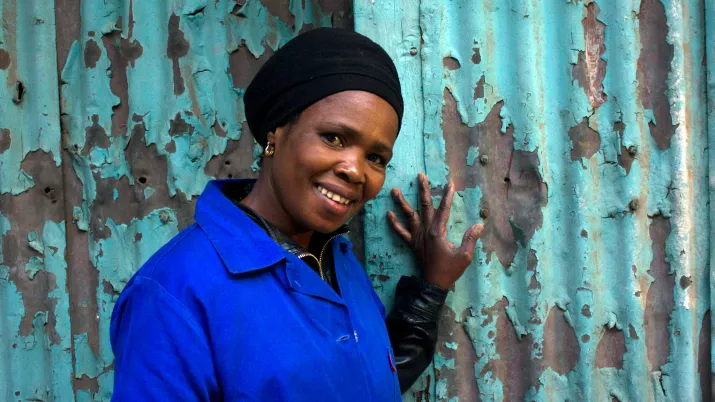
In South Africa, informal work is a feature of the labor market - one in six South African workers is employed in the informal sector. During the pandemic, millions of workers without legal or social protection were disproportionately affected by the negative impacts of measures to prevent the spread of Covid-19 (loss of jobs, hours of work and income...). As a "forgotten" sector in many ways, it should not be forgotten that the informal sector provides livelihoods, employment, and income for millions of workers and business owners, and contributes significantly to the country's Gross Domestic Product (GDP).
In response to the social and economic effects of the pandemic on vulnerable groups, the South African government has further developed its social protection system. As part of the social assistance component of the Covid-19 stimulus package, it introduced a new Social Relief of Distress (SRD) grant in April 2020. This social assistance grant is for the first time targeted at many informal workers on the basis of their employment status.
While the positive links between the subsidy and economic activity had already been studied, as well as the limits to this interaction, it remained to be understood whether and how the SRD had been used by informal workers and what economic effects had been generated. This project was conducted by CSDA as part of a larger program to analyze various components of the South African government's Covid and recovery stimulus package.
This project is part of the Extension of the EU-AFD Research Facility on Inequalities. Coordinated by AFD and financed by the European Commission, the Extension of the Facility will contribute to the development of public policies aimed at reducing inequalities in four countries: South Africa, Mexico, Colombia and Indonesia over the period 2021-2025.
Objectives
To better understand the effects of the Covid-19 and recovery public policy stimulus on reducing inequality, this study qualitatively analyzed the interactions and impacts of the SRD (as well as other subsidies, and the stimulus package more broadly) on local economies.
In particular, it focused on the experiences of women and men traders in the informal sector, who represent a significant proportion of informal sector workers. Through the data collected, differentiated patterns by gender, location, and level of the informal worker in his or her work organization have also been revealed.
Research findings
You will find below the research paper related to this project:
Contact
-
Anda DAVID
Economist, scientific coordinator of the EU-AFD Facility on Inequalities
Discover other research projects
Evaluation of local stimulus effects in South Africa: Jobs and grants programmes
Completed
2022 - 2023
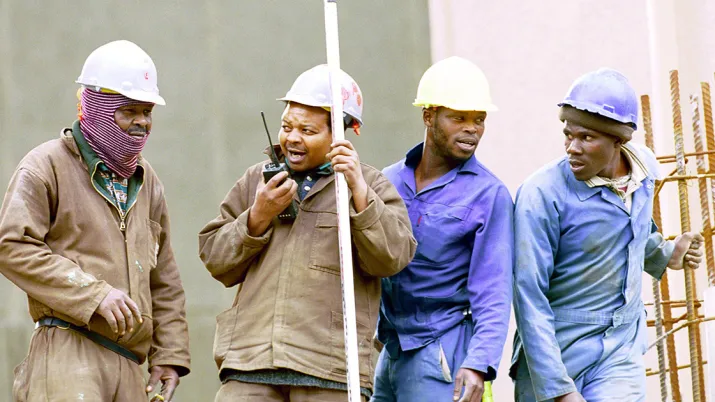
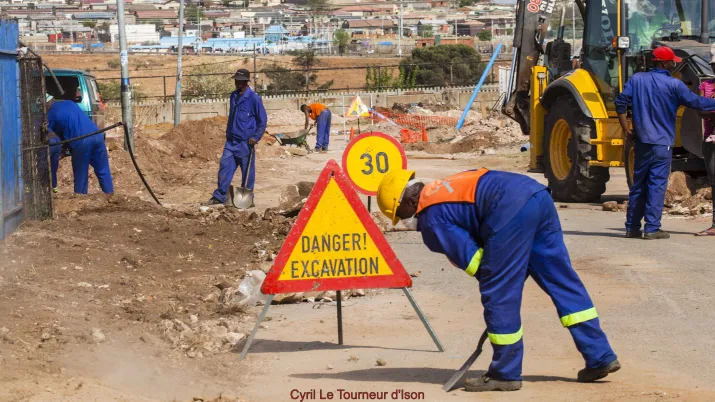
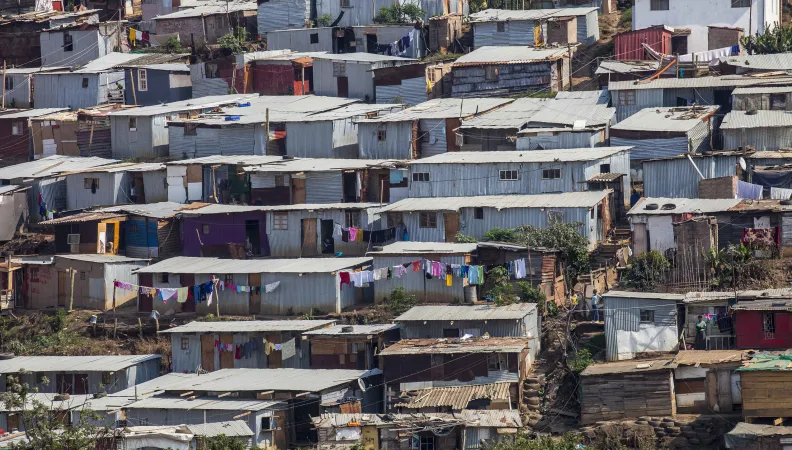 How can we better understand local realities and more particularly socio-economic outcomes at the community level? The Extension of the EU-AFD Research Facility on Inequalities in partnership with the Southern Africa Labour and Development Research Unit (University of Cape Town), and in close collaboration with local and national government entities, seeks to answer this question.
Context
South Africa’s spatial inequality translates in significantly different lived experiences among members of different communities across the country. Statistics South Africa gathers data on a range of socio-economic outcomes of individuals and households through an array of national surveys; these data can be analysed at the national, provincial, district and sometimes municipal level, and provide us with a sense of well-being, deprivation and inequities in these, between these different geographies. However, there is not yet one standardised set of data that would allow for a coherent, systematic and longer-term understanding, visualisation and tracking of a broad set of indicators on well-being, that allows for a better understanding of socio-economic outcomes at the community level. Yet, understanding this local context is important, as it is within that local reality that policies and interventions aim to make a difference. South Africa’s government has recognised this too and, with the introduction of its District Development (DD) Model, aims to see different spheres and departments of government work together for larger impact, “higher performance and accountability for coherent service delivery and development outcomes”. A consolidated, central point of information that is accurate and regularly updated, would provide a strong basis for the implementation South Africa’s DD Model.
This project therefore proposes the development of an interactive, online Community Explorer that would allow researchers, policy-makers and civil society members to build a stronger understanding of well-being at the community (or main area) level in South Africa. Such an understanding is crucial to inform development efforts implemented at that community level. We suggest drawing on the local level information for the Steve Tshwete municipality to pilot the Community Explorer approach.
The local municipality of Steve Tshwete is part of the Mpumalanga province, an area that is home to one of the country's largest coal mining areas and accounts for 83% of the coal produced in South Africa. Steve Tshwete can be considered as one of the commercial centers of this province, with one of the largest local economies in the district dominated by the mining, manufacturing and financial sectors. As such, coal mining and the three coal-fired power plants currently in operation are by far the largest contributor to local employment, accounting for 40% of it.
This project is part of the Extension of the EU-AFD Research Facility on Inequalities. Coordinated by AFD and financed by the European Commission, the Extension of the Research Facility will contribute to the development of public policies aimed at reducing inequalities in four countries: South Africa, Mexico, Colombia and Indonesia over the period 2021-2025.
Objectives
This project proposes to leverage the data and tools already available on the South African Youth Explorer (and the related WaziMap tool). The SA Youth Explorer is a SALDRU-led project that constructs and maps a range of indicators that measure key dimensions of well-being among young people, at various geographical levels. Using Census 2011 data, these indicators are currently constructed for the following domains: demographics, education, living environment, economic opportunities and youth poverty (including income poverty and multidimensional deprivation). In addition, the project has begun the construction, verification and maintenance of a central database of service provision, that allows for government-provided services to be mapped down to the main area level. Finally, it is the project’s aim to explore the possibilities of adding a third layer of knowledge with local labour market demand side information. As such, the overall aim of the proposed project is to provide “an understanding of the functionings of geographical areas as economic and social systems” and thereby “to promote the construction of an integrated and effective” approach to policy and planning that would ultimately contribute to the social betterment of all.
In addition, the project will use the administrative South African Revenue Service (SARS) and National Treasury (NT) Firm-Level (SARS-NT) Panel data developed as a joint SARS–National Treasury–UNU-WIDER initiative which gives matched employee-employer level information and thus allows computing labor market demand indicators. The greatest advantage of the administrative SARS–NT Panel data over other firm-level surveys is that it allows us to have employee-related information such as income, age and gender, as well as firm-level information such as labour costs, gross sales, industry sector, firm age, productivity, firm size, learnership and training cost . Another advantage of the administrative SARS–NT Panel data which is important for the project is that the worker and firm information can be aggregated to four different geographical levels, namely: province, district municipality, local municipality, and main place . With these geographical levels, it is possible to create local averages of various worker and firm variables that can then be mapped alongside Higher Education Institutes present at the local level.
Research findings
You will find below the two research papers related to this project:
- Developing a Youth Labour Market Index for South Africa at the sub-national level
- Youth and the just transition. A profile of young NEET in Mpumalanga
Contact
-
Anda DAVID
Economist, scientific coordinator of the EU-AFD Facility on Inequalities
Discover other research projects

 Legal notice EU (project) How do inequalities influence biological and social outcomes in MPAs in Indonesia? The Extension of the EU-AFD Research Facility on Inequalities program sought to answer this question in collaboration with SMERU to integrate inequality assessments and indicators into existing MPA policies in the country at all levels of governance.
Context
MPAs are often associated with high poverty, being by design targeted at relatively untouched areas with low economic potential. Establishing an MPA can thus create a financial and social burden on resource-dependent communities, even if the benefits of doing so would bring higher yields or revenue in the future. Some stakeholders may benefit greatly from commercial activities (e.g., tourism, sale of higher-value products), while at the same time others are left out of the management processes, sometimes even those having most at stake.
Because MPAs will most likely affect user groups disproportionately, inequality issues among stakeholders can easily arise. Some aspects of MPA design, implementation, and management may contribute to positive ecological and well-being outcomes, while others will require tradeoffs. This coexistence of both co-benefits and trade-offs among stakeholder groups leads to tricky questions of equity, justice, and power in the design, implementation, and management of MPAs. There is a general lack of knowledge regarding how inequalities influence MPA outcomes.
In brief, MPAs are a driver of inequalities in communities that rely heavily on marine resources, and a powerful tool to help reduce them. While being an important aspect of the well-being of the people involved and of the success of MPAs, inequality assessments and metrics are currently largely absent in the design, implementation and management of MPAs. This research project aimed at a deeper understanding of the inequality dynamics in MPAs in Indonesia, drawing upon existing data and specific case studies. It helped us gain better knowledge of how inequalities influence biological and social outcomes in MPAs, and brought insights on how to integrate inequality assessments and indicators in existing MPA policies in the country, at every level of governance.
This project is part of the Extension of the EU-AFD Research Facility on Inequalities. Coordinated by AFD and financed by the European Commission, the Extension of the Facility contributes to the development of public policies aimed at reducing inequalities in four countries: South Africa, Mexico, Colombia and Indonesia over the period 2021-2025.
Objectives & results
This project first went through a scoping phase which enabled to better understand the role of MPAs and its link to inequalities. It then aimed to develop a framework for analyzing inequalities and their dynamics in MPAs in Indonesia, and a toolbox for mainstreaming inequalities in the design, implementation and management of MPAs. It has also fed into the policy dialogue conducted by the EU and AFD on marine resource management and environmental protection.
This project therefore resulted in:
- A working paper summarizing the current knowledge on marine protected areas and inequalities in Indonesia (carried out by LPEM).
- An in-depth research project on the links between inequality reductions and the management of marine protected areas, including cases studies of three MPAs (performed by the SMERU Institute).
- Training and capacity building activities with practitioners and MPA managers on the inclusion of inequalities in MPA management practices.
Research findings
You will find below the different publications related to this project :
- The benefits of Marine Protected Areas in fighting inequality and fostering environmental sustainability in Indonesia
- Balancing conservation and community welfare: Enhancing the management of Marine Protected Areas in Indonesia
- Can social inclusion benefit ecosystems?
Watch the replay of the "Research Conversations" webinar on this topic (July 2023):
Contacts
-
Oskar LECUYER
Economist

Other research projects supported by the Extension in Indonesia
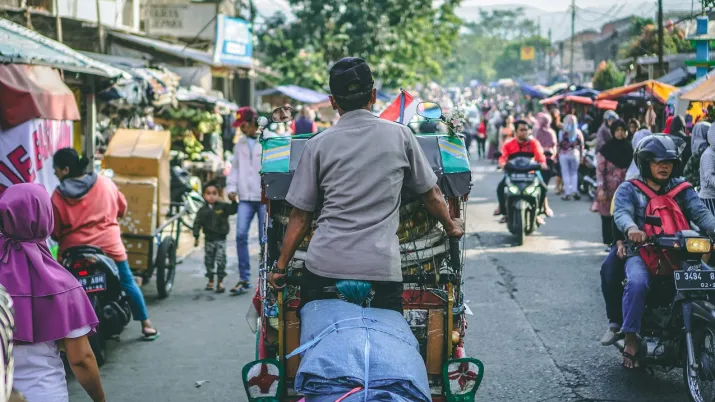
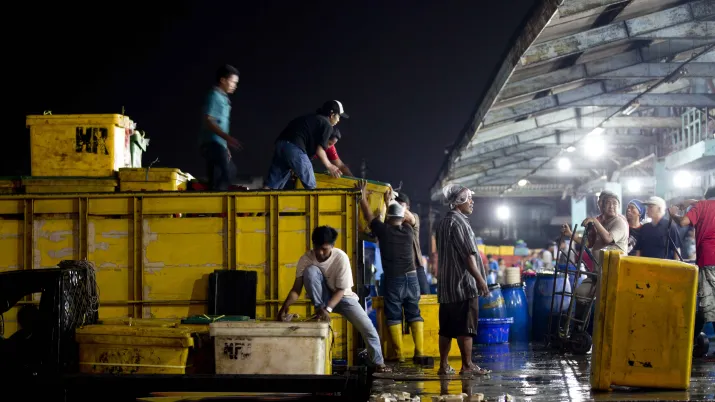
 Legal notice EU (project) How to effectively reduce inequality in Indonesia? To answer this question, the Extension of the EU-AFD Research Facility on Inequalities is working with the local research center LPEM and the national statistical office BPS to produce a diagnosis that is essential to guide policy interventions towards reducing inequalities.
Context
In Indonesia, poverty has been declined since 2006 from 17.75% to 9.41% in 2019 due to strong economic growth and other poverty reduction efforts. The inequality, however, remains considerably high. Since 2010, Indonesia’s Gini ratio remains above 0.38. The poverty and inequality situation has been worsen post-pandemic. Indonesia’s headcount poverty rate back to double digit, 10.14% in 2021, while the Gini ratio climbed to 0.384, its highest rate since 2018. While focus on economic inequality is important, the picture of inequality in Indonesia should be assessed through a multi-dimensional aspect, not limited to households income or expenditure.
Indonesia is a fourth most-populous and also the largest archipelagic country in the world. It makes any policy context should be assessed carefully throughout population groups, income class, and geographical location due to the difference in the provision of public infrastructure and policy efforts within the country. As such, a comprehensive inequality diagnostic report is needed to assess overall condition of inequality in Indonesia not only using monetary indicator (income or expenditure), but also social assets, in terms of access to education, health, water and sanitation, employment, and other basic infrastructures needed for households.
The Extension of the Research Facility on Inequalities will cooperate with leading research center, LPEM FEB UI, and national statistical office, BPS, to conduct comprehensive inequality assessment and produce an inequality diagnostic report as the basis for launching a national dialogue about inequality and stimulate policy interventions to overcome inequality.
This project is part of the Extension of the EU-AFD Research Facility on Inequalities . Coordinated by AFD and financed by the European Commission, the Extension of the Facility will contribute to the development of public policies aimed at reducing inequalities in four countries: South Africa, Mexico, Colombia and Indonesia over the period 2021-2025.
Objectives
The objectives of the Inequality Diagnostic Research in Indonesia are:
- to produce a working paper which will consolidate data and resources (papers) around inequality issues to profile the prevailing situation of inequality in Indonesia.
- to conduct capacity building activities for national research center and the national statistical office in performing data analysis for the Inequality Diagnostic Research Report.
- to introduce specific tools for multidimensional inequalities diagnostic in Indonesia.
This research has led to a comprehensive Inequality Diagnostic Research Report in Indonesia and contributes to public debate and discussion on Inequality in Indonesia. Indeed, this project performed a thorough analysis of multi-dimensional aspect of inequality in Indonesia and a comprehensive breakdown based on income groups, geographical locations, and gender. It also includes analysis of prior policies that have been taken by the government to reduce inequality and how it performs overtime. The output of this research will help government to identify priorities and policy options in order to further reduce them.
Research findings
You will find below the research publications related to this project:
Read the press release

Contacts
-
Oskar LECUYER
Economist
Other research projects supported by the Extension in Indonesia
Harnessing the benefits of inequalities reduction in marine protected areas in Indonesia
Completed
2022 - 2023

 Legal notice EU (project) The fear that cash transfer programs (or social grants) can discourage labor market participation is common among policymakers locally and around the world, including in South Africa. To refute or confirm this fear, the Extension of the EU-AFD Research Facility on Inequalities worked with the Development Policy Research Unit (DPRU) of the University of Cape Town to analyze the impacts of the Covid-19 grant on labor market recovery and investment in productive activity in South Africa.
Context
In South Africa, the social grant system is relatively comprehensive in scope, directly benefiting one in three individuals, and mainly empowering the most vulnerable such as children, the elderly and people with disabilities from poor households. Despite the progressiveness of this system, there remains a lack of assistance to the unemployed, who are presumed to be able to support themselves through the labor market (Ferguson, 2015). However, such a view overlooks the widespread and structural nature of unemployment in South Africa, where over 70% of the unemployed have been unemployed for more than a year.
In this light, the expansion of the country's social grant system in response to the Covid-19 pandemic played an important role in filling this gap. On the margins of the system, a special Covid-19 grant of R350 was introduced to support this previously unreached and important group of unemployed adults. With one of the highest official unemployment rates in the world (32.6 percent in the first quarter of 2021), the grant was an important form of support for millions of vulnerable adults and was the first to use an explicit labor market eligibility criterion that could be considered a "labor market vulnerability transfer."
This project is part of the Extension of the EU-AFD Research Facility on Inequalities. Coordinated by AFD and financed by the European Commission, the Extension of the Facility will contribute to the development of public policies aimed at reducing inequalities in four countries: South Africa, Mexico, Colombia and Indonesia over the period 2021-2025.
Objectives
Conducted by the UCT-DPRU team, the objective of this research project was to quantitatively study whether the Covid-19 grant acted as a source of labor market recovery by leading to increased investment in productive labor market activities.
To do this, the research aimed to provide a detailed and quantitative descriptive analysis of transitions in labor market outcomes among Covid-19 grant recipients (measuring whether individuals moved from vulnerable to more productive activities, for example), as well as an analysis of the correlation between grant receipt and labor market outcomes. Finally, it estimated the causal effects of subsidy receipt on a range of productive labor market activities.
Method
The analysis exploited representative survey data collected during the pandemic in South Africa (from the National Income Dynamics Study: Coronavirus Rapid Mobile Survey, NIDS-CRAM) to answer the following cross-sectional and longitudinal questions about the role of the subsidy:
- What is the correlational relationship between receipt and job-seeking behavior, labor market participation, and the probability of finding a job ?
- What is the correlation between receipt of the subsidy and the transition from a relatively unproductive labor market state to a more productive state over time?
- Does this relationship vary across different groups and subgroups of recipients?
Research findings
You will find below the research paper related to this project:
Contact
-
Anda DAVID
Economist, scientific coordinator of the EU-AFD Facility on Inequalities