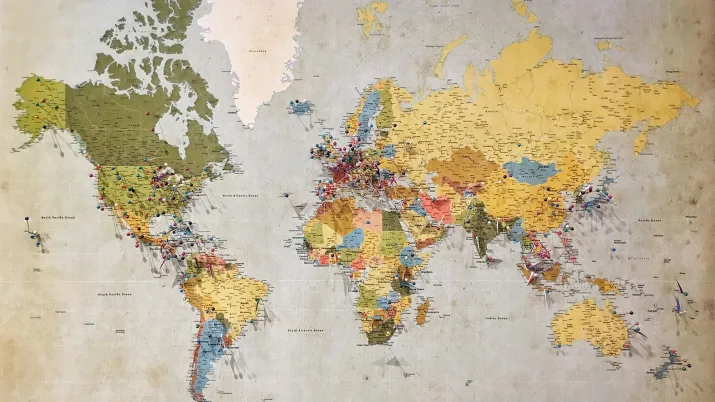
The Track Adapt research project aims to develop a new methodology, based on the GAP-Track monitoring system, to closely assess progress on urban adaptation to climate change. It will help build a shared understanding of adaptation challenges with local stakeholders in the cities of Cape Town and Nelson Mandela Bay (South Africa), and identify effective, context-specific adaptation pathways.
Context
Heatwaves, intense rainfall, prolonged droughts… As climate risks intensify, it is increasingly important to know whether adaptation measures implemented at the local level are actually reducing vulnerabilities and risks. Yet international debate remains largely focused on global indicators, such as the proportion of agricultural area using climate adaptation practices and technologies, or the proportion of population using climate-resilient water services. These indicators are useful but insufficient to capture local contexts, long-term trade-offs, and the risk of maladaptation—that is, measures that, paradoxically, may increase vulnerability rather than reduce it—faced by these territories.
In South Africa, Cape Town and Nelson Mandela Bay are particularly exposed to climate risks: both cities face significant pressures linked to water scarcity, heatwaves, coastal erosion and coastal flooding. Beyond the material consequences of these risks, the challenge is also political: how can the visions, values, and interests of multiple stakeholders—municipalities, scientists, practitioners, civil society, communities, and the private sector—be reconciled to build robust and equitable adaptation pathways?
Objectives
To track progress on urban climate change adaptation, the Track Adapt research project aims to adapt the GAP-Track methodology (developed by IDDRI with support from AFD and ADEME), making it relevant at the urban scale, usable by relevant stakeholders, and replicable. To this end, the research team is working with stakeholders in two pilot cities: Cape Town and Nelson Mandela Bay.
Track Adapt focuses on three main questions:
- How can the tool be adapted to the metropolitan scale?
- What progress, gaps and needs emerge in two priority areas for these two cities: water security in the face of drought and heat, and coastal adaptation to erosion and flooding?
- How can regular assessment of adaptation measures make it possible to compare progress over time and across cities?
This action-research will be particularly valuable to development actors, as it enables a shift from monitoring focused on plans and indicators toward a shared understanding of what actually reduces risk. It will help municipalities, AFD and their partners prioritize actions, strengthen capacities, guide financing, and inform dialogue on more equitable adaptation pathways.
Track Adapt contributes to AFD's efforts to strengthen urban adaptation, inform public policy dialogue, and direct financing toward relevant and effective solutions
Method
In Cape Town and Nelson Mandela Bay, technical, institutional, and academic experts, as well as civil society and economic actors, will assess the progress and limitations of adaptation using a matrix structured around six dimensions: risk knowledge, plans, actions, capacities, evidence of risk reduction and adaptation pathways.
The project will bring together complementary expertise:
- The African Climate & Development Initiative, affiliated with the University of Cape Town (ACDI-UCT), will lead local engagement, stakeholder dialogue, and methodological development;
- IDDRI will provide methodological expertise on GAP-Track;
- Local stakeholders will validate the methodology and share experiential knowledge;
- AFD will provide scientific input to adapt GAP-Track to the local context, facilitate scientific outreach toward concrete adaptation projects—in South Africa and other regions of operation—and share experience with French cities.
Learning Labs will translate research findings into priority actions, financing options, and replicable lessons.
Expected results
Expected outcomes include a methodological note on applying GAP-Track at the urban level, participatory assessments on water and coastal issues in Cape Town and Nelson Mandela Bay, publications (project report, policy brief, research article, etc.), and multi-stakeholder workshops.
The project also aims to strengthen the capacities of municipal actors on adaptation; create a space for dialogue among scientists, practitioners, and decision-makers; and support the identification of investment priorities to bridge the gap between adaptation needs and the responses currently in place.
Want to stay up to date with AFD’s research news?
Contact
-
Christophe BUFFET
Research Officer on Adaptation
Discover other research projects
In a Middle East undergoing profound reconfiguration, while Lebanon, Syria and Gaza face massive destruction across their territories, this observatory aims to analyse the dynamics and modalities of the reconstruction processes currently taking shape. These comparative insights will enable AFD and its partners to better understand these operating environments and the dynamics among the actors involved, in order to act effectively.
Context
Lebanon, Syria, Gaza: the Middle East is home to some of the world's most complex reconstruction efforts, taking place in conflict and post-conflict settings and involving significant financing challenges. For Syria alone, the World Bank estimates reconstruction costs at 216 billion dollars.
However, the challenges are not solely financial or technical: these reconstruction processes unfold within complex political, economic and social environments, involving many stakeholders whose interests and approaches may sometimes diverge. To engage effectively in this complex geopolitical landscape, a thorough understanding of the operating environments is essential – not only for AFD Group, but also for other development actors.
Objectives
Led by IFRI and coordinated by AFD, this observatory project analyses the state of destruction and the prospects for reconstruction across three territories: Gaza, Lebanon and Syria. Its aims to :
- Understand the local dynamics (social, political and economic) of reconstruction : What are the actual needs? What is the state of the social fabric? Who are the key stakeholders and how do they interact?
- Identify practical and feasible reconstruction pathways : What positions are the governments of these countries taking? What role can the private sector play, and how can public-private partnerships be structured? What role can civil society organisations and diasporas play?
- Compare the positioning of external actors (European institutions and states, Israel, the United States, Gulf countries, Turkey, China, Iran and Russia) : What reconstruction plans are being proposed, and what is the level of their involvement? How do diplomacy, reconstruction and economic interests interact? Do these actors prioritise humanitarian assistance or reconstruction? What is France’s position?
Method
To stay as close as possible to developments in this fast-moving context, a monitoring system will be established to map reconstruction projections and track decisions made by the various countries involved. IFRI will produce maps whenever relevant to support a better understanding of the broader challenges.
Three field missions will be carried out directly by IFRI researchers and/or researchers based in the region. The methodology will primarily rely on interviews, conducted either in person or remotely when travel is not possible. Syria is a particularly relevant case in this regard, as territorial disparities pose a major challenge for operators.
Operating in an interactive manner, the observatory will remain open to regular and on-request exchanges with French institutions that share an interest in these questions.
Expected results
The project deliverables will include:
- Field mission reports with an oral presentation of findings;
- Publications on cross-cutting themes within IFRI’s publication series;
- A final report, covering all three reconstruction efforts and framed around a central research question, published in the collections of Éditions Agence française de développement;
- A final conference that may introduce comparative perspectives (Ukraine, Africa).
Contacts
- Dorothée SCHMID, Program Manager for Turkey/the Middle East, IFRI
- Elodie RICHE, Research Officer, AFD
Want to stay up to date with AFD’s research news?
Discover other research projects
When Research Informs Public Action: A Toolkit to Rethink Monitoring and Evaluation
Completed
2020 - 2025
- Read more about Managing Urban commons in Brazil by drawing on Italian legal and participatory tools
This project aims to adapt legal and participatory tools developed in Italy to the Brazilian context in order to support citizen-led initiatives for managing urban commons. It is based on field studies and pilot initiatives in the cities of Goiânia and Goiás, with the objective of strengthening institutional recognition of local cooperative practices.
Context
In many Brazilian cities, residents spontaneously organize to collectively manage spaces, services, or resources: community gardens, building occupations, and cultural or solidarity-based initiatives. These practices, often referred to as “urban commons,” reflect strong civic engagement in Brazil, yet they remain insufficiently recognized by institutions. The current legal framework primarily favors public–private partnerships, often associated with the privatization of urban services.
In Italy, several cities have found concrete responses to this challenge. Since the 2000s, municipal regulations have enabled citizens to officially collaborate with authorities to take care of urban commons (public spaces, facilities, and heritage). More than 200 cities have adopted this model, which provides a legal framework without commodifying the spaces, resources, and services concerned.
It is within this context that this research project takes place. It is conducted in two cities in the state of Goiás, where strong community dynamics already exist (associations, rural communities, and cultural initiatives). More broadly, the project aligns with AFD’s research priorities on commons and citizen participation. It also contributes to AFD’s broader priorities related to strengthening local governance, citizen participation, social cohesion, and sustainable development.
Read also : How can the Commons approach transform Brazil?
Objectives
The central research question is: how to create an institutional framework that recognizes and supports these citizen-led practices without turning them into purely market-based services?
To address this, the project seeks to understand how residents in the cities of Goiânia and Goiás collectively take care of their spaces and resources. It also aims to equip local stakeholders with solutions—particularly legal tools—inspired by the Italian experience but adapted to the Brazilian context.
This will take the form of a mapping of local initiatives, the organization of workshops with relevant stakeholders, and the development of a proposed municipal regulation on urban commons. These outputs can help local authorities better support grassroots initiatives, strengthen citizen participation, and develop more inclusive public policies at lower cost.
Method
The project is based on an action-research approach: in addition to fieldwork, interviews, and observations, the research teams organize participatory workshops with residents, associations, and local authorities. A collaborative mapping exercise will document existing practices, while case studies will enable comparisons between Brazilian and Italian experiences. In a second phase, workshops will support the co-construction of concrete initiatives with local stakeholders, and seminars will foster dialogue between researchers, citizens, and policymakers.
The project draws on the expertise of two partners, the Federal University of Goiás and the Polytechnic University of Turin (Politecnico di Torino — PoliTo), as well as the experience developed within the Italian laboratory LABSUS, which specializes in regulations on commons. Local partners (civil society organizations and municipalities) are fully involved.
Expected results
In addition to scientific outputs, the project includes capacity-building activities for local partners through workshops and collaborative work. It will also deliver several outputs directly useful for local authorities:
- A collaborative mapping of urban commons practices
- A practical guide with a toolkit for local stakeholders
- A pilot project co-constructed with a citizen initiative
- A policy brief proposing a regulation on urban commons
A range of activities will support the dissemination of these tools and results: exhibitions and public events, an online platform, publications.
These outputs will provide local authorities with concrete levers to better support urban commons and will contribute to the broader debate on participatory urban policies in Brazil.
The teams are engaged in a collective dynamic led by La Coop des Communs, the Casa Comum platform, and AFD. The objective is to build a transnational learning community by sharing ongoing work, capitalizing on each other’s experiences, and producing knowledge on the links between commons, citizen participation, and the transformation of public action.This network brings together complementary profiles—researchers, civil society actors, and public decision-makers involved in these initiatives—from Brazil, Colombia, and Europe. Supported by meetings held in Brazil and Italy, this dynamic will lead to a collective publication, currently in preparation, which will compare and contextualize the various research projects undertaken.
Want to stay up to date with AFD’s research news?
Contact
-
Stéphanie LEYRONAS
Research Officer