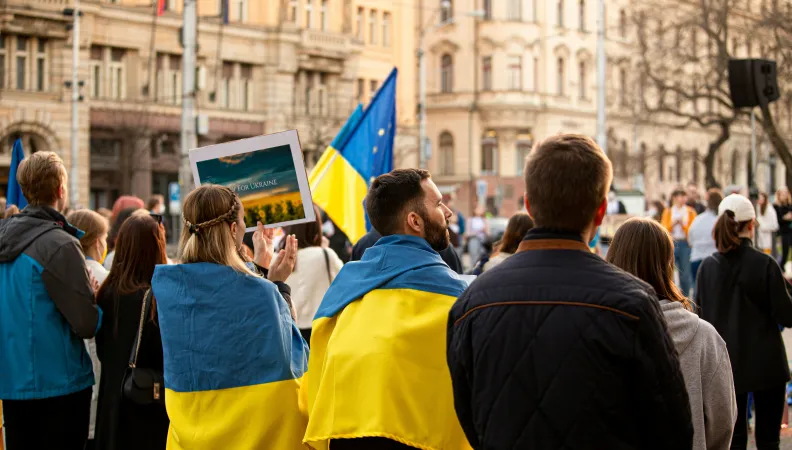
 Ukraine is today at the heart of the priorities of many French public and development actors, yet academic expertise on the country remains scattered and has little visibility. Backed by AFD, the Observatory of Contemporary Ukraine supports Francophone academic research around one central question: how can we think about and prepare for the post-war period in Ukraine?
Context
The war in Ukraine, ongoing for more than a decade, is generating a growing need for knowledge about the country. Indeed, in order to act, many French public, civil-society, and media actors – including AFD – must draw on solid, up-to-date expertise. Yet while many researchers work on contemporary Ukraine, they are scattered across different research units with varied geographic and thematic focuses. Moreover, a significant proportion of them are in precarious employment situations, which reduces their visibility. The challenge is therefore twofold: to structure and strengthen an academic network, while better mobilizing its members' expertise to address the challenges of the post-war period.
Read also (in french)

Objectives
Supported by AFD, the French Ministry of Armed Forces, and the French Ministry for Europe and Foreign Affairs, the Observatory of Contemporary Ukraine was launched to address a twofold challenge: structuring a network of Francophone researchers in Ukrainian studies, and mobilizing their expertise to better respond to requests from French public authorities. For AFD Group, which operates in Ukraine, this high-quality expertise is essential to inform its action.
The Observatory of Contemporary Ukraine organizes its work around one central question: what are the key issues for understanding Ukraine’s post-war future? Two complementary strands seek to decode the country's profound transformations:
- Military dimension and the transition out of war: the complexity of mobilization and demobilization processes; changes in the practices and means of warfare; and issues relating to reconstruction, demographic trends, and memory work;
- Structural transformations (economic, social, etc.) of Ukrainian society in this context of war.
The Observatory will seek both to better disseminate and to deepen existing work, while encouraging the exploration of emerging topics that remain little documented
Method
To carry out its mission, the Observatory will develop a range of tools:
- Scientific monitoring of knowledge produced on Ukraine;
- Mapping of Francophone researchers in Ukrainian studies to build a network of specialists;
- Organization of events to foster dialogue between academia and public authorities and public-interest actors;
- Expertise: facilitating and coordinating the production of studies and other forms of expert input at the request of public authorities;
- Information: producing analytical briefs, organizing scientific and outreach events, and promoting researchers to the media.
Expected results
Over two years, the research team will produce or organize, in coordination with AFD:
- Three seminars a year, one of which will be hosted at AFD and will result in a policy paper;
- Ten briefs a year for the general public, published on the Observatory of Contemporary Ukraine's website;
- An annual thematic conference, for both academic and operational audiences.;
At the end of the project, a joint discussion will be organized with the Observatory on Reconstruction in the Middle East, another AFD-supported research project on post-conflict reconstruction issues.
Learn More (in french)

Contacts
- Anna Colin Lebedev, Associate professor of political science at the University of Paris-Nanterre and scientific director of the Observatory on Contemporary Ukraine
- Bertrand de Franqueville, Ph.D. in political science from the University of Ottawa and chief operating officer of the Observatory on Contemporary Ukraine
- Elodie Riche, Research officer, AFD
Want to stay up to date with AFD’s research news?

Discover other research projects
When Research Informs Public Action: A Toolkit to Rethink Monitoring and Evaluation
Completed
2020 - 2025

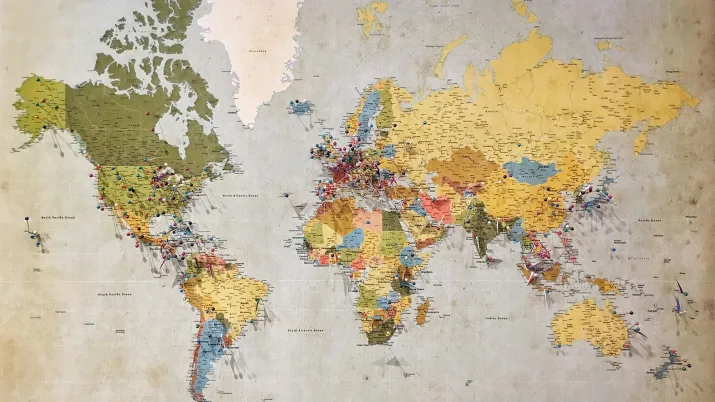
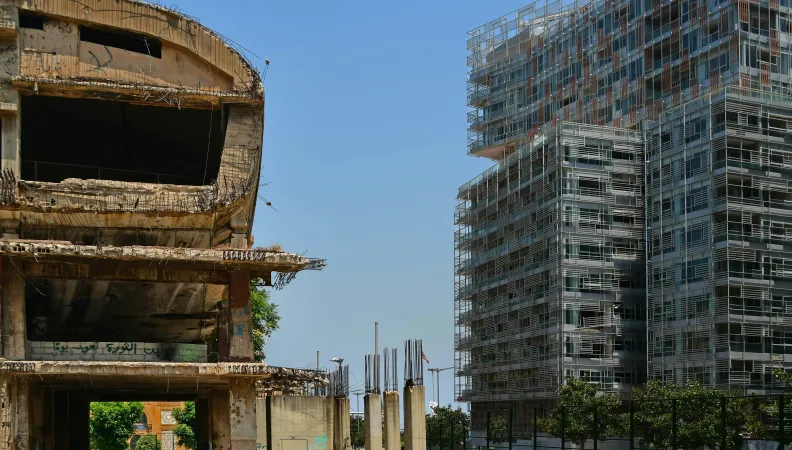 In a Middle East undergoing profound reconfiguration, while Lebanon, Syria and Gaza face massive destruction across their territories, this observatory aims to analyse the dynamics and modalities of the reconstruction processes currently taking shape. These comparative insights will enable AFD and its partners to better understand these operating environments and the dynamics among the actors involved, in order to act effectively.
Context
Lebanon, Syria, Gaza: the Middle East is home to some of the world's most complex reconstruction efforts, taking place in conflict and post-conflict settings and involving significant financing challenges. For Syria alone, the World Bank estimates reconstruction costs at 216 billion dollars.
However, the challenges are not solely financial or technical: these reconstruction processes unfold within complex political, economic and social environments, involving many stakeholders whose interests and approaches may sometimes diverge. To engage effectively in this complex geopolitical landscape, a thorough understanding of the operating environments is essential – not only for AFD Group, but also for other development actors.
Objectives
Led by IFRI and coordinated by AFD, this observatory project analyses the state of destruction and the prospects for reconstruction across three territories: Gaza, Lebanon and Syria. Its aims to :
- Understand the local dynamics (social, political and economic) of reconstruction : What are the actual needs? What is the state of the social fabric? Who are the key stakeholders and how do they interact?
- Identify practical and feasible reconstruction pathways : What positions are the governments of these countries taking? What role can the private sector play, and how can public-private partnerships be structured? What role can civil society organisations and diasporas play?
- Compare the positioning of external actors (European institutions and states, Israel, the United States, Gulf countries, Turkey, China, Iran and Russia) : What reconstruction plans are being proposed, and what is the level of their involvement? How do diplomacy, reconstruction and economic interests interact? Do these actors prioritise humanitarian assistance or reconstruction? What is France’s position?
Method
To stay as close as possible to developments in this fast-moving context, a monitoring system will be established to map reconstruction projections and track decisions made by the various countries involved. IFRI will produce maps whenever relevant to support a better understanding of the broader challenges.
Three field missions will be carried out directly by IFRI researchers and/or researchers based in the region. The methodology will primarily rely on interviews, conducted either in person or remotely when travel is not possible. Syria is a particularly relevant case in this regard, as territorial disparities pose a major challenge for operators.
Operating in an interactive manner, the observatory will remain open to regular and on-request exchanges with French institutions that share an interest in these questions.
Expected results
The project deliverables will include:
- Field mission reports with an oral presentation of findings;
- Publications on cross-cutting themes within IFRI’s publication series;
- A final report, covering all three reconstruction efforts and framed around a central research question, published in the collections of Éditions Agence française de développement;
- A final conference that may introduce comparative perspectives (Ukraine, Africa).
Contacts
- Dorothée SCHMID, Program Manager for Turkey/the Middle East, IFRI
- Elodie RICHE, Research Officer, AFD
Want to stay up to date with AFD’s research news?
Discover other research projects
When Research Informs Public Action: A Toolkit to Rethink Monitoring and Evaluation
Completed
2020 - 2025