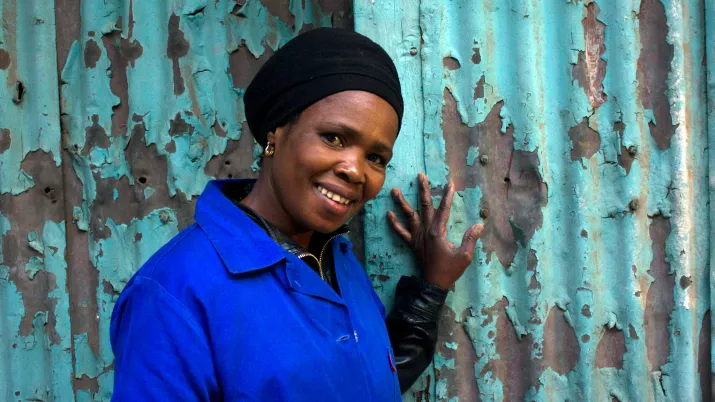
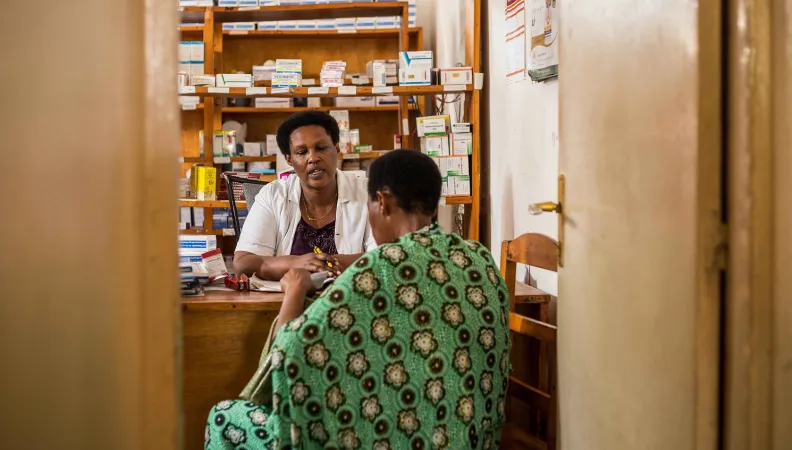
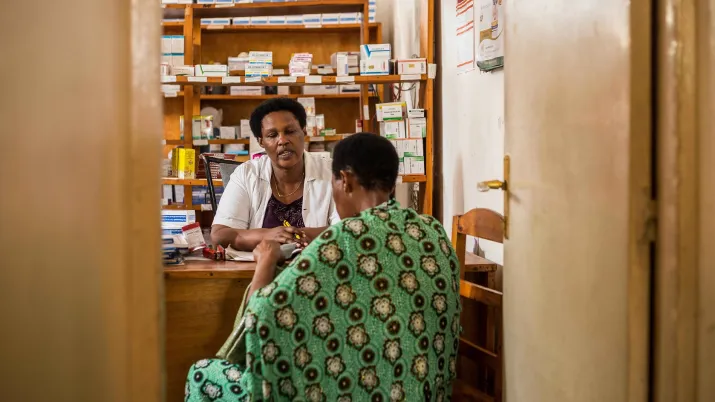
 Africa remains a young continent. However, the ongoing demographic transitions are accompanied by an anticipated aging population — and in some countries, this process has already begun. Although a wide variety of situations coexist across the continent, the growing number of older people will require significant adjustments to public policies, including fiscal, health, and social measures.
Context
In many African countries, older people still represent a very small share of the population (3% in sub-Saharan Africa and 5.6% in North African countries). For a long time, they have been largely overlooked by public policies, which have focused instead on the most urgent needs of economic, social, and health development — primarily targeting children and young adults.
However, the number of older people is increasing — not only in absolute terms but soon also in relative terms, with aging projected to occur more rapidly than in other regions. The challenge now is to design and implement appropriate public policies to support this demographic shift, particularly in the areas of health and social protection.
New forms of coverage and protection are emerging — or becoming essential — such as cash transfers, which complement family-based solidarity systems, free healthcare and services for older adults, the expansion of so-called universal pension and retirement schemes, and more broadly, private support systems on which most older people on the continent must still rely.
Objectives
This research project provides a framework for understanding population aging and related public policies across the African continent, from a comparative perspective. It examines the aging process, its associated challenges, the public policies addressing it, and the institutional frameworks in various countries, focusing on emblematic case studies that reflect diverse situations (South Africa, Cameroon, Cape Verde, Kenya, Morocco, and Senegal). The project also includes targeted analyses based on recent data, highlighting the contributions of demographic research to issues of health and social protection (notably pensions) for older adults.
The project resulted in a valuable overview for policymakers in AFD’s partner countries, contributing to broader reflections on the conditions under which different public policy models may or may not be replicated across the African continent.
Method
The project is based on a comparative analysis of secondary demographic data drawn from existing sources — including research papers, reports, and scientific literature. By presenting the different trajectories of demographic transitions, it offers an overview of aging across the continent, including its timing and context, and explores the associated challenges for both national and local public policies. It highlights regional, national, and subnational variations in aging, in order to identify the areas that are either most advanced in this process or experiencing the fastest pace of change.
Focused case studies on a selection of countries representing different situations provide a systematic critical review along the following lines:
- a socio-demographic and health overview;
- a description of the institutional framework and public policies in place;
- a critical analysis of the social and health-related challenges of the aging process;
- and an exploration of how aging is transforming family structures — particularly regarding intergenerational transfers, migration patterns, and women’s labor participation.
Results
The research project led to the following publications:
- The publication of the research paper “Africa Facing Its Aging Population: What Are the Challenges for Public Policy?” (in French, June 2024);
- The release of “How can healthcare for older people in sub-Saharan Africa be improved?” (April 2024);
- The publication of “Health Statistics on Older Adults in Sub-Saharan Africa: A Literature Review” (in French).
In July 2023, a webinar from the Research Conversations series presented the project’s initial findings (in French only):
Research findings
Africa is expected to face the challenge of an aging population in the coming decades. The first and foremost challenge lies in expanding social protection coverage, which is currently the lowest in the world: only 17% of the population is covered. This low rate is partly due to the predominance of the informal economy, which hinders the development of a contributory social protection system — particularly in rural areas. There is now a pressing need to strengthen public policies aimed at expanding social protection to a broader share of the population, both in rural and urban areas.
However, the evolution of social protection systems — particularly in health and pensions — rests on several key pillars that remain uncertain and have historically been prerequisites for their expansion:
- First, the effective collection and use of tax revenues to finance social protection;
- Second, the promotion of stronger links between pension and health coverage;
- And finally, sustained economic growth driven by a development model — historically industrial and manufacturing-based — that enabled the establishment of such public policies.
Yet in Africa, this economic model, centered on formal employment, has not taken root. Moreover, the impacts of climate change are raising fundamental questions about this development path, making it even more difficult to design and implement aging-related public policies — just as they are becoming increasingly necessary.
READ OUR RESEARCHER'S INTERVIEW
Serge Rabier: ‘Many African Countries Have No Social Protection Programmes For Elderly’
Want to stay updated on AFD’s latest research?

Contact
-
Serge RABIER
Research Officer, Social Demographer

Discover other research projects
 Legal notice EU (project) South Africa has embarked on the necessary path of a just transition, which will result in job losses in the coal sector, at a time when unemployment in the country is already very high. AFD, in partnership with the REAL Centre of the Wits University, is conducting a detailed analysis of the skills ecosystem that could feed into the various initiatives to support local authorities and communities of the Nkangala district in meeting this challenge.
Context
With one of the highest youth unemployment rates in the world, South Africa’s planning for a just transition needs to take into account the vulnerabilities of its youth cohorts, especially those that can be qualified as “not in education, employment or training” (NEET). For example, a recent study conducted in the framework of the EU-AFD Research Facility on Inequalities revealed that the Mpumalanga province, the region with the highest exposure to the coal exit, has had a NEET youth rate of over 37% for the past decade, with almost three-quarters of them living in income-poor households.
Since 2019, the National Business Initiative (NBI) has been spearheading a multi-faceted and multi-sector partnership, which focuses on expanding and growing pathways for young people to access Installation, Repair and Maintenance (IRM) occupations. The IRM initiative is strategically aligned to various initiatives of the government to drive inclusive recovery and revitalisation of the economy, particularly in the aftermath of the Covid-19 pandemic. It has subsequently been incorporated as part of the Presidential Youth Employment Intervention (PYEI). The Initiative works on the premise that, by supporting township-based IRM entrepreneurs to strengthen and grow their businesses, and by linking them to localised market opportunities, there will be a concomitant increase in the demand for skilled labour, which could lead to the creation of employment opportunities. Therefore, it is a direct response to the youth unemployment challenge.
Collaborating closely with the NBI, the Centre of Researching Education and Labor (REAL Centre) contributed its expertise to the comprehensive analysis of the four key regions identified in Phase 1 of the IRM skills ecosystem mapping project: Atlantis (Western Cape), Mandeni (KwaZulu-Natal), Mamelodi (Gauteng), and Kathorus (Gauteng). Building upon the success of this initial phase, the REAL Centre will now expand the project's scope to the Nkangala district municipality, which is one of the three districts of Mpumalanga province.
This project is part of the Extension of the EU-AFD Research Facility on Inequalities. Coordinated by AFD and financed by the European Commission, the Extension of the Facility will contribute to the development of public policies aimed at reducing inequalities in four countries: South Africa, Mexico, Colombia and Indonesia over the period 2021-2025.
This work is also part of AFD's dialogue with the South African authorities on the just transition and the reduction of inequalities.
Objectives
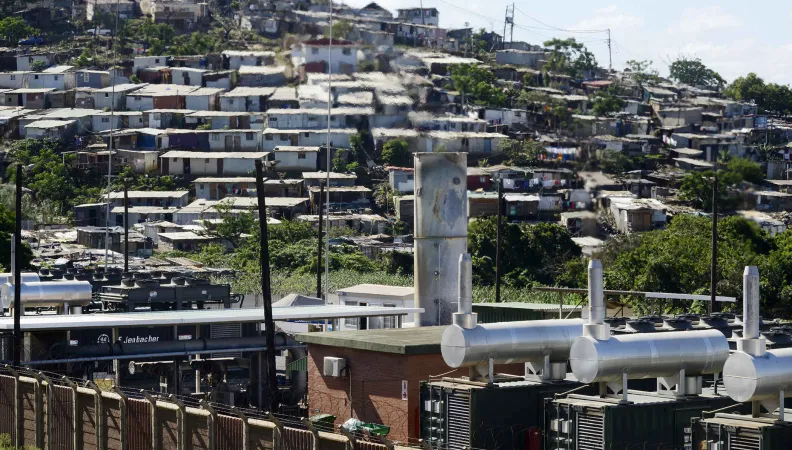
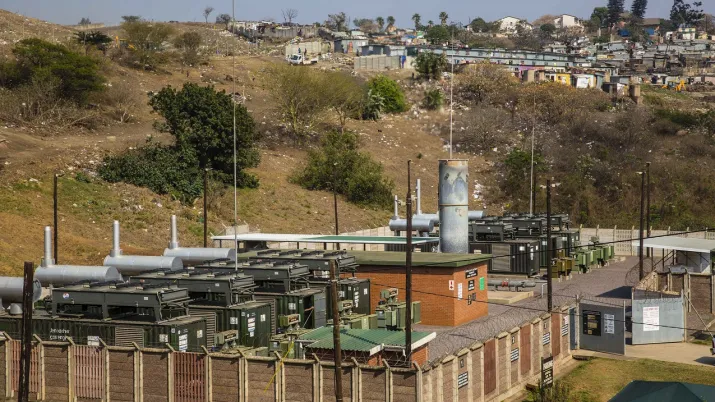
This research project will conduct a detailed analysis of the skills ecosystem that could feed into the various initiatives to support local authorities and communities in the Nkangala district, which concentrates the coal-fired power plants that will be closed as a result of just transition policies.
Phase 1 of the project revealed that an IRM skills ecosystem mapping project is crucial for addressing inequality by thoroughly analysing the socioeconomic and demographic profiles of diverse townships in South Africa.
By identifying specific skill gaps and understanding the challenges faced by Small, Medium, and Micro Enterprises (SMMEs) in these areas, the study can inform targeted interventions aimed at reducing inequality in access to employment and economic opportunities.
Furthermore, by examining the role of Technical and Vocational Education and Training (TVET) institutions and conducting a comprehensive literature review, the study ensures that proposed interventions are evidence-based and tailored to the needs of the communities studied.
Ultimately, the study's approach of generating actionable insights in collaboration with stakeholders aims to drive meaningful impact and promote inclusive economic development in underserved regions, contributing to efforts to reduce inequality, to advance the principles of just transition and to foster a more inclusive society.
Method
Building on Phase 1 of the IRM skills ecosystem mapping, researchers will apply the following method:
- They will set the context for the Nkangala district through desktop research and a few selected key informant interviews;
- They will collect primary data and set up fieldwork through stakeholder mapping workshops and key informant interviews to collect data;
- They will then provide an initial narrative on the overarching local skills ecosystem from the site mapping exercise and will draw on the document review and contextual work on the Nkangala district. Drawing on Spours’ (2019) work on ecosystems, they will use three core elements: the dimensions of verticalities, horizontalities and mediation to understand and analyse the skills ecosystem Nkangala district and to guide the cross-site analysis, building on the work undertaken during Phase 1.
Research findings
You will find below the different research papers related to this project:
Contact
-
Anda DAVID
Economist, scientific coordinator of the EU-AFD Facility on Inequalities

Discover other research projects

Evaluation of local stimulus effects in South Africa: Jobs and grants programmes
Completed
2022 - 2023
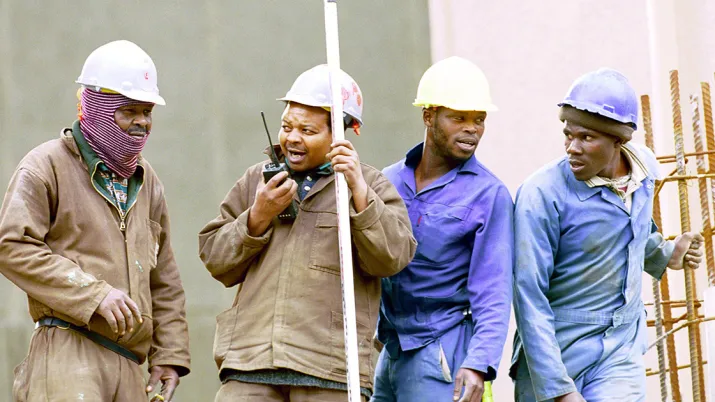
 Extreme weather events resulting from the effects of climate change coupled with a global call for countries to reduce their greenhouse gas (GHG) emissions imply that the transition to a “green” economy is non-negotiable. The societal and policy discussions have moved on to trying to understand the transition possibilities and the economic and social implications of these in each country’s context. This research project will focus on the case of South Africa.
Context
South Africa is one of the largest GHG emitting countries due to its heavy reliance on coal for most of its energy needs. The South African government is cognisant of the fact that shifting away from carbon-intensive forms of technology to more sustainable ways of production means that some jobs will be destroyed, and new ones will be created. A concern therefore for policy makers is ensuring that the transition is just and that it will not exacerbate existing inequalities.
South Africa comes into this employment transition discussion facing a triple challenge: persistent high unemployment, inequality, and poverty. This situation has worsened since the 2007-2008 financial crisis and was further exacerbated by the recent COVID-19 pandemic. This complicates the discussion of an optimal social transition to a “green” economy.
This project is part of a wider research program on the just transition in South Africa, conducted with several South African research centres and in close collaboration with the South African authorities.
FIND OUT MORE
Objectives
The project will carry out a study of the South African labour market with the aim of identifying the proportion and distribution of workers engaged in “green” jobs and “brown” jobs – in other words, jobs that are ecologically sustainable and jobs that are not. It will also examine the possibilities of transitioning labour from brown jobs into low emitting sectors.
Method
We will measure green intensity as the share of total tasks in an occupation that are green. We will also identify the share of workers in green jobs using employment information from surveys such as the Quarterly Labour Force Surveys (QLFSs) and the Census. Using industry level information on pollution, we will go further to identify occupations more likely to be in highly polluting sectors than in any other sectors. This will be described as brown jobs. Next, we will utilise occupational tasks, skills, and knowledge information from the O*NET dataset to identify important skills for brown and green jobs. This will enable us to estimate the probability of transitioning workers to green jobs. Finally, to map the location of green jobs, we will use employment information from the Census, the Community Survey, and the Spatial Tax data.
Contact
-
Anda DAVID
Economist, scientific coordinator of the EU-AFD Facility on Inequalities
Discover other research projects

 Legal notice EU (project) How could the Social Relief Distress grant be redesigned to maximize impact on poverty and unemployment reduction, while being sustainable in the longer term? The Extension of the EU-AFD Research Facility on Inequalities will seek to answer this question in partnership with SALDRU (University of Cape Town – Southern Africa Labour and Development Research Unit).
Context
South Africa’s Economic Reconstruction and Recovery Plan was launched in October 2020 by the Presidency in response to the economic impacts of the Covid-19 pandemic. Besides the Presidential Employment Stimulus program, it included emergency social protection measures, among which the introduction of a special Covid-19 Social Relief of Distress grant (SRD), providing ZAR350 per month for unemployed people not covered by any other form of support. The South African government now seeks to develop options for the future of SRD grant.
This project is part of the Extension of the EU-AFD Research Facility on Inequalities. Coordinated by AFD and financed by the European Commission, the Extension of the Facility will contribute to the development of public policies aimed at reducing inequalities in four countries: South Africa, Mexico, Colombia and Indonesia over the period 2021-2025.
Objectives
The objective of this research project is to produce motivated recommendations on how the SRD should be designed going forward into the longer term, in order to maximize the impact of the grant on employment outcomes and to ensure it effectively reduces poverty, while maintaining its cost to an acceptable level:
- To maximise the impact of the grant on employment, the project needs to understand how to design and label the grant to encourage its use for job search.
- To ensure the grant effectively reduces poverty, the project must figure out the most cost-effective way to target and assess the eligibility of recipients. Moreover, poverty reductions can be scaled up by determining measures that could encourage take up among the most disadvantaged.
Once these goals have been achieved, and in order to inform public decision-making, these findings must be communicated to a number of stakeholders in government and civil society.
This project is part of a wider research program conducted with several South African research centres and in close collaboration with the South African Presidency. Four other research projects analysing the externalities of the Covid-19 stimulus policy are currently being developed as part of the first pillar of the Extension's activities in South Africa.
Method
This research project uses the model generated to conduct the 2014/2015 fiscal incidence assessment and introduces updated data for 2019-2021. It simulates five scenarios around eligibility criteria, targeting mechanisms, value, disbursement model and conditionalities and computes the potential impact on poverty and employment outcomes.
Research findings
You will find below the research paper related to this project:
It is worth noting that another paper has been published on the implications of the SRD grant, funded by AFD outside the Research Facility on Inequalities: Systemic exclusion from a South African social assistance transfer (February 2024)
Contact
-
Anda DAVID
Economist, scientific coordinator of the EU-AFD Facility on Inequalities
Discover other research projects

Analyzing the employment effects of the “green economy” transition in South Africa
Completed
2023 - 2024