
Share the page
Western Balkans

Present in the Western Balkans since 2019, AFD’s mandate is to support the region’s convergence towards European Union standards and the implementation of the Paris Climate Agreement. In Albania, Bosnia and Herzegovina, Kosovo, North Macedonia, Montenegro and Serbia, AFD finances investments and essential reforms for the countries’ development, as well as technical cooperation programs, mainly through sovereign loans and delegated European financing, to support an inclusive, sustainable and low-carbon growth trajectory. Since 2019, AFD Group has committed more than €2 billion in the region.
Context
Located at the heart of the Balkan Peninsula, in south-eastern Europe and surrounded by European Union (EU) member states, the six Western Balkan countries are undergoing profound political, economic and social transformations.
These countries still have lower levels of development than the European Union, but their living standards have improved significantly in recent years. According to the United Nations Development Programme (UNDP), all six countries are now in the high human development category: Montenegro ranks 48th worldwide, Serbia 62nd, North Macedonia 68th, Albania 71st, and Bosnia and Herzegovina 74th.
Economically, the region remains dynamic but faces structural constraints, notably related to demographics, emigration, labor market pressures, investment needs, its strong exposure to European economic developments, and external shocks. After several years of sustained growth, the World Bank forecasts average growth of 2.8% for the Western Balkans as a whole in 2026.
The six countries have embarked, to varying degrees, on a process of rapprochement with the European Union. Albania, Montenegro, Serbia, North Macedonia and Bosnia and Herzegovina are candidate countries, while Kosovo submitted its application in 2022 and continues its rapprochement with the EU.
However, the situations remain very different: as of July 2026, Albania has opened all 33 negotiating chapters and began provisionally closing some of them in 2026; Montenegro has also opened all chapters and plans to provisionally close all chapters by the end of 2026.
Rapprochement with the European Union is a powerful driver of transformation for the region’s economies and institutions. It requires lasting reforms to embed EU democratic values and legal and good governance standards in political and economic systems.
Significant challenges remain in building a sustainable and fair development trajectory, particularly in education, employment and the fight against inequalities, in a context of emigration and rapid population aging. Investment needs in essential infrastructure and bringing it into line with European norms and standards are substantial. Governance and rule of law reforms are underway. The fight against climate change and the energy transition are also playing an increasingly important role in public policies.
The European Union has also strengthened its support for the Western Balkans through the Growth Plan for the Western Balkans, endowed with €6 billion for the 2024–2027 period, combining financing, reforms and progressive integration into the European Single Market.
AFD therefore supports Albania, Bosnia and Herzegovina, Kosovo, North Macedonia, Montenegro, and Serbia in their political, economic and social transformations towards EU standards and supports the implementation of their climate commitments. It finances projects through sovereign and non-sovereign loans, as well as technical cooperation programs and delegated European financing.
AFD Group has a 2025–2029 strategy for the Western Balkans, structured around four priorities: supporting the low-carbon transition, promoting resilient territorial development, supporting institutional reforms and mobilizing private investment.
AFD’s Western Balkans regional office, based in Serbia, has a presence in five of the six Western Balkan countries and is attached to the Regional Directorate for Enlargement and European Neighborhood.
Our approach
AFD and the Western Balkans: supporting an inclusive and sustainable growth trajectory
Climate action and investments supporting ecological and social transitions are at the heart of AFD’s mandate in the region.
We support Montenegro in its green transition through support for reforms and the financing of investments in the energy sector.
In Serbia, the program supporting the climate roadmap and green agenda, in partnership with the World Bank and KfW, supports reforms in the areas of energy, the environment, and green budgeting.
In the area of green growth, Proparco is providing a loan to ProCredit Bank in Serbia to support SMEs and green projects.
AFD also pays particular attention to the social and professional integration of young people and equal opportunities for women and men.
In Albania, AFD has supported the government through a loan and technical assistance to support public policies aimed at reducing gender inequality in access to economic opportunities.
Cities are central to the challenges of ecological transition, as they are both particularly vulnerable and able to act at the territorial level. AFD supports territorial planning and encourages the development of urban infrastructure, for sustainable urban management and greater resilience to climate change.
In the Western Balkans, AFD implemented the Smart City program with the municipalities of Tirana, Podgorica, Pristina and Skopje to develop local digital action plans. Completed in 2022, this technical assistance program supported the four capitals in defining Smart City strategies and action plans.
The objective was in particular to support these local authorities in their urban planning through a digital and climate-resilient approach, while fostering exchanges between cities in the region and French partners.
In Serbia, AFD promotes sustainable urban investments by local authorities.
Mobility is essential for people’s access to employment and essential services.
AFD operates in Serbia through the national solid waste management program, in partnership with the EBRD.
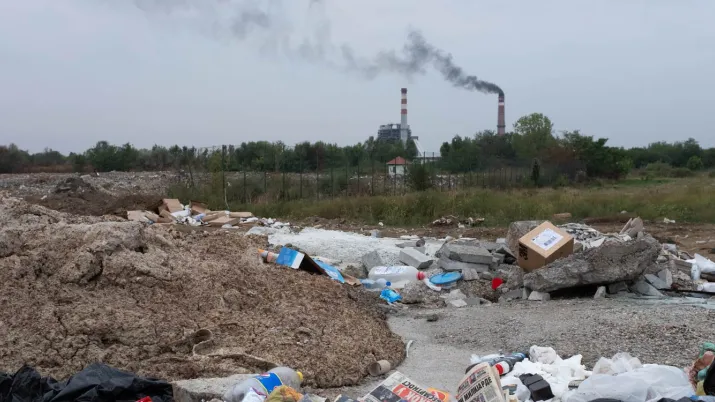
Reducing the environmental and health impact of waste is at the heart of the EU accession agenda and makes a significant contribution to improving living conditions.
We also work to promote the sustainable use of water resources and prioritize the optimization of water distribution networks and the renovation of sanitation infrastructure.
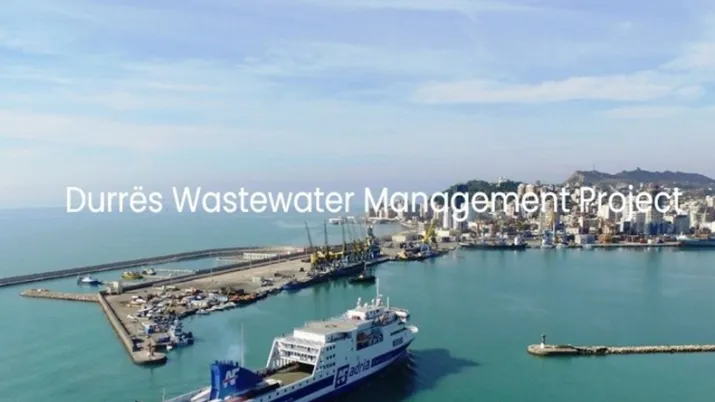
For example, we finance the rehabilitation and extension of the water supply network in Durrës, Albania. This project, financed through a sovereign loan, aims to sustainably improve access to drinking water and the quality of service in one of Albania’s main cities. It includes in particular the rehabilitation and extension of networks and the development of the city’s sanitation master plan.
AFD’s action focuses on universal access to efficient and decarbonized energy services. We support Western Balkan countries in their efforts to structure the electricity market, in line with the European Union’s Third Energy Package, thereby developing an appropriate regulatory framework to promote renewable energy and energy efficiency.
In partnership with KfW, AFD provided Albania with a sovereign loan accompanied by technical assistance to support institutional restructuring, the creation of the energy market and the diversification of the electricity mix. A second operation is envisaged to finance the second phase of this reform.
In North Macedonia, AFD also supports the energy transition and the development of more sustainable finance. The “Developing green and social finance in North Macedonia” project, committed for the 2023–2027 period, aims in particular to facilitate the financing of investments contributing to the energy transition and inclusive economic development.
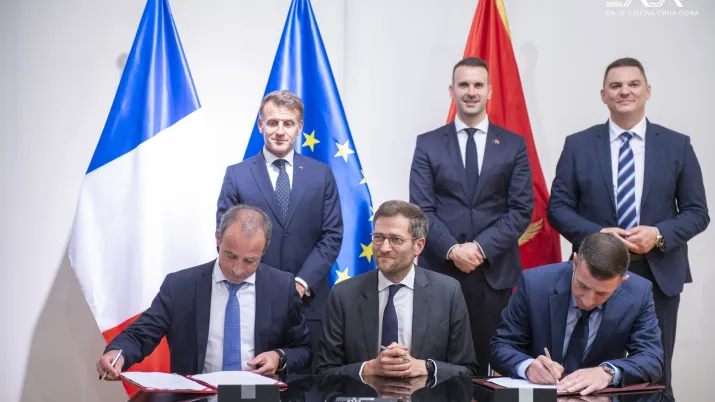
In Montenegro, AFD is also strengthening its action to modernize the electricity system. In June 2026, AFD, CEDIS and EDF International Networks signed a technical cooperation agreement aimed at modernizing the country’s electricity distribution network and strengthening the capacities needed for the energy transition.
The Western Balkans civil society support portfolio: e.g. “BOOST”, ALDA’s flagship project aims to promote the democratic, economic and social development of the Western Balkans in the context of EU enlargement, by supporting civil society in the areas of youth and entrepreneurship, the environment, and cultural heritage. Launched in 2024, it is co-financed by the EU to the tune of €750,000. BOOST has funded numerous projects and strengthened the capacities of several associations in urban and rural areas.
In terms of AFD’s activities, it helps create favorable conditions for mobilizing French expertise and companies by intervening upstream on public policies and investment preparation. In the energy sector, several peer-to-peer exchanges and technical cooperation initiatives have been established with recognized French players in the sector. In water and sanitation, French expertise is mobilized in the preparation and management of infrastructure. In waste and the circular economy, European financing delegated to AFD — particularly in Albania — helps disseminate European standards and prepare future infrastructure markets. More broadly, combining AFD and European financing, a technical assistance program implemented by Expertise France, and Treasury and Bpifrance instruments makes it possible to build an integrated French offering.
In the field
In the field
News & Press Releases
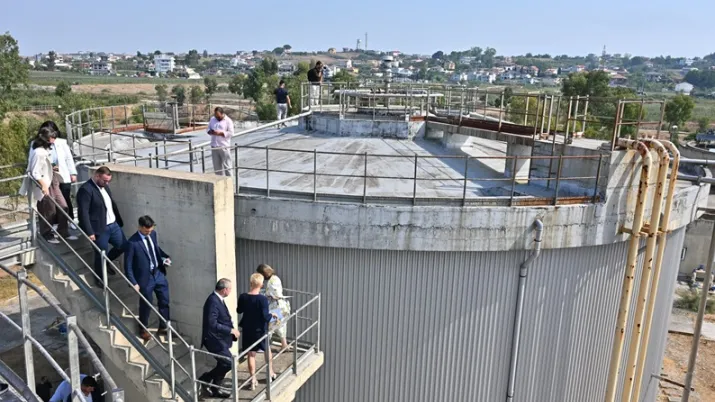
Serbia and Albania: projects driving closer integration with the European Union
Published on September 14, 2026

Publications & Media
Key figures
-
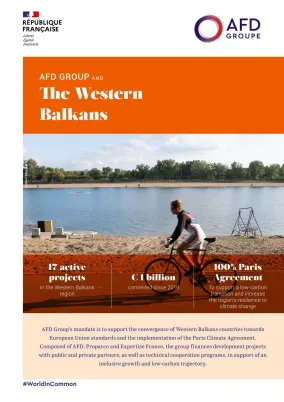
17 active projects
-
€2 billion committed since 2019
-
100% aligned with the Paris Agreement