Share the page

Integrated Development of Agriculture and Irrigation Programme (iDRIP)
Project
This project is carried out with the support of the European Union


-
Project start date
-
Status
Ongoing
-
Project end date
-
-
Project duration
-
5 years
-
AFD financing amount
-
€ 45 000 000
-
Global financing amount
-
€ 61 600 000
-
Country and region
-
Location
-
Moldova
-
Beneficiaries
-
Ministère de l’Agriculture et de l’Industrie alimentaire
-
Type of beneficiary
-
State

This project is carried out with the support of the European Union
The content of this project information sheet falls under the sole responsibility of the AFD and does not necessarily reflect the opinions of the European Union.
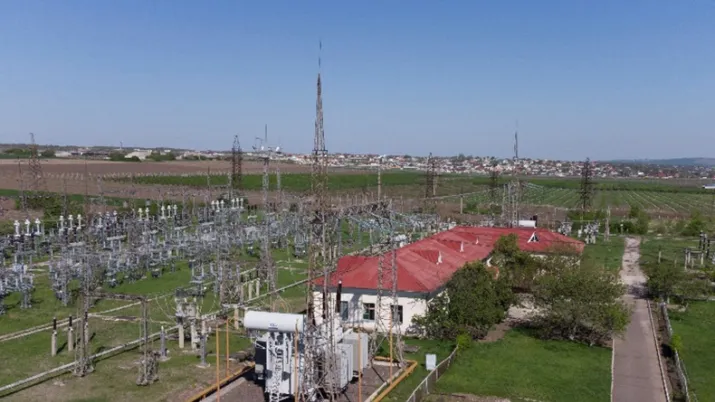
To improve the climate resilience of the agricultural sector, the project will rehabilitate two public irrigation systems and decentralised water harvesting structures. Equally important for lasting impact is strengthening the capacity of farmers, water user associations and national institutions, also supported within this framework.
Context
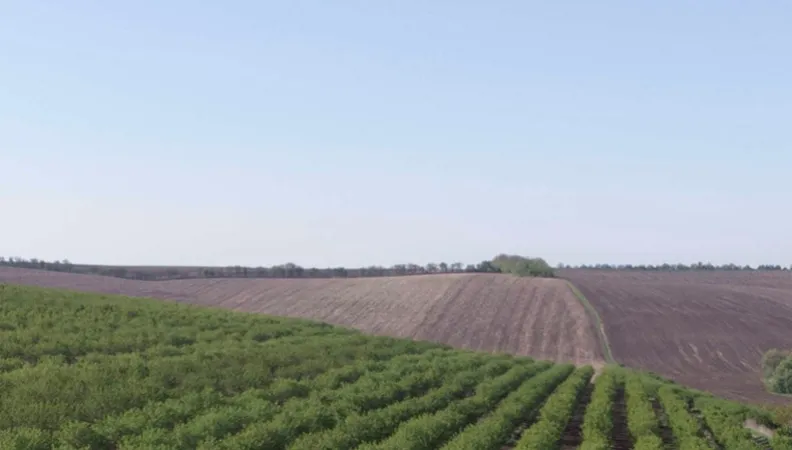
Moldova's agricultural sector has to contend with increasingly frequent droughts and heat waves that impact on crop yields, limit the scope for diversification and make farming a risky business. Public irrigation systems built before the 1990s are now largely non-functional. Despite the high potential offered by the quality of the soil, the agricultural sector is not very attractive to young people, and rural areas struggle to maintain an active population.
Description
The project aims to increase the resilience of the agricultural sector to climate change and revitalize rural areas. iDRIP is organized into 4 main components:
1. Rehabilitation of the infrastructure of two public irrigation systems, Calinesti (1,262 ha) and Criulenii de Sus (1,794 ha).
2. Establishment of a financial mechanism for private farmers or local authorities to support the development of small-scale rainwater storage and irrigation structures. The target area is at least 750 ha.
3. Development of farmers' capacities to adopt climate-smart practices and diversify production systems towards higher value crops. Support is also provided to assist the water users' associations of Calinesti and Criulenii de Sus in setting up a reliable water service adapted to the needs of irrigators.
4. Institutional strengthening and assistance to project management.
Results
By disseminating and facilitating the adoption of sustainable climate smart agricultural practices, encouraging cooperation between stakeholders and re-establishing the conditions for a reliable water service, the project will enable producers to diversify and develop more remunerative and less vulnerable production systems, helping make the agricultural sector more attractive for the young generation. The number of direct beneficiaries – households of supported farmers, their employees and capacity building recipients – is estimated at approximately 2,200. The project will, however, have a substantial indirect impact on all the populations of Criuleni and Calinesti, which are at least 10,500 people.
Implementation
The AFD loan of 45 million euros is complemented by a grant from the European Union (15 million euros) for investment and training actions for farmers, user associations and national institutions. The project will be implemented by the Ministry of Agriculture and Food Industry. Two national agencies, ANIF and ADMA, are mobilised, supported by the technical assistance provided by Expertise France, part of AFD-Group, as well as service and works providers recruited by competitive processes.
Sustainable Development Goals
Zero Hunger
Goal 2 aims to eliminate hunger and malnutrition by ensuring access to safe, nutritious, and sufficient food for all. It calls for sustainable and resilient food production systems and agricultural practices. Achieving this goal depends on progress in several other SDGs. Policymakers play a key role in promoting sustainable large-scale production systems and well-functioning food markets.