Share the page

Support Agricultural Education and Vocational Training – PAFAR
Project
This project is carried out with the support of the European Union


-
Project start date
-
Status
Ongoing
-
Project end date
-
-
Project duration
-
5 years
-
AFD financing amount
-
€ 70 000 000
-
Global financing amount
-
€ 74 700 000
-
Country and region
-
Location
-
Provinces of Uige, Cuanza Norte, Malange, Cuanza Sul, Huambo, Bié, Benguela, Namibe, Huila, Cuando Cubango, Moxico, Lunda Sul
-
Type of financing
-
Beneficiaries
-
Republic of Angola

This project is carried out with the support of the European Union
The content of this project information sheet falls under the sole responsibility of the AFD and does not necessarily reflect the opinions of the European Union.
AFD and the European Union are funding a project to reform agricultural vocational train-ing in order to meet the sector’s skills needs and reduce gender inequalities in rural areas.
Context
The technical education and vocational training system in Angola was largely destroyed by the civil war (1975–2002), including in the agricultural sector, which is critical for the country in terms of employment and for achieving the desired economic diversification away from oil and minerals. The shortage of well-trained agricultural technicians is one of the main obstacles to the sector’s development at all levels. However, vocational agricultural education is not only ill-suited to the needs of the agricultural sector (too theoretical, outdated, and insufficiently connected to the sector), but it also lacks the infrastructure and equipment required to deliver high-quality training.
Against this backdrop, AFD granted a loan of 35 million euros to the Angolan Government in December 2022 and mobilised a European Union delegation in December 2023 to finance a project to reform and rehabilitate the agricultural vocational training system. In October 2025, AFD granted additional funding of 35 million euros to the Angolan Government to enable PAFAR to fully achieve its objectives.
Description
The aim of the project is to support a reform of agricultural and rural training that meets the skills needs and strategic priorities of the agricultural sector, and to help reduce gender inequalities in rural areas. As such, it must help to reduce food insecurity and poverty in rural areas by facilitating the development of agricultural production and value chains, and the adoption of environmentally friendly farming practices. It must support the empowerment of women in rural areas and the employability of young people in the agricultural sector.
The project comprises four components:
-
Adapting training to the sector’s context and challenges
-
Improving the governance and regional integration of the ITAs
-
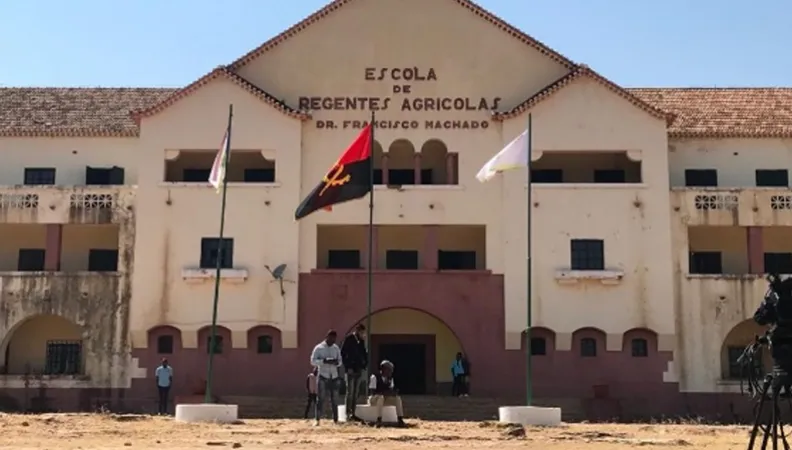
Upgrading and refurbishing the facilities of 10 ITAs ((Agricultural Technical Institutes)
-
Project steering, management and monitoring
The project is being implemented across the 10 active ITAs. The direct beneficiaries of the project are the students at the ITAs (approximately 6,000 per year, in 2021). Female students are a particular focus of the project, which aims to improve their access to training, their integration into the agricultural sector, and their study conditions. The curriculum overhaul also incorporates a gender perspective.
Impacts
-
Technical and vocational training programmes are tailored to the needs of stakeholders in the agricultural sector
-
The ITAs are integrated into their local communities and the governance of the agricultural and rural training system is improved
-
The ITAs’ infrastructure enables teaching to take place under suitable conditions and ensures the long-term preservation of assets
Outcomes achieved to date:
-
The new curriculum has been finalised and will be piloted in five ITAs at the start of the 2026 academic year.
-
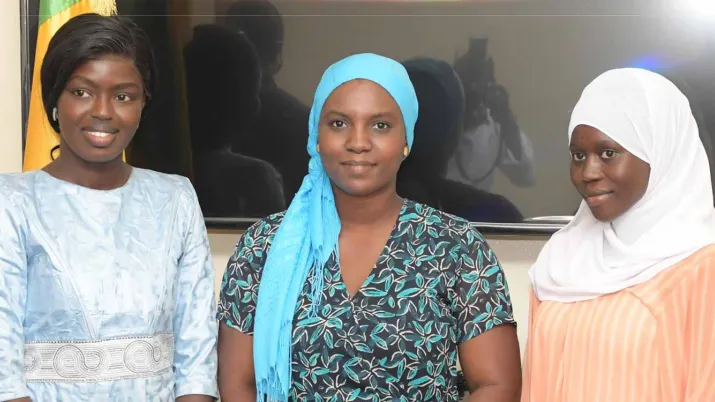
815 girls are receiving scholarships for the duration of their schooling
Sustainable Development Goals
Quality Education
Goal 4 calls for universal access to free, equitable, quality education at all stages of life, with particular emphasis on eliminating disparities related to gender and income. It also stresses the acquisition of basic and higher-level skills for living in a sustainable society. Targets include building and upgrading educational infrastructure, expanding scholarships for students from developing countries, and increasing the number of qualified teachers.