Share the page

Electricity Sector Improvement and Access Project (ESIAP)
Project

-
Project start date
-
Status
Ongoing
-
Project end date
-
-
Project duration
-
20 years
-
AFD financing amount
-
US$ 167 000 000
-
Global financing amount
-
US$ 397 000 000
-
Country and region
-
Location
-
Nationwide
-
Type of financing
-
Beneficiaries
-
Republic of Angola
-
Type of beneficiary
-
State

AFD is partnering with the World Bank to improve the operational performance of public utilities in the electricity sector and increase access to electricity in Angola.
Context
It is estimated that in 2022, only 48% of Angola’s population had access to electricity. Angola’s main challenges are the transmission and distribution of electricity to serve populations living outside major urban centers.
In addition, the sector faces numerous challenges: outdated infrastructure, unstable production amid rising demand, five independent power grids with no operational interconnections among themselves or with neighboring countries, and, overall, very poor operational and financial performance (significant losses, inadequate maintenance and collection capabilities).
The price of electricity in Angola remains very low compared to other countries in the region, thanks to substantial but unsustainable government subsidies, which make investments in electricity generation relatively unattractive to the private sector, despite the country’s potential for renewable energy.
The Angolan government has undertaken economic reforms aimed at reducing the public sector’s share of the economy, as well as reforming public finances—including a comprehensive reform of electricity rates—in order to ensure the sector’s financial sustainability and attract private investment.
Description
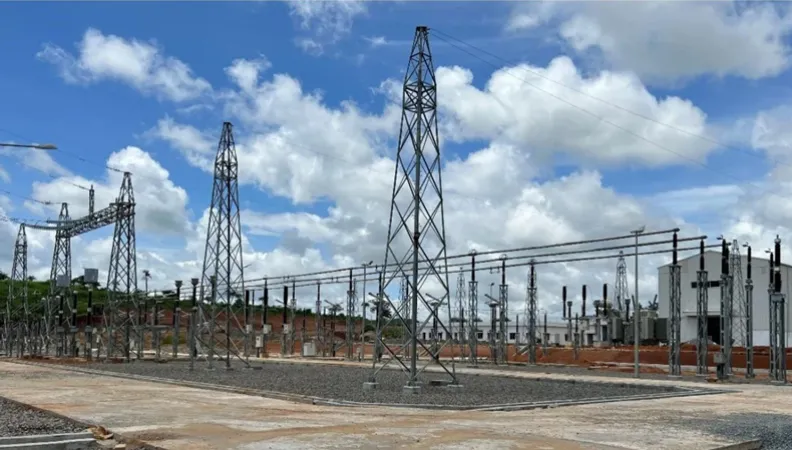
The goal of the ESIAP project is to ensure widespread and reliable electricity services for the Angolan population and businesses. The aim is to improve both access to electricity in various regions and the operational and commercial performance of the public utilities responsible for electricity generation (PRODEL), distribution (ENDE), and transmission (RNT).
To this end, the project supports the three public entities in their transition toward financial sustainability and reduced dependence on the government. Support for the public service reform process will help improve the investment climate for the private sector and enable progress toward the sectoral development goals set by the Angolan government.
The project consists of three components:
- Component 1: Expanding access to electricity and improving revenue collection (US$252 million, of which US$102 million comes from the IBRD and US$150 million from the AFD).
- Component 2: Improvement of electricity services (USD 104 million from the IBRD). This component funds infrastructure works, new tools and software, and capacity building to improve the electricity distribution and transmission services provided by RNT, with a view to ensuring a more efficient and reliable electricity supply.
- Component 3: Improvement of public utility planning, operations and maintenance, as well as project management capabilities (26 MUSD, of which 9 MUSD comes from the IBRD and 17 MUSD from the AFD).
Impacts
-
Upgrading and extension of the electricity network in Luanda, Benguela, Lubango and Huambo, and connection of 196,500 new customers;
-
15,000 industrial and commercial users covered by the RPP;
-
An improved telecommunications network for the transport sector;
-
Remote metering systems and other monitoring tools installed;
-
Capacity building across the entire electricity sector in Angola.
Sustainable Development Goals
Affordable and Clean Energy
Goal 7 lies at the heart of today’s major challenges and tomorrow’s opportunities. Access to sustainable energy is essential not only for fighting climate change, but also for job creation, housing, connectivity, safety, food production, and more. This SDG represents a clear opportunity to transform lives, economies, and the planet.