Share the page

Climate and Water Resilience in Angola (Reclima)
Project

-
Project start date
-
Status
Ongoing
-
Project end date
-
-
Project duration
-
5 years
-
AFD financing amount
-
€ 141 789 888
-
Country and region
-
Location
-
Huila, Cuando, Cubango, Kwanza Sul, Zaire, Cunene, Namibe
-
Type of financing
-
Partners
-
World Bank
-
Beneficiaries
-
Republic of Angola
-
Type of beneficiary
-
State
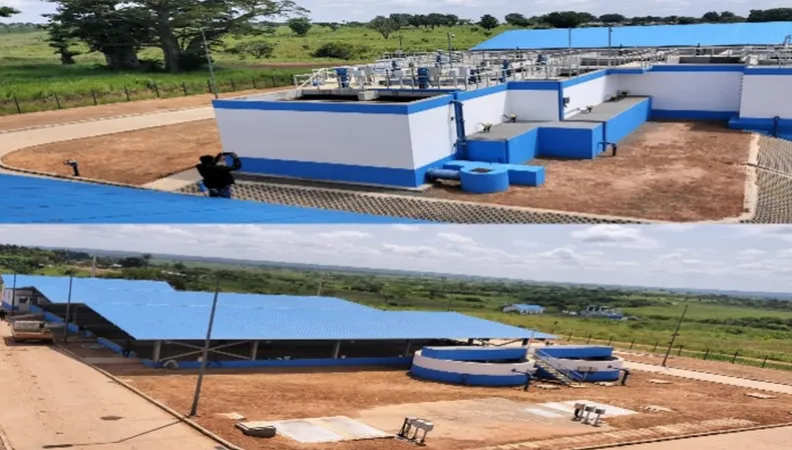
AFD is partnering with the World Bank to improve water supply services and strengthen wa-ter resource management in order to enhance Angola’s climate resilience.
Context
In Angola, 65 per cent of the population has access to an improved water source and 42 per cent has access to running water. Access to sanitation is also below the regional average. Angola is not meeting its Millennium Development Goals regarding access to safe water and sanitation.
In towns and cities, the most disadvantaged communities settle in areas particularly affected by the adverse effects of climate change, such as flooding. In rural areas, access to an improved water source stands at just 37 per cent. Rural areas in the south of the country are even less well served by water and sanitation services due to their isolation and the poor development of the networks. People living in this part of the country are even more vulnerable, as the region has been affected by severe droughts since 2012.
In order to improve people’s living conditions, the government has made access to essential services a priority and aims to achieve universal water supply by 2027. Through this project, the government is complementing the objectives of the PDISA 2 project by improving access to water for urban and rural communities in the southern provinces, which have been severely affected by the adverse effects of climate change.
Decription
The project comprises three components:
Component 1 – Strengthening water and sanitation services in urban and rural areas in the south of the country including through:
-
Capacity building in the water sector at national, provincial and municipal levels.
-
Capacity building at the Huila Water Training Centre.
-
Rehabilitation and extension of the urban and peri-urban networks in Porto Amboim, Sumbe, Menongue and M’banza-Kongo
-
Strengthen water services in rural areas of the southern provinces (Cunene, Huila and Namibe), including support for maintenance and repair services at water points and the establishment of community groups responsible for water and sanitation.
-
Capacity building at the Huila water training centre.
-
Rehabilitation and extension of the water supply network in urban and peri-urban areas of Porto Amboim, Sumbe, Menongue and M’banza-Kongo.
Component 2 – Strengthening water resource management to improve resilience to climate change:
-
Strengthening water infrastructure at community level, including the rehabilitation and construction of typical infrastructure such as sand dams, chimpacas, cisterns and protected wells.
-
Institutional strengthening to improve water resources in the south, including support for the establishment of GABHIC offices and decentralised departments, and the funding of hydrological studies.
-
Reconstruction, management and safety of the dam, including the reconstruction of the Sendi and Quimaia dams.
Component 3 – Project management support:
-
Recruitment of consultants to manage the project and integrate it into the PDISA 2 project implementation unit.
-
Monitoring of social and environmental commitments.
Impacts
-
More than 500,000 people in urban and peri-urban areas have safe access to drinking water (110,000 new dedicated connections),
-
More than 300,000 people living in rural areas have improved access to safe drinking water, notably through the mobilisation and strengthening of 60 groups involved in the management of water and sanitation services at community level,
-
19,250 people now have access to a sustainable water source for smallholder farming and livestock thanks to the reconstruction of the Sendi and Quimaia dams
-
Additional treated water capacity in urban areas of 30,000 m³/day,
-
Groundwater resources developed or rehabilitated, together with new infrastructure, totalling up to 12.4 Mm³/year and creating a storage capacity of 10 Mm³/year.
-
Improved performance of targeted provincial public enterprises; 175 national, provincial and municipal technicians trained.
Sustainable Development Goals
Clean Water and Sanitation
Goal 6 seeks to achieve universal and equitable access to safe drinking water, hygiene, and sanitation by 2030, especially for vulnerable populations. It also calls for sustainable water management and reducing the number of people affected by water scarcity.
The goal includes the concept of transboundary water management, which is key not only to sustainable governance but also to peace and cooperation.