
 Legal notice EU (project) How can the South African government prepare the transition of workers from the coal sector to a low-carbon economy? What is the socio-demographic and spatial profile of workers in the coal value chain? What are the social protection options for preventing the potential rise in unemployment and inequality caused by the just transition? The Extension of the EU-AFD Research Facility on Inequalities is exploring these questions in partnership with the Development Policy Research Unit at the University of Cape Town.
Context
South Africa remains one of the most unequal countries in the world. The country’s high-income inequality is driven primarily by extreme differentials in the labour market, where over 30% of the labour force is unemployed and earns zero income (Leibbrandt et al., 2010; StatsSA, 2024). Reducing unemployment is therefore at the heart of South Africa’s social and economic challenges, and is key to lower the level of inequality.
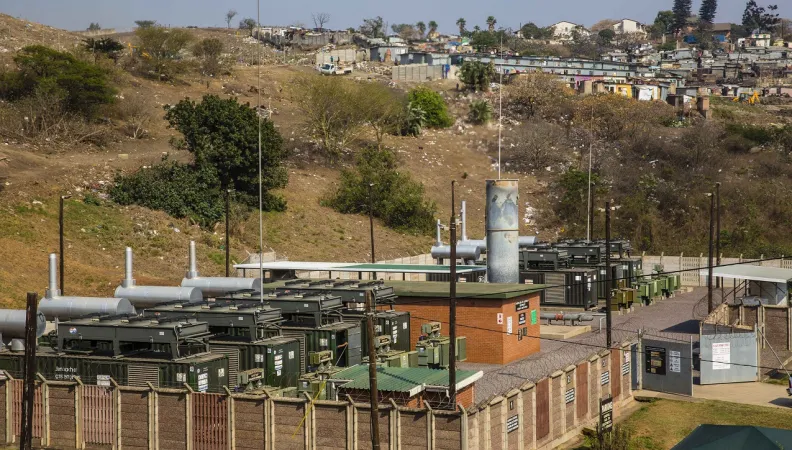
Coal is an important industry in South Africa and is central in the just transition. Rough estimates of total employment in the coal value chain alone are close to 200,000 – roughly 1.2% of total employment – while the contribution to output sits at 5.4% of growth domestic product (Makgetla et al., 2021). Moreover, the coal industry is highly geographically concentrated and underpins a large share of local and regional economic activity in certain areas, particularly localities within the Mpumalanga province.
In this regard, the potential negative employment impacts of a transition away from coal, and toward low carbon energy production, presents a significant socio-economic challenge for a country still dealing with the vestiges of apartheid. It is thus critical that the risks associated with these potential adverse employment effects are managed to ensure that inequality is not worsened by an unplanned transition.
This project is part of the Extension of the EU-AFD Research Facility on Inequalities. Coordinated by AFD and financed by the European Commission, the Extension of the Facility will contribute to the development of public policies aimed at reducing inequalities in four countries: South Africa, Mexico, Colombia and Indonesia over the period 2021-2025.
Find out more about the Extension in South Africa
This work is also part of AFD's dialogue with the South African authorities on the just transition and the identification of reforms to be implemented to ensure an inclusive transition.
Objectives
There is currently a limited understanding of how many workers are likely to be affected by a transition away from coal; how these workers vary by age, skill, or income level; what an effective social protection policy package for such workers would involve; how much a given basket of policies is likely to cost; and the financing options available. Yet, these are crucial elements in designing and implementing policies that limit the negative social and economic effects of transition and prevent potential increases in unemployment and inequality.
This project aims to make two primary high-level contributions:
- First, it will count and profile existing workers in coal and related industries using reliable, spatially sensitive microdata. This includes an analysis of employment, wages, and wage inequality;
- Second, it will propose a basket of social protection policies tailored to the identified worker profiles, with attendant modelled cost estimates, and potential financing options. This includes a focus on the wage inequality implications of various policy scenarios that highlight the importance of a just transition in South Africa.
Method
The research project has four main components that will encompass the following analytical areas:
- The utilisation of tax data to accurately identify at-risk employees in coal mining, coal-based electricity generation, and coal-adjacent industries, locating them spatially across the country. This will provide a reliable estimate of the number of direct and indirect coal industry workers at risk of being adversely affected in a shift away from coal.
- The production of detailed gender, age, and earnings profiles of the identified at-risk workers in the sector. This exercise is anchored around worker earnings and will be used to identify sub-groups, or cohorts, of workers who will require different forms of protection and support based on their existing skills, earnings, and age profile. The earnings data will in addition be utilised to examine inequality dynamics within the coal value chain and between coal value chain workers and those employed in mining generally and in the formal economy as a whole.
- Using these worker profiles to provide a framework of suitable policy options for the different cohorts in order to develop a comprehensive social protection response. Policy options would include individually assigned combinations of interventions such as early retirement packages, grants, and skills development. Furthermore, the study will provide a comprehensive overview of the various social protection policies available in South Africa and determine whether they could apply to affected workers.
- Examination of scenarios for declining coal employment and model a series of associate cost estimates for the various policy response options. This includes modelling possible policy scenarios over the full-time horizon of existing employees. The result is a costed picture of the implications of the just transition policy for South Africa’s coal sector, that includes a discussion of potential public finance options. The findings will also shed light on potential inequality outcomes to emerge from different just transition policy scenarios.
Research findings
The project resulted in two research papers, available below:
- Counting and Profiling Coal Mining Industry Jobs (July 2025):
Subcontracted employment within the coal mining industry has grown, now constituting nearly half of all jobs. The workforce is relatively young, requiring transition policies that prioritize skills development and job placement. Men comprise the bulk share of employees in the coal mining industry, although female participation has risen over time. Coal mining industry jobs are relatively well paid, with the average coal miner wage surpassing that of the average formal sector worker, thus making income support for displaced workers financially burdensome. Wage inequality within the coal mining industry is lower than wage inequality within the broader formal sector economy. Thus, should coal miners transition from jobs in the relatively low inequality coal mining industry, to jobs in high inequality industries, then it is possible that overall inequality will rise.
- Ameliorating the Consequences of Coal Job Destruction - A Just Transition Policy Matrix Approach (October 2025)
Ensuring a just energy transition in South Africa requires supporting workers to absorb the negative shocks of structural change. Central to this is the design of a comprehensive social protection package for coal mining workers. This paper proposes the “just transition policy matrix” approach, which uses micro data to tailor policy responses to the needs of different groups of at-risk workers.
Temporary income support dominates expenditure in all scenarios, followed by education and training. Existing policies can be leveraged to support displaced workers. Nonetheless, when applied to coal workers, funding gaps remain, requiring additional fiscal resources and implying a substantial rise in social protection spending.
For further reading

Contact
-
Anda DAVID
Economist, scientific coordinator of the EU-AFD Facility on Inequalities

Discover other research projects on inequalities

 Legal notice EU (project) The energy transition is a challenge and a necessity for Mexico’s economic transformation. What role can socially owned renewables and energy cooperatives play in enhancing the livelihoods of the most vulnerable and in reducing inequality?
Context
The energy transition is a challenge and a necessity for Mexico’s economic transformation as, on the one hand, the country spends 7.6% of its GDP on fossil fuel subsidies and, on the other hand, in 2020 it was estimated that the economic impact of climate disaster increased by 202%. In order to achieve a successful energy transition and secure a sustainable growth path, Mexico needs to modernize its energy sector, reduce reliance on fossil fuels, and ensure sustainability. However, it is necessary to start from the territory, involving communities in the co-construction of resilience and the strengthening of local productive chains. Community and cooperative models play an essential role in promoting the creation of collective businesses managed in a democratic and solidarity-driven manner.
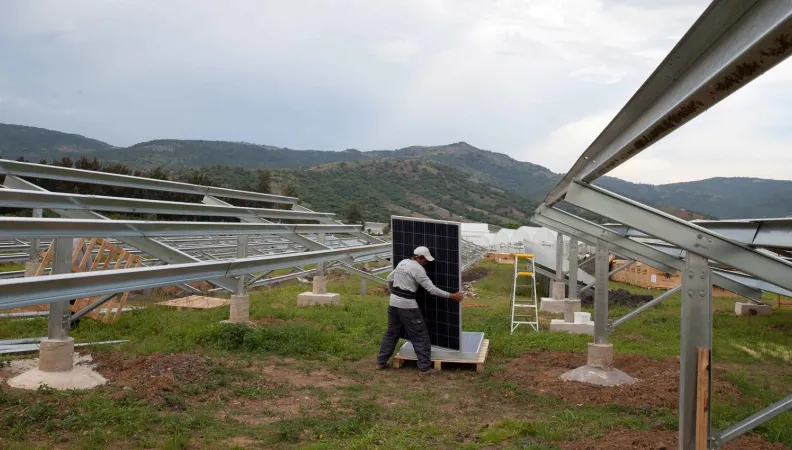
An example of just transition opportunities are energy cooperatives. They are a clear and promising model that involves local communities in the production, distribution and consumption of renewable energy, promoting decentralization and democratization of energy, especially in those territories historically and systematically excluded.
However, research conducted in Mexico during the first phase of the Research Facility on Inequalities showed low wealth sharing and limited social mobility in the country. In this context, it is necessary to address the just energy transition from an intergenerational social mobility approach and a social perspective to ensure benefits for the whole society.
This work is also part of AFD's dialogue with the Mexican authorities on options for diversifying the economy and reducing inequalities.
This project is part of the Extension of the EU-AFD Research Facility on Inequalities. Coordinated by AFD and financed by the European Commission, the Extension of the Facility will contribute to the development of public policies aimed at reducing inequalities in four countries: South Africa, Mexico, Colombia and Indonesia over the period 2021-2025.
Objectives
In partnership with the Centro de Estudios Espinosa Yglesias (CEEY) and in collaboration with the National Institute of the Social Economy (INAES), this research project aims to develop a conceptual and analytical research input for a better understanding of the role that renewable energy cooperatives can play in reducing inequality and increasing social mobility, and how they can be financed.
This input will:
- Conceptualise the just energy transition approach in the area of existing structural inequalities;
- Make a diagnosis from the perspective of intergenerational social mobility, as well as from the perspective of social and solidarity economy, and its relevance in the framework of just transitions, in order to establish identification criteria, social selection and prioritisation of projects;
- Use this diagnostic to propose criteria for the identification and selection of projects that prioritise the populations with the greatest disadvantages of origin (with the least space for social mobility), given the requirement of «no losers» of the just transition;
- Review and articulate technical issues related to decentralised energy and distributed generation, given their importance in the social economy in the just energy transition;
- Review the current INAES projects related to the subject in order, where appropriate, to guide the construction of identification and selection criteria.
Method
The research team will first conduct an exhaustive review of literature focused on environmental justice, climate justice, social mobility applied to environmental justice and intergenerational environmental justice. The literature will be analysed from the perspective of the energy transition and the intersection of these issues.
Based on this review of literature, researchers will develop a conceptual framework to understand the just energy transition in the field of current structural inequalities. It will also explain how this conceptual framework can be relevant for public policy decision-making.
The research team will also identify information gaps and research needs, with a special focus on the study of just energy transitions.
Research findings
You will find below the research paper related to this project: Just Energy Transition, Structural Inequities, and Social Mobility: The Case of Mexico
For further reading
Contact
-
Anda DAVID
Economist, scientific coordinator of the EU-AFD Facility on Inequalities
Discover more research projects in Mexico


 To what extent do partnerships between public actors and commons actors improve access to care? To answer this question, this action-research project examines Public-Community Care Partnerships (PCCPs), in the city of Bogotá, Colombia.
Context
The care economy is a field in which commons-based approaches are essential to tackling inequalities in access, which disproportionately affect women. Public-Community Care Partnerships (PCCPs) can be understood as a model of social commons for addressing this issue. PCCPs involve collaboration between public actors and community-led care initiatives, such as community care centers. They focus on the complementarity of action between public and community actors, with the aim of delivering public action focused on care services that are accessible and collectively managed.
This project was selected as part of AFD’s “Commons and Citizen Participation” call for research projects. This call was aimed at research projects examining the contribution of commons to democratic practices and citizen participation; the interactions between commons actors and public actors; and the capacity of the commons to shape public action. It is part of AFD’s research program on commons.
LEARN MORE ABOUT...
Objectives
The project studies Public-Community Care Partnerships in Colombia:
- By analyzing the extent to which they constitute a model for promoting access to care;
- By developing, testing, and evaluating public policy instruments to implement PCCPs, including a PCCP model contract.
This project is an action-research initiative that combines research activities with public policy dialogue in the city of Bogotá. The research is organized through learning communities, which bring together civil society actors from community care centers, project researchers, and public actors.
Through experimentation and learning by doing, the project will help answer the following research questions:
- What are the conditions for the emergence of PCCPs?
- To what extent do they constitute public policy tools?
- What governance, deliberation, compensation, and evaluation mechanisms underpin these PCCPs?
- How do PCCPs reflect a complementarity between public services and commons in terms of access to care?
Method
This participatory research, based on “learning communities,” involves public actors from both the Municipality of Bogotá and the national government from the outset of the project. The project will unfold in five stages:
- Study of the ecosystem of actors and their interrelationships in the field of care within the context under study;
- Selection of four community care centers (two as pilot partnership sites and two as counterfactuals) and conducting a diagnostic of these centers’ internal and external practices and processes (legal, accounting, logistics, communication);
- Establishment of “learning communities” in the two pilot centers conceived as spaces for dialogue and co-creation of the PCCP prototype, as well as legal and financial information and monitoring tools for the two partnerships. The pilots will run for 12 months;
- Evaluation of the pilots through in-depth interviews and surveys of stakeholders (before/after; and between community centers);
- Co-design and production of communication and dissemination materials.
Expected results
The project will produce deliverables at each stage:
- A survey report (stage 1);
- A baseline report on the analysis of the community care centers, the collaborative digital platform for knowledge management and information-sharing within the learning communities (stage 2);
- A prototype PCCP contract (stage 3);
- A report on the challenges and opportunities of learning communities around PCCPs (stage 4);
- Dissemination of the project's findings and lessons learned (stage 5).
The teams are also involved in a collective effort led by Coop des Communs, the Casa Comum platform, and AFD. The goal: to build a transnational learning community by exchanging on the work carried out, drawing on each other’s experience, and generating knowledge on the links between commons, citizen participation, and the transformation of public action. This network brings together complementary profiles — researchers, civil society, and public decision-makers involved in these experiments — coming notably from Brazil, Colombia, and Europe. Supported by meetings held in Brazil and Italy, this effort will lead to a collective volume, currently being drafted, that will compare and put into perspective the various research projects underway.
Want to stay up to date with AFD’s research news?
Contact
-
Stéphanie LEYRONAS
Research Officer