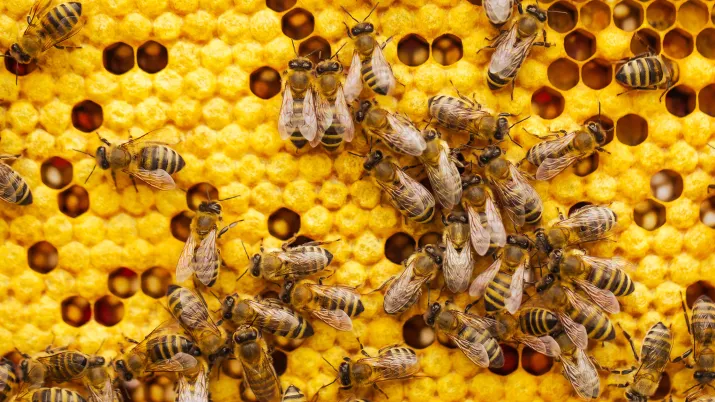
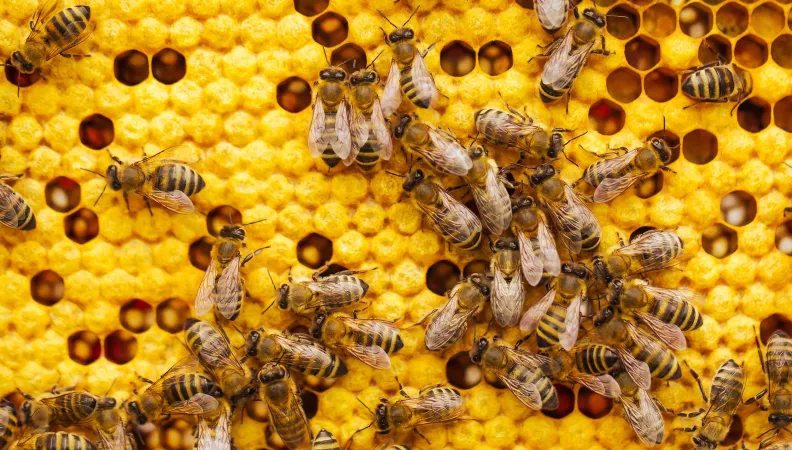
 As part of the ECOPRONAT research programme, AFD is working with the Indian Institute for Human Settlements (IIHS) to analyse the links between urban agriculture, nature-based solutions (NBS) and city-scale resilience in Bangalore. Documenting the role of urban food systems in the production of ecosystem services aims at contributing to the development of sustainable urban development policies.
Context
As the field of research on green infrastructure and nature-based solutions in cities expands, the potential of urban agriculture in the production of ecosystem services remains unexplored. Beyond the benefits of increasing food supply and reducing the vulnerability of urban populations, urban food systems can be at the heart of policies to develop nature-based solutions. This project studies the potential benefits of these systems in the perimeter of Bengaluru, an Indian city with a strong heritage in terms of urban agriculture.
This project is part of the ECOPRONAT research programme, which supports research on how to better take into account biodiversity and mainstream it into key economic sectors.
Objectives
Taking the case study of Bengaluru, this project led by IIHS explores how and why urban food systems, in rapidly developing urban and peri-urban areas, can be seen as nature-based urban solutions that bring benefits to ecosystems and society.
Two research questions are addressed:
- What is the scope and outcomes of urban agriculture for ecosystem services (including pollination) and societal well-being (such as food and nutritional security of the most vulnerable populations)?
- How can we use different co-production pathways across the science-policy-citizen interface to scale up NBS around sustainable urban agricultural practices?
Method
The research methodology is based on three main work packages:
- Synthesis of scientific knowledge on the potential of NBS and existing practices at various scales, and particularly within a chosen ward of Bengaluru with the deployment of pilot interventions;
- Incubation and capacity building: incubating novel NBS ideas and experiments related to pollinator friendly and water conserving urban agriculture, and capacity building through the training of various stakeholder groups;
- Scaling impact by identifying and engaging with different stakeholders, including city-level policy and decision makers, right from the start of the project to ensure the scaling of impact throughout the project.
Results
The expected results of these projects are:
- Academic results on sustainable urban food systems in the context of rapidly urbanizing countries from the Global South, on urban NBS experiences and their effects on ecosystem services (including pollination);
- Knowledge outputs for urban decision-makers on the integration of NBS in urban planning;
- Capacity building and teaching materials on multidisciplinary approaches to urban sustainability.
The project is also testing nature-based solutions aimed at strengthening the resilience of food systems in Bangalore.
An example: the PLUME project
Supported by the IIHS, the PLUME (Pollinator Linked Urban Multifunctional Ecosystems) project is developing pollinator-friendly food gardens in private and public spaces, installing infrastructure such as bee hotels, and raising public awareness of the importance of biodiversity for urban agriculture. The project team has designed a ‘PLUME toolkit’ containing seeds of local species and the appropriate equipment for sowing them, as well as educational tools and a website.
By testing nature-based solutions, PLUME is the action research component of the research carried out by the IIHS on the greening of urban food systems as part of the Ecopronat research programme. It demonstrates how sustainable agricultural practices can be integrated into cities while enhancing biodiversity and citizen involvement through a research-action approach.
Research findings
The research team aims to show how nature-based solutions (NbS) can address urban water security challenges in the Global South — a topic that remains underexplored in the scientific literature, which is still largely focused on the Global North. Drawing on expert discussions and a literature review, they identify the specific characteristics of these contexts (environmental, socio-economic, governance-related, technical capacity, etc.), as well as the barriers and opportunities for implementing these solutions. The goal is to propose concrete avenues to support the more effective and equitable adoption of NbS in cities of the Global South.
Read the research paper

Contact
-
Julien CALAS
Research Officer on Biodiversity
Other projects on Nature-based Solutions supported by ECOPRONAT
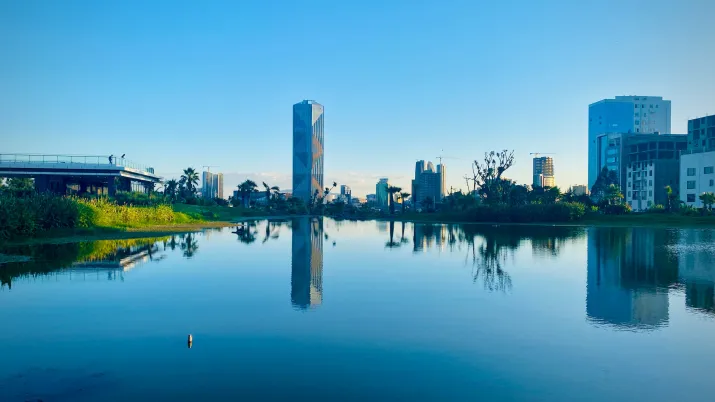
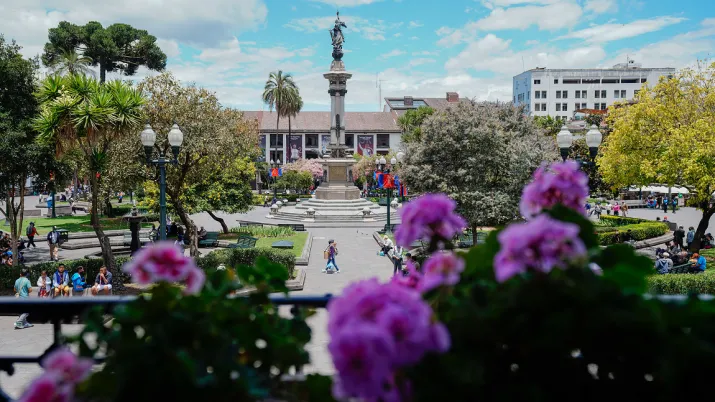
 As part of the ENSLAC project, AFD is working with Yes Innovation and its partners to study and identify replicability levers for nature-based solutions in three South American countries – Ecuador, Colombia and Peru. Fifteen initiatives are analyzed in order to understand how natural ecosystems are mobilized in urban areas, what are their impacts and how nature-based solutions (NBS) could be more widely integrated into spatial and urban planning.
Context
Latin America is the second most urbanized region in the world, with 81% of its population concentrated there. This strong urbanization, its rapid growth and the weakness of urban planning policies affect areas of high ecological and environmental value. However, natural ecosystems can be a source of solutions for those involved in urban design and development, in particular to respond to the risks generated or exacerbated by climate change.
Understanding nature-based solutions (NBS), studying their implementation conditions and analyzing their integration into public policies is therefore necessary to ensure the livability of cities in the long term. While NBS and green infrastructure are still recent in the urban landscape, initiatives have been deployed for several years and are a privileged source of data to exploit.
This project is part of the ECOPRONAT research programme, which supports research on how to better take into account biodiversity and mainstream it into key economic sectors.
Objectives
The ENSLAC (Enabling Nature based solutions Scale-up in Latin American Cities) project aims to analyse the mechanisms that enable the scale-up of nature-based solutions implementation in Latin American cities, drawing on 15 case studies in Peru, Colombia and Ecuador. This research approach aims to:
- Analyze the challenges of ecological restoration for the management of risks related to the impacts of climate change in urban areas;
- Understand the levers for using NBS as a tool for urban planning and development;
- Identify the temporal, technical, cultural, political, social, financial and cooperative processes that have enabled large-scale NBS-based projects;
- Assess the influence of national or supranational strategies and policies on NBS development;
- Disseminate the knowledge produced by focusing on formats and channels that can be used for the training of urban development actors.
To explore these issues, Yes Innovation, based in Quito, works with the Humboldt Institute for Biological Resources Research, an institution linked to the Ministry of the Environment of Colombia, and Periferia Territorios Vivos, a Peruvian organization specialized in urban planning with an ecological approach.
Method
This research project uses two analytical tools (depending on the case study and the available field data):
- Temporal and spatial analysis (known as BA/CI, which refers to a Before/After and Conservation/Intervention analysis);
- Comparative analysis between case studies on NBS and reference cases of comparable characteristics but without implementation of NBS.
Results
The ENSLAC research project aims to:
- Understand mechanisms that enable scale-up of nature-based solutions as a tool for urban and peri-urban planning;
- Identify replicability levers of these NBS for Latin American cities;
- Produce training materials for urban development actors.
The research team presented its findings during a webinar from the Research Conversations series. The replay is available below (in French and Spanish).
Find out more

Contact
-
Julien CALAS
Research Officer on Biodiversity