Share the page
The IOC: strengthening regional cooperation in the Indian Ocean
Published on
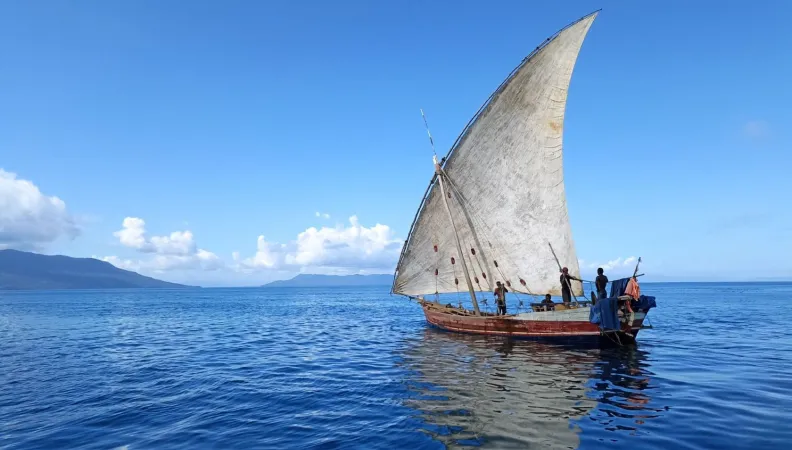
The Indian Ocean region faces pressing challenges in terms of climate resilience, health security, marine resource conservation, economic development, and regional integration. Against this backdrop, France assumed the rotating presidency of the Indian Ocean Commission (IOC) at the organization's 40th Council of Ministers meeting, held in Moroni, Comoros, on June 8, 2026.
A long-standing partner of the IOC, Agence française de développement (AFD) has supported regional programs across the Indian Ocean for many years. AFD acts on behalf of France, the Commission's largest contributor, which provides 40% of its budget. The IOC brings together Comoros, France (through Réunion Island,) Madagascar, Mauritius, and Seychelles – a region particularly exposed to climate change, health risks, and increasing pressure on natural resources.
Regional cooperation is a key lever for developing shared solutions in areas such as health, food security, biodiversity conservation, the blue economy, and economic development.
From health to culture: the IOC in action
The IOC's work takes shape through regional programs designed to foster exchanges of experience, knowledge sharing, and the development of solutions adapted to island territories.
In the field of health, the Sega-One Health network is one of the region's main health cooperation mechanisms. It strengthens member states' capacities to prevent, detect, and respond to health risks. More than 4,000 people have been trained through the network, including 400 field epidemiologists and 16 graduates of the FETP master's program. More than 40 surveillance systems and laboratories have also been strengthened across the region.
Marine and coastal resource conservation is another major area of cooperation. Through programs such as ExPloi and Recos, the IOC supports scientific research, locally driven solutions, and the sharing of expertise.
In 2025, ExPloi carried out an oceanographic and citizen science campaign across the IOC's five member states. Around 4,000 students from approximately 100 schools took part in awareness-raising activities, while 20 researchers joined a scientific mission conducted with the French National Research Institute for Sustainable Development (IRD). The program also supports 30 PhD and master's students, 20 senior researchers from countries in the Global South, and around 40 companies working to reduce their environmental footprint and develop circular economy solutions.
Meanwhile, the Recos program supports coastal resilience initiatives and integrated coastal zone management, with 13 field projects funded in Comoros, Madagascar, Mauritius, and Seychelles. The program has also enabled 188 participants to take part in 24 study visits and exchanges of experience and currently funds several research projects, including two PhDs, one postdoctoral fellowship, and six master's internships.
Culture is also part of the picture. Through its Cultural and Creative Industries (CCI) program, the IOC supports cultural professionals in developing their activities and encourages regional exchanges. To date, 537 applications have been received through the various funding mechanisms, resulting in support for 164 initiatives and training opportunities for 164 beneficiaries.
A long-standing partnership with AFD
Forty years after its creation, the IOC remains the only organization bringing together these five member states and territories around shared challenges in the western Indian Ocean. Today, AFD supports several regional programs with its partners in the areas of health, climate, biodiversity, culture, governance, and institutional modernization.
Beyond project implementation, AFD also supports the modernization of the Commission through Horizon 2030, helping transform regional priorities into concrete projects, mobilize financing, and better showcase results.
This new chapter builds on decades of regional cooperation led by member states, technical and financial partners, and the many organizations committed to the sustainable development of the Indian Ocean region.
Read more
Passing traditional knowledge from mother to child to protect the environment
Published on March 5, 2024