
 Brazil faces significant challenges in its low-carbon transition, including maintaining global competitiveness and avoiding macroeconomic imbalances. To address these, in partnership with the Ministry of Finance, and in cooperation with CEPAL and IPEA, AFD is developing an economic modelling tool to assess the impacts of public policies, specifically those related to the Ecological Transformation Plan.
 Context
Brazil’s current development model, characterized by intensive use of natural resources and environmental degradation, has caused serious social and economic consequences. Additionally, the country faces the impacts of environmental degradation (extreme weather events, scarcity of natural resources, loss of biodiversity, reduced agricultural productivity…), that affect the poorest populations more severely.
In response, Brazil is actively engaging in the transition to a low-carbon economy. At COP28, in Dubai, Finance Minister Fernando Haddad has launched the Brazilian Ecological Transformation Plan (ETP). This Plan seeks to shift economic, technological and cultural paradigms towards sustainable development based on sustainable relationships with nature and its biomes. To achieve this, strong public and private investment – in sustainable infrastructure, clean technologies, and new production models – will be paramount.
However, achieving this ambition comes with significant challenges, particularly in maintaining external competitiveness. As it moves towards a greener economy, Brazil must ensure that its policies and investments do not compromise the competitiveness of its products in global markets, or create macroeconomic imbalances that could jeopardize the sustainability of these efforts.
Objectives
In partnership with the Ministry of Finance, and in cooperation with CEPAL and IPEA, AFD is developing a GEMMES economic modelling tool to test policy instruments capable of promoting a just and green transition.
The GEMMES Brazil model will serve to evaluate the impact of public policies, specifically the ones on the Ecological Transformation Plan, with a special focus on their long-term consequences for economic growth, employment, macroeconomic stability, and climate/environmental variables. Indeed, for a successful green transition, Brazil needs comprehensive and coordinated policies that not only cut emissions but also support socioeconomic development, protect the environment, and ensure macroeconomic stability.
GEMMES is an empirical structural macroeconomic model capable of identifying the specific dynamics of open developing countries. The model is built in partnership with local authorities and research institutes to guarantee that the tool is coherent with the country's needs and to assure that the partners are capable of using and improving independently. It is a monetary model that allows policymakers to test different policy instruments and identify the financial mechanisms and the consequences of these policies in different contexts.
Method
After developing a preliminary model calibrated with Brazilian data, the project team will refine the tool by incorporating the specific characteristics of Brazil’s sectoral, macroeconomic and financial framework:
- The model needs to account for the dynamics of interest and exchange rates and their impact on private investment and employment, as well as the fiscal and macro-financial constraints and the capacity of public investments in green infrastructure to drive a new ecological transformation plan.
- The model will also bring a sectoral approach to provide detailed estimates of the impact of climate measures and sectoral policies in the medium- and long-run, considering different domestic and international scenarios, as well as their capacity to strengthen strategic productive chains and promote structural change towards an economy less dependent on natural-resource exploitation.
Expected results
The project will result in a tool that models the macro-financial framework of the Brazilian economy, clearly identifying the mechanisms that determine interest rates and exchange rate dynamics, along with their impact on real variables (such as private sectoral investment decisions, exports, imports and market structure).
Throughout the project, the research team will organize workshops to ensure that the model responds to the specific needs of the Ministry of Finance, and training sessions will take place so that public policy analysts can use the model effectively to evaluate policy measures. Several publications, including one final book, are also expected.
Contact
-
Guilherme MAGACHO
Economist - Modeller
-
Gaëlle LE TREUT
Economist, modeller
Discover other GEMMES projects


 Can South Africa secure the necessary investments to transition to a low-carbon economy and adapt its infrastructure to climate change, while balancing economic growth and maintaining macro-financial stability? AFD is supporting South Africa in addressing climate change through the GEMMES South Africa project, developed with academic and institutional partners.
Context
South Africa requires significant investment to transition to a low-carbon economy and resilient infrastructure, especially in energy and water sectors. Heavily reliant on coal and facing increasing water scarcity due to climate change, South Africa’s shift towards sustainability is crucial for long-term environmental and economic stability.
With the support of AFD, the University of Cape Town (UCT), Development Bank of Southern Africa (DBSA), Presidential Climate Commission (PCC), National Treasury, and the Centre for Sustainability Transitions of Stellenbosch University are developing a model that evaluates the macroeconomic impacts and various policy options and financing mechanisms for transitioning South Africa's water, energy, and food (WEF) systems in response to climate challenges.
This project falls under the “South Africa – Towards Inclusive Economic Development” (SA-TIED) initiative, a research and policy programme aimed at fostering inclusive economic growth in South Africa.
The GEMMES programme is developing a general theoretical model on the one hand, and national models applied to concrete cases and adapted to the characteristics of each country on the other, including the GEMMES South Africa model.
Objectives
The GEMMES South Africa project aims to:
- Analyze the macro-financial impacts of transitioning to renewable energy, ensuring water security, and maintaining food sustainability;
- Provide policymakers with insights and forecasts to inform decision-making and long-term planning for economic growth, employment, and climate resilience and more specifically provide insights into the macroeconomic effects of climate-resilient investments up to 2050;
- Enhance understanding of the vulnerabilities and opportunities in South Africa’s transition by integrating macro-financial feedback loops into structural change analysis;
- Foster sustainable development and mitigate environmental risks, contributing to long-term economic stability and improved quality of life;
- Promoting public policy dialogue on South Africa's low carbon transition.
Method
In addition to its specific transdisciplinary approach, which makes this project one of the few to integrate the notion of strong sustainability, the originality of GEMMES lies in its consideration of macro-financial imbalances and the impact of the low-carbon transition on all elements of the balance of payments.
GEMMES South Africa builds on UCT’s SATIM-GE energy transition model incorporating macro-financial feedback loops, which provide critical insights into the country's economic vulnerabilities and investment opportunities during this transition.
GEMMES South Africa is built in partnership with local authorities and research institutes to guarantee that the tool is coherent with the country's needs and to assure that the partners are capable of using and improving independently. It will account for:
- the dynamics of interest and exchange rates and their impact on private investment and employment;
- the fiscal and macro-financial constraints;
- different dynamics between banks and non-bank financial institutions;
- the capacity of public investments in green infrastructure to drive a new ecological transformation plan;
- and, the impacts of climate changes.
Expected results
The GEMMES South Africa project anticipates several key publications, including:
- A presentation of the specificities of GEMMES-South Africa and its baseline simulations;
- The macro-financial implications of infrastructures investments;
- The macro-financial implications of climate change impacts.
These papers will provide valuable insights into the project's findings and contribute to ongoing discussions in the field.
Research findings
At this stage, while the project is still in its early phases, it is expected that integrating macro-financial feedback loops will play a significant role in shaping effective policies and investment strategies. As the project progresses, ongoing stakeholder dialogue will be crucial in refining these concepts and addressing future challenges in the transition process.
Download the publications related to other South Africa modelling projects:
Want to stay updated on AFD’s latest research?

Contacts
-
Paul HADJI-LAZARO
Economist - Modeller

-
Antoine GODIN
Economist - Modeler

Discover other GEMMES projects

 Colombia has demonstrated its commitment to climate issues through its commitment to implementing its nationally determined contribution (NDC) under the Paris Agreement. Developing an ecologically and economically sustainable development trajectory is a significant challenge, which the GEMMES Colombia project supports through sound methodology and policy-based dialogue.
Context
Highly exposed to the effects of climate change and to the degradation of natural resources, Colombia is strengthening its climate policy, considering a green growth strategy, particularly since the 2014-2018 National Development Plan. Nevertheless, the country's dependence on raw material exports and its strong integration into international financial markets generate monetary, financial and commercial vulnerabilities.
AFD is supporting Colombia in its efforts to tackle climate change through the GEMMES Colombia project, which is part of the third climate policy loan since 2018. The GEMMES programme, by integrating the impact of climate change into its forecasts, is developing a general theoretical model on the one hand, and national models applied to concrete cases and adapted to the characteristics of each country on the other, including the GEMMES Colombia model.
Objectives
The GEMMES Colombia project, which is fully in line with AFD's commitment to strong sustainability, aims to :
- Highlight potential fragilities in the Colombian economy through a better understanding of the interactions between fiscal, monetary and trade policies and the country's NDC objectives;
- Identify the opportunities generated by the energy transition in Colombia: structural changes and financing methods under the best possible conditions;
- Quantifying the macroeconomic impact of NDC-related investments, particularly in the financial and tax sectors;
- Promoting public policy dialogue on Colombia's energy transition:
- Providing a decision-making tool for decision-makers on climate policies, with a view to limiting the consequences identified without compromising the implementation of Colombia's NDC objectives;
- By promoting the appropriation and sustainability of the GEMMES modelling tool within the partner institutions.
Method
In addition to its specific transdisciplinary approach, which makes this project one of the few to integrate the notion of strong sustainability, the originality of GEMMES lies in its consideration of macro-financial imbalances and the impact of the low-carbon transition on all elements of the balance of payments.
Moreover, GEMMES Colombia is part of a partnership initiative that is organised around two phases:
- The first phase is based on the development of the model and the macroeconomic analysis of the Colombian NDC trajectory, in partnership with the National Planning Department (DNP) and the Ministry of Finance (MHCP) supported by AFD's modelling teams.
- The second is intended to ensure the sustainability of the project after the end of the support, with the analysis by the National University of Bogota (UNAL) of the interactions between trade, fiscal and monetary policies and the NDC trajectory, as well as the training of students in sustainable development through the Catedra course as well as in the GEMMES methodological approach.
Results
The GEMMES Colombia model, enriched by academic expertise and integrated into decision-making processes through Colombian ministries, has become a key tool for public policy dialogue on the energy transition:
- At the request of the Colombian authorities, GEMMES was added to the MHCP’s macroeconomic models in 2023 and was coupled with the Energyscope energy model, a tool for energy assessment and planning. The model’s adoption continued in 2024 with an executive training session on its use provided to MHCP officials.
- These exchanges are ongoing through the GEMMES Strategic Committee, composed of the Ministry of Finance and Public Credit (MHCP), the National Planning Department (DNP), the Ministry of Mines and Energy (MME), and the Banco de la República.
FIND OUT MORE
Furthermore, the research work led to the publication of a collective volume launched in June 2024, presenting the scientific findings and policy recommendations derived from the project: Modelling Low-Carbon Transitions in Colombia: Macrofinancial Opportunities and Risks
This work also gave rise to a new initiative: the creation of PowerShift, a strategy game designed to support multi-stakeholder dialogue around Colombia’s NDC.
Watch the replay of the GEMMES Colombia book launch (in Spanish)
The first results of the project had been presented at the virtual congress "Conexión DNP: transfiriendo conocimiento para innovar" on 2 and 3 December 2021. The project partners expressed their satisfaction, with the MHCP showing a particular interest in modelling after a year of remote work due to the Covid-19 pandemic.
In March 2022, a university course on sustainable development (Catedra), partly based on the results of the GEMMES Colombia project, was launched at UNAL. As a continuation of this initiative, a second course on the modelling of ecological transitions in the Global South was given in 2023.
Research findings
The GEMMES Colombia model, by developing scenarios on fossil fuel exports and alternative policies for the 2023-2050 period, as well as financing scenarios of the NDC trajectory, contributes to informing decision-makers in their political strategy to fight global warming. The model also allowed the National Planning Department (DNP) to analyze the consequences of economic shocks such as the loss of the country’s investment quality, the reduction of coal exports or the bankruptcy of Evergrande in China.
The conclusion is clear: a diversification of the production structure and a transformation of public finances are essential if Colombia is to meet the challenges of a global low-carbon transition and ensure its own energy transition. The GEMMES model highlights the importance of using a combination of private investment and public green bonds to finance Colombia's climate ambition.
Related publications

Contact
-
Antoine GODIN
Economist - Modeler
Discover other GEMMES projects

For further reading
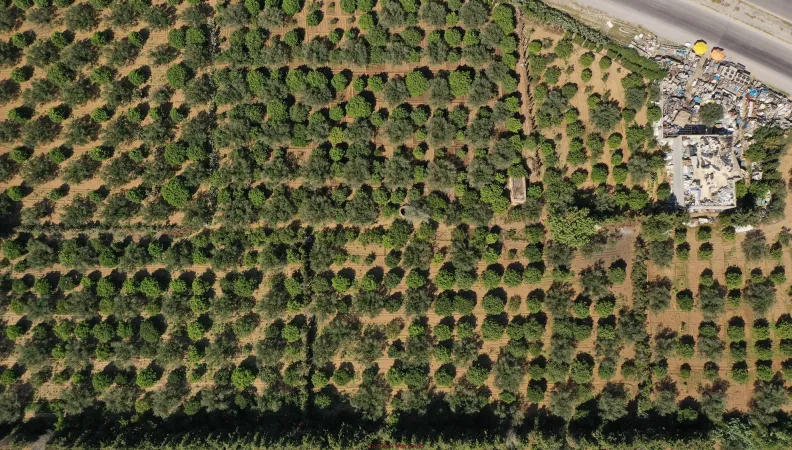 The GEMMES Tunisia project examined the impact of climate change on Tunisian agriculture in particular, and the macroeconomic impact of these changes in general, as well as the benefits of various adaptation policies to offset these impacts.
Context
Tunisia is particularly exposed to the impacts of climate change, on environmental, social and economic levels. Due to inappropriate agricultural practices, the availability of water resources has decreased, the salinisation process has worsened, and land and plant cover have experienced significant degradation. Since September 2018, the Tunisian Institute of Competitiveness and Quantitative Studies and the Tunisian Ministry of Agriculture have been working in collaboration with AFD on the development of a macroeconomic model within the GEMMES programme to make projections of agricultural yields until 2050 and to consider possible policies.
This project is part of the modelling work that integrates the impact of climate change into macroeconomic forecasts in order to inform public policy choices in this area. AFD is developing a general theoretical model on the one hand, and national models applied to concrete cases and adapted to the characteristics of each country on the other, including the GEMMES Tunisia model.
This partnership is carried out in the context of the memorandum of strategic dialogue between AFD and the Tunisian Ministry of Development, Investment and International Cooperation. This collaboration involves the joint production of studies, diagnoses and modelling tools to promote inclusive and sustainable development policies.
FIND OUT MORE ABOUT GEMMES
AFD and Macroeconomic Modelling Tools for the Ecological Transition
Objectives
The objective of the GEMMES Tunisia project is to analyse the macroeconomic effects of climate change on agriculture. By modelling development trajectories, it improves the understanding of the interactions between the economy and the environment, and helps inform public decision-making.
Aspiring to promote exchanges between researchers and political decision-makers, this project aims to place the issues of ecological transition and strong sustainability at the heart of political dialogue. It thus aims to become a tool at the service of the Tunisian authorities, by helping to evaluate the advantages of adaptation policies that could possibly be implemented.
Method
The GEMMES model is based on a trans-disciplinary analysis, which is able to take into account sectoral heterogeneity, whether in terms of market structures, access to financial markets or employment, as well as the structural imbalances inherent in a change as profound as climate change. GEMMES Tunisia is using this method to test different scenarios concerning the mechanisation of agricultural production, the improvement of agricultural practices and investment in water resources.
The GEMMES Tunisia project was divided into three phases:
- The first year was devoted to identifying the macroeconomic and ecological fragilities due to the impacts of climate change on agriculture and the water cycle.
- The second year focused on the construction of the macroeconomic framework and the choice of the agricultural model.
- The third year was dedicated to combining the macroeconomic model and the water cycle model by adding agricultural dynamics.
Research findings
The scenarios established by the GEMMES Tunisia model confirmed that the implementation of adaptation policies is necessary and desirable:
- The absence of such policies would lead to a significant increase in external debt, which would reduce the value of the national currency and thus the purchasing power of the population, while threatening the country's food security. Similarly, food inflation is reaching very high levels, which will have a massive impact on increasing poverty among Tunisian households.
- The benefits of sustainable development policies outweigh its costs by limiting the rise in rural unemployment, rapid urbanisation and declining per capita incomes. As an important result, the social and economic benefits of the adaptation policies envisaged for Tunisia are even higher if these policies are financed by low-cost foreign currency loans from climate funds, green bonds or international financial institutions. In this case, the adaptation policies have a much more beneficial effect and the costs of food imports put much less pressure on the balance of payments, food inflation, the exchange rate and thus the per capita income of Tunisian households.
Thus, the results of this project are in line with AFD's positioning in favour of strong sustainability.
This research project also highlighted the difficulty of quantifying the impacts of climate change in a context of limited data availability. Nevertheless, producing national models in this context has prompted research teams to test a greater diversity of scenarios or to gather different data sources, for example.
Download the research paper
Contact:
- Devrim Yilmaz, senior economist in the GEMMES Macroeconomic Modelling Unit, AFD
Discover other GEMMES projects
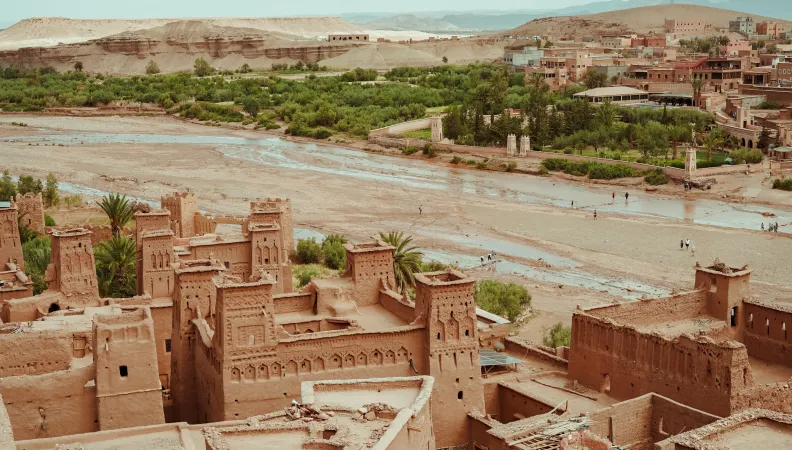 Due to climate change, the agricultural sector in Morocco is increasingly facing rising temperatures and dwindling water resources. As part of a long-standing collaboration with AFD, the GEMMES Morocco project reflects on how to develop sustainable development trajectories that take into account interactions between climate and agriculture from a macroeconomic perspective.
Context
Interactions between socio-economic and ecological spheres make the elaboration of strong sustainability development trajectories a particularly difficult exercise. Morocco expressed its willingness to embark on a development plan based on prosperity, inclusion and sustainability in a report published in May 2021, but the country is facing one of the highest water stress conditions in the world. A technical cooperation request concerning the modelling of the impact of climate change on agriculture by 2050 was therefore sent to AFD, which the GEMMES Morocco model is attempting to satisfy.
This project is part of the modelling research that integrates the impact of climate change into macroeconomic forecasts in order to inform public policy choices in this area. AFD is developing a general theoretical macroeconomic model on the one hand, and on the other hand national models applied to concrete cases and adapted to the characteristics of each country, including the GEMMES Morocco model.
This partnership is carried out in the context of the memorandum of strategic dialogue between AFD and the Directorate of Studies and Financial Forecasts (DEPF) of the Ministry of Economy and Finance of the Kingdom of Morocco. The research program is financed by the 2050 Facility, which aims to contribute to capacity building and the development of long-term strategies in line with the commitments of the Paris Agreement. In addition to the partnership with the DEPF, the project is developed with the Mediterranean Institute of Marine and Terrestrial Biodiversity and Ecology for the hydro-agricultural part.
Objectives
The GEMMES Morocco project carries out simulations of agricultural production and available surface water resources for the year 2050 according to different climate scenarios, and analyses the impacts on the country's economy. This approach is rooted in the will to inform public decision-making, through the collaboration between Moroccan, French and international experts. The GEMMES Morocco model is intended to be an additional simulation tool for the Directorate of Financial Studies and Forecasting.
Method
The specificity of this project lies in the coupling of two models: the macroeconomic model GEMMES, adapted to the specificities of Morocco, and the hydro-agricultural model Lund-PotsdamJena managed Land (LPJmL). The latter, widely used in the international scientific community, produces simulations of the country’s most important surface hydrology and crop yields. It uses projections of temperature and precipitation from the ALADIN regional climate model and compares the water requirements for Moroccan agriculture to the resources that will actually be available. The GEMMES Morocco model then uses these agricultural yield projections to integrate them into its macroeconomic framework.
Results
Preliminary results were presented at COP26 in Glasgow in 2021, along with a summary for policy makers. The initial findings highlight the adverse effects of climate change, particularly on the water resources available for irrigation. In 2050, an irrigation level corresponding to 75% of the needs would lead to an agricultural production 3.7% higher than if only 50% of the irrigation needs were covered. GDP and household consumption would then be 0.5% higher. Thus, investing in water infrastructure seems essential to limit the impacts of climate change.
Research findings
The GEMMES Morocco project reveals the usefulness of coupling two types of models responding to different areas of expertise. By encouraging dialogue between researchers from different disciplines, the different perceptions of each can be explained and thus lead to a greater relevance of the political debate.
The contributions of this project can also continue beyond the framework of AFD, either because of the integration of some of its results into a World Bank exercise or because of its use in the Moroccan long-term strategy.
Want to stay updated on AFD’s latest research?
Contacts
-
Antoine GODIN
Economist - Modeler