Share the page

Investment Program for Waste Management - EU for Circular Economy and Green Growth
Project
This project is carried out with the support of the European Union


-
Project start date
-
Status
Ongoing
-
Project end date
-
-
Project duration
-
5 years
-
AFD financing amount
-
€ 19 000 000
-
Country and region
-
Location
-
Kukës & Gjirokastër/Vlora-Sud, Albania
-
Type of financing
-
Beneficiaries
-
Republic of Albania
-
Type of beneficiary
-
State
This project is carried out with the support of the European Union
The content of this project information sheet falls under the sole responsibility of the AFD and does not necessarily reflect the opinions of the European Union.
To support Albania's convergence towards European Union standards, AFD is assisting the Albanian authorities in establishing environmentally friendly waste management infrastructure in two regions of the country.
Context
In Albania, waste management is a major challenge, impacting the quality of life, ecosystem preservation, climate change mitigation, and the country’s economic and tourist attractiveness. With significant progress in legislation, regulations, and the recent construction of new infrastructure, the effective implementation of an integrated waste management system, based on circular economy principles, is a priority for the government.
A candidate for EU membership since 2014, Albania officially began accession negotiations in July 2022. Waste management is a key issue for alignment with the EU, particularly under Chapter 27 of the negotiations (Environment and Climate Change).
Descriptif
Under the Instrument for Pre-Accession Assistance (IPA), the EU has delegated the management of the investment component of the "EU for Circular Economy and Green Growth" program to AFD.
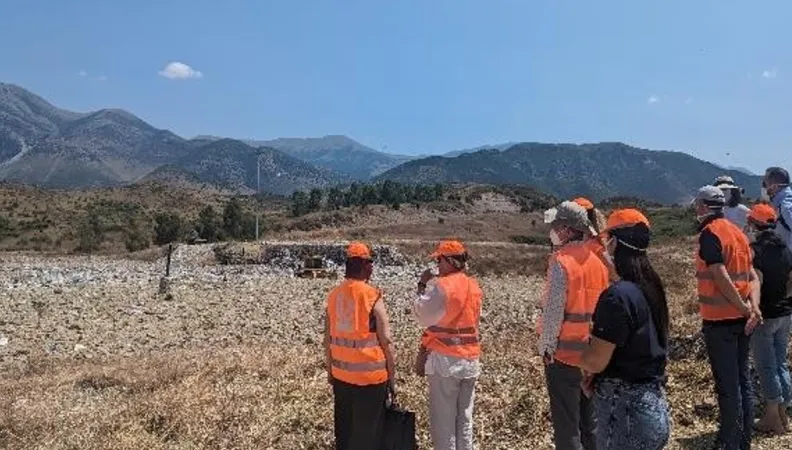
This program includes: Improving and creating waste treatment infrastructure that complies with EU standards. Closing non-compliant landfills in the Kukës and Gjirokastër/Vlora-South regions. The program will be financed with a €19 million European grant (IPA).
Impacts
The project will:
- Improve living conditions for nearly 190,000 residents.
- Reduce pollution, particularly plastic waste, and greenhouse gas emissions by upgrading or closing non-compliant sites;
- Decrease the volume of waste sent to landfills. o Increase waste recovery and recycling rates.
Sustainable Development Goals
Life on Land
Goal 15 aims to implement the sustainable management of terrestrial ecosystems – forests and mountains – by preserving biodiversity and soils and limiting the long-term impacts of natural disasters. It calls for integrating ecosystem and biodiversity protection into national planning and poverty reduction strategies. SDG 15 also stresses the need to protect endangered species through strengthened international cooperation against poaching and trafficking, and by implementing controls—or even eradication—of invasive alien species that harm ecosystems.