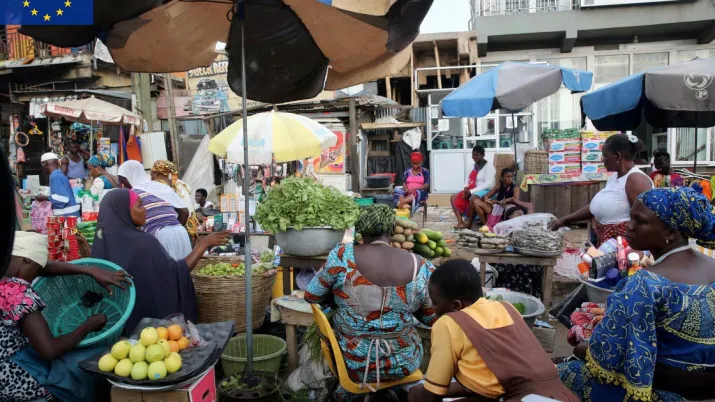
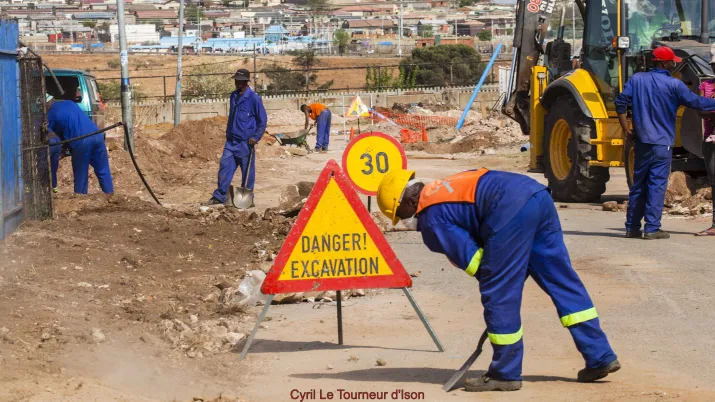
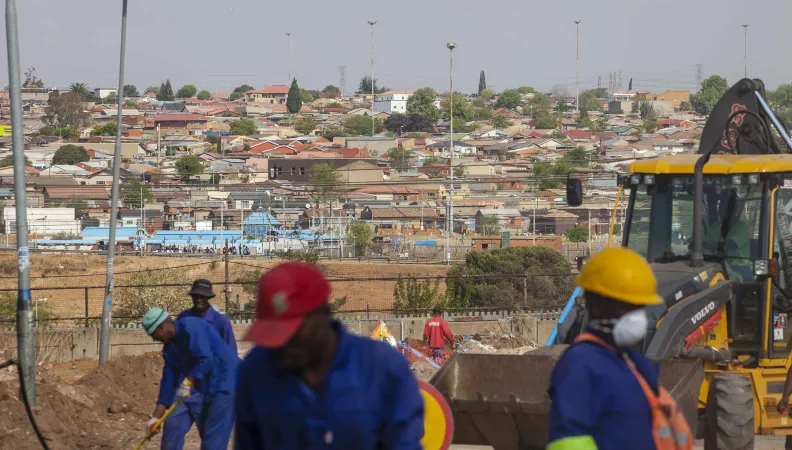
 Extreme weather events resulting from the effects of climate change coupled with a global call for countries to reduce their greenhouse gas (GHG) emissions imply that the transition to a “green” economy is non-negotiable. The societal and policy discussions have moved on to trying to understand the transition possibilities and the economic and social implications of these in each country’s context. This research project will focus on the case of South Africa.
Context
South Africa is one of the largest GHG emitting countries due to its heavy reliance on coal for most of its energy needs. The South African government is cognisant of the fact that shifting away from carbon-intensive forms of technology to more sustainable ways of production means that some jobs will be destroyed, and new ones will be created. A concern therefore for policy makers is ensuring that the transition is just and that it will not exacerbate existing inequalities.
South Africa comes into this employment transition discussion facing a triple challenge: persistent high unemployment, inequality, and poverty. This situation has worsened since the 2007-2008 financial crisis and was further exacerbated by the recent COVID-19 pandemic. This complicates the discussion of an optimal social transition to a “green” economy.
This project is part of a wider research program on the just transition in South Africa, conducted with several South African research centres and in close collaboration with the South African authorities.
FIND OUT MORE
Objectives
The project will carry out a study of the South African labour market with the aim of identifying the proportion and distribution of workers engaged in “green” jobs and “brown” jobs – in other words, jobs that are ecologically sustainable and jobs that are not. It will also examine the possibilities of transitioning labour from brown jobs into low emitting sectors.
Method
We will measure green intensity as the share of total tasks in an occupation that are green. We will also identify the share of workers in green jobs using employment information from surveys such as the Quarterly Labour Force Surveys (QLFSs) and the Census. Using industry level information on pollution, we will go further to identify occupations more likely to be in highly polluting sectors than in any other sectors. This will be described as brown jobs. Next, we will utilise occupational tasks, skills, and knowledge information from the O*NET dataset to identify important skills for brown and green jobs. This will enable us to estimate the probability of transitioning workers to green jobs. Finally, to map the location of green jobs, we will use employment information from the Census, the Community Survey, and the Spatial Tax data.
Contact
-
Anda DAVID
Economist, scientific coordinator of the EU-AFD Facility on Inequalities

Discover other research projects


 Legal notice EU (project) How can green transition policies impact labour market segmentation between formal and informal sectors in Colombia? What consequences on income inequality after retirement? The Extension of the EU-AFD Research Facility on Inequalities program seeks to explore these questions in collaboration with Universidad de los Andes.
Context
The design of the Colombian pension system exacerbates income inequality and poverty after retirement age. High informality rates (over 60% of total employment, according to OECD) imply that many workers in Colombia have a low probability of qualifying to get a contributory pension. Despite the targeted support provided to the vulnerable population through pension assistance programs, this support tends to be low compared to other countries in Latin America and the Caribbean.
The relationship between informality and inequality after retirement plays a central role in the discussion of policies affecting the labour market. One dimension that has not been explored in the public policy debate is how policies aimed to mitigate climate change (and more specifically the creation of green jobs) can affect the distribution of workers between the formal and informal sectors, and how it can have an impact income inequality after retirement.
This project is part of the Extension of the EU-AFD Research Facility on Inequalities. Coordinated by AFD and financed by the European Commission, the Extension of the Facility will contribute to the development of public policies aimed at reducing inequalities in four countries: South Africa, Mexico, Colombia and Indonesia over the period 2021-2025.
Objectives
This project seeks to contribute to the public policy debate by analysing the effects that scenarios of a green economic transformation may have on income inequality after retirement, via the reallocation of workers between the formal and informal labour markets.
The project will aim to answer following questions, in the Colombian context:
- What are the environmental properties of jobs?
- How can economic transformation towards a more sustainable economy change the composition and transitions between the formal and informal sector?
- What is the impact on inequality and fiscal viability of implementing those policy scenarios?
In addition, the project will evaluate prospective scenarios during the discussion of the pension reform in the Colombian Congress and will develop a simulation model for the use of the Ministry of Finance and Public Credit.
Method
The project will be implemented in three stages:
- The research team will first characterize the environmental properties of jobs in Colombia.
- In the second stage, the team will calibrate the transition matrices between employment states and wages to introduce to the microsimulation model. In this stage, the team will propose the economic transition scenarios to simulate.
- In the final stage of the project, the team will prepare a final report with the simulation results and policy discussion.
Research findings
You will find below the different research papers related to this project:
Contact
-
Anda DAVID
Economist, scientific coordinator of the EU-AFD Facility on Inequalities
Discover other research projects
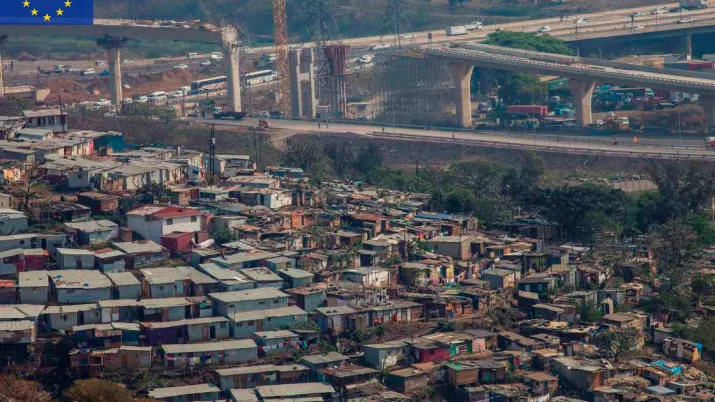
Analyzing the employment effects of the “green economy” transition in South Africa
Completed
2023 - 2024
 Legal notice EU (project) What has been the redistributive impact of social and fiscal policies in Mexico and Colombia, in the context of the policies implemented during the Covid-19 pandemic? The EU-AFD Research Facility on Inequalities will seek to answer this question in collaboration with the Institute for Inequality Studies (INDESIG).
Context
While there is mounting evidence that the Covid-19 pandemic has increased socioeconomic inequality, there is still a need to understand the exact channels of impact and what role the policy response has played in different contexts. It is also necessary for governments to be clear about the efficiency of the type of policies they have implemented throughout this period, in terms of the redistributive and/or regressive effect both from an inequality and poverty perspective. Indeed, we know that the amount of additional social spending (excluding health) implemented during the pandemic reached almost 3% of GDP in Colombia and only 0,2% in Mexico. However, research has not yet demonstrated whether the redistributive policies introduced by the Mexican and Colombian governments in response to the Covid-19 crisis have had any positive effect on the distribution of economic and social resources in these two countries.
This project is part of the call for research proposals “Advancing the inequality agenda through collaborative research: identifying the priorities for a global Team Europe approach on inequalities”, launched by the Strategic Committee of the Research Facility on Inequalities. It is coordinated by AFD and co-financed by the European Commission, AECID and ENABEL.
Objective
The project will seek to understand what has been the redistributive impact of social and fiscal policy in Mexico and Colombia, in the context of the policies implemented during the Covid-19 pandemic.
Method
This research project will be conducted as follows:
- Using the framework of the Commitment to Equity (CEQ) methodology, an analysis aiming to differentiate what has been the progressivity or regressivity of the policies implemented during the Covid-19 pandemic will be conducted. This analysis will take into account the main beneficiary groups of these policies and will include a comparison between the budget amount and the efficiency of the policies identified in terms of inequality and poverty reduction.
- A desktop analysis of the decision-making will also be carried out to understand how the redistributive effects of the policies implemented were envisaged by the governments.
Results
The results of this project are presented in the following research paper: Promoting a More Progressive Approach - Evaluating the Impact of Social and Fiscal Policies in Mexico and Colombia amidst the Covid-19 Pandemic (2025)
This research paper analyzes the redistributive impact of some fiscal policies and social programmes (direct taxes and transfers) before and after the pandemic Crisis in Mexico and Colombia, following the CEQ methodology.
Contact
-
Anda DAVID
Economist, scientific coordinator of the EU-AFD Facility on Inequalities
Discover other research projects
Analyzing the employment effects of the “green economy” transition in South Africa
Completed
2023 - 2024
 Legal notice EU (project) How could the Social Relief Distress grant be redesigned to maximize impact on poverty and unemployment reduction, while being sustainable in the longer term? The Extension of the EU-AFD Research Facility on Inequalities will seek to answer this question in partnership with SALDRU (University of Cape Town – Southern Africa Labour and Development Research Unit).
Context
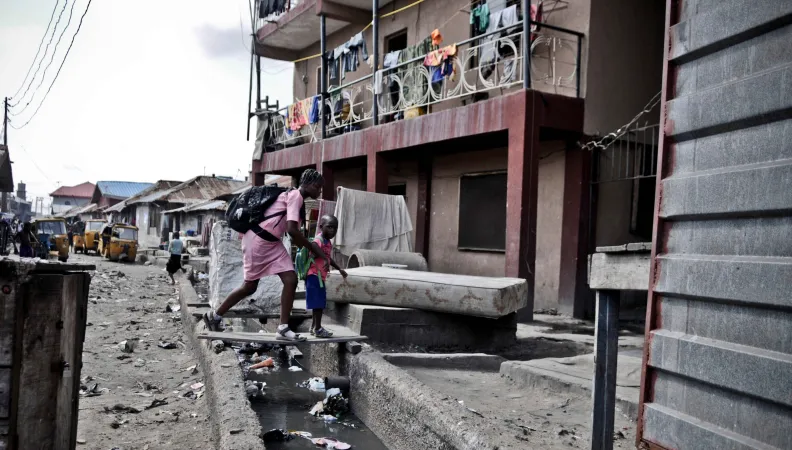
South Africa’s Economic Reconstruction and Recovery Plan was launched in October 2020 by the Presidency in response to the economic impacts of the Covid-19 pandemic. Besides the Presidential Employment Stimulus program, it included emergency social protection measures, among which the introduction of a special Covid-19 Social Relief of Distress grant (SRD), providing ZAR350 per month for unemployed people not covered by any other form of support. The South African government now seeks to develop options for the future of SRD grant.
This project is part of the Extension of the EU-AFD Research Facility on Inequalities. Coordinated by AFD and financed by the European Commission, the Extension of the Facility will contribute to the development of public policies aimed at reducing inequalities in four countries: South Africa, Mexico, Colombia and Indonesia over the period 2021-2025.
Objectives
The objective of this research project is to produce motivated recommendations on how the SRD should be designed going forward into the longer term, in order to maximize the impact of the grant on employment outcomes and to ensure it effectively reduces poverty, while maintaining its cost to an acceptable level:
- To maximise the impact of the grant on employment, the project needs to understand how to design and label the grant to encourage its use for job search.
- To ensure the grant effectively reduces poverty, the project must figure out the most cost-effective way to target and assess the eligibility of recipients. Moreover, poverty reductions can be scaled up by determining measures that could encourage take up among the most disadvantaged.
Once these goals have been achieved, and in order to inform public decision-making, these findings must be communicated to a number of stakeholders in government and civil society.
This project is part of a wider research program conducted with several South African research centres and in close collaboration with the South African Presidency. Four other research projects analysing the externalities of the Covid-19 stimulus policy are currently being developed as part of the first pillar of the Extension's activities in South Africa.
Method
This research project uses the model generated to conduct the 2014/2015 fiscal incidence assessment and introduces updated data for 2019-2021. It simulates five scenarios around eligibility criteria, targeting mechanisms, value, disbursement model and conditionalities and computes the potential impact on poverty and employment outcomes.
Research findings
You will find below the research paper related to this project:
It is worth noting that another paper has been published on the implications of the SRD grant, funded by AFD outside the Research Facility on Inequalities: Systemic exclusion from a South African social assistance transfer (February 2024)
Contact
-
Anda DAVID
Economist, scientific coordinator of the EU-AFD Facility on Inequalities
Discover other research projects

Analyzing the employment effects of the “green economy” transition in South Africa
Completed
2023 - 2024
 Legal notice EU (project) Through which channels did the Covid-19 pandemic impact inequalities in Togo? What have been the effects of the “Novissi” cash transfer program implemented by the Togolese government on the mitigation of income inequality? The EU-AFD Research Facility on Inequalities will seek to answer these questions in collaboration with the University of Lomé.
Context
Research has already shown that some population groups have been harder hit by Covid-19 than others and that the pandemic exacerbated existing inequalities in many areas, including health, education, work, and gender.
In this context, inequality has become a central issue for governments willing to fight the effects of the pandemic and to better prepare for future shocks. In April 2020, the Togolese government set up a cash transfer program called "Novissi", with the financial contribution of AFD, to support any eligible Togolese citizen who lost his or her income due to the adoption of the response measures against Covid-19.
This project is part of the call for research proposals “Advancing the inequality agenda through collaborative research: identifying the priorities for a global Team Europe approach on inequalities”, launched by the Strategic Committee of the Research Facility on Inequalities. It is coordinated by AFD and co-financed by the European Commission, AECID and ENABEL.
Objectives
Studies using updated data and capturing the potential effects of the Covid-19 pandemic on income inequality and poverty in Togo are relatively scarce. This research project aims to fill the gap in academic literature by analyzing the impacts of Covid-19 on inequality in Togo, and evaluating the effects of the Togolese social policy « Novissi » on mitigating the impact of Covid-19 on inequality.
Method
Using rich microeconomic data from a survey conducted by Togo's Institut National de la Statistique et des Études Économiques et Démographiques (INSEED) aimed at analysing the impact of the Covid-19 pandemic, the research team will estimate an econometric model based on the model developed by Dang and Nguyen (2021).
Results
Due to methodological limitations and data availability constraints, this project did not lead to a publication. Further information is available upon request.
Contact
-
Anda DAVID
Economist, scientific coordinator of the EU-AFD Facility on Inequalities
Discover other research projects
Agroecology public policies and income inequalities in rural regions in Senegal
Completed
2018 - 2020
Inequalities in access to basic services and impact of public policies in Côte d'Ivoire
Completed
2018 - 2019