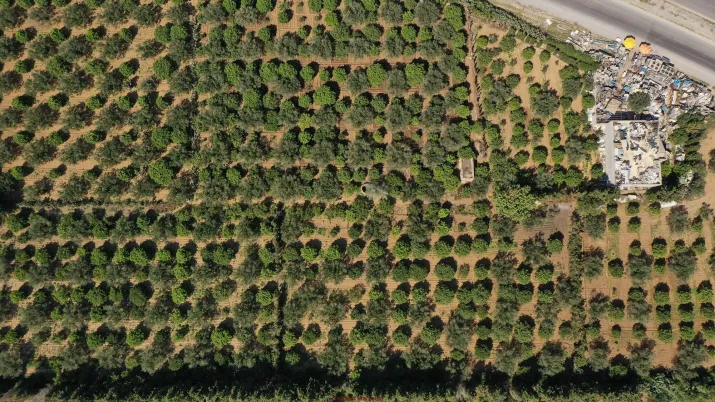

As part of the ECOPRONAT research programme, AFD is collaborating with the World Resources Institute (WRI) to develop a strategic framework for identifying and deploying nature-based solutions (NBS) in urban areas, taking Addis Ababa (Ethiopia) and Kigali (Rwanda) as case studies. Natural ecosystems and biodiversity are indeed essential to ensure the livability of cities, especially in the face of climate change and its impacts. Their integration into urban planning processes is also essential.
Context
According to a 2021 OECD report, two-thirds of African cities are at “extreme” risk of climate and water-related shocks. Violent climate events, heat waves and droughts are thus at the top of the risks incurred by urban areas. Rapid urbanization, unsustainable development and degradation of natural ecosystems exacerbate these risks.
Nature-based solutions (NBS), which rely on natural ecosystems and the services they provide to human activities, address these urban challenges, while simultaneously providing benefits in terms of human well-being and biodiversity. However, they are still little integrated into urban planning processes and decision support tools available to planners. The lack of knowledge, data and experimentation on nature-based solutions therefore hampers their adoption and deployment.
This project is part of the ECOPRONAT research programme, which supports research on how to better take into account biodiversity and mainstream it into key economic sectors.
Objectives
The objective of this research project is to enable, through the construction of a strategic framework, the deployment and scaling of nature-based solutions, in particular to address water and heat risks. The challenge is to improve the ecological resilience of cities by helping them identify the risks they must prepare for, to assess the potential of NBS to address them and to develop implementation and funding strategies for these NBS as part of the urban planning process.
A fast, effective and practical methodology for assessing the potential of nature-based solutions will be made available to the cities of Addis Ababa and Kigali, which are the two pilot cities of this research project. The project is led by WRI, in partnership with the Addis Ababa Urban Development Department, the Ethiopian Institute of Architecture and the Rwanda Young Water Professionals Association. This methodology is intended to be adopted by other urban centers to allow a broader appropriation and mobilization of NBS in cities.
Method
At the methodological level, the construction of a strategic framework for nature-based solutions is interesting for two reasons:
- Identification of flood risks, heat islands, water supply and biodiversity potential of cities through the production of composite maps and the mobilization of satellite data;
- Participatory construction of the strategic framework through workshops with stakeholders of both cities to validate the priority areas of intervention and identify the NBS most adapted to the issues of each area.
Results
Developed by the WRI research team with the cities of Addis Ababa and Kigali, the Strategic NbS Framework can support cities in selecting and implementing appropriate nature-based solutions (NbS).
By integrating globally available data sets with local data, it helps identify areas of a given city that are susceptible to extreme flooding and heat, as well as opportunities to expand urban green spaces and create ecological corridors.
To ensure successful implementation, collaboration between public authorities, technical experts, and community leaders is essential. Using this framework, citywide maps can be quickly generated to identify priority areas. After a validation by city stakeholders, field experts then play a key role in designing effective NbS, tailored to local conditions.
Although it has limitations in data detail, the Framework provides a solid starting point to build sustainable cities. Additional guidelines provide technical information on usable NbS, as well as case studies. These guidelines are available for download below:
A webinar from the Research Conversations series was held to present the project's findings, and these research findings are summarized in a policy brief available for download below.
Research findings
The research project identified a series of lessons to facilitate the deployment of nature-based solutions (NbS), taking into account the specific needs of cities. These lessons highlight the potential of nature in urban resilience planning and climate action:
- To increase awareness and institutional integration:
- Set up multi-stakeholder processes to support dialogue and the prioritization of identified NbS.
- Rely on case studies to facilitate understanding and engagement.
- To enhance data availability for more effective planning:
- Combine local and global datasets to carry out multi-hazard assessments (flooding, urban heat islands, etc.).
- Encourage citizen science initiatives for data collection, and ensure it is considered in decision-making.
- To strengthen planning and implementation linkages:
- Establish dedicated governance structures (such as a mayoral committee) to coordinate various technical services involved and mobilize funding.
- Develop common reference frameworks (design standards, guidelines, etc.) to strengthen political and public support.
- To secure long-term financing:
- Integrate NbS into existing city investment programs.
- Include strategies for public-private partnerships and use a multi-benefit assessment framework to demonstrate their long-term value.
- To adapt solutions to the local context and ensure monitoring:
- Launch NbS pilot projects with monitoring systems to track their performance.
- Integrate gender, equity, and inclusion considerations from the selection phase of each NbS.
Learn more
Contact
-
Julien CALAS
Research Officer on Biodiversity
Other projects on Nature-based Solutions supported by ECOPRONAT
Within the framework of the ECOPRONAT research programme, AFD supports the development of methodologies to assess the environmental sustainability at the level of a territory - and more particularly in Colombia and South Africa -, using the ESGAP (Environmental Sustainability Gap) framework. This framework produces a synthetic indicator based on a dashboard to monitor the state of the environment from a strong sustainability perspective.
Context
Public actors need to monitor the state of the environment in order to assess the effectiveness of their actions, prioritize management policies and measures, and thus objectively establish their contribution to the conservation of natural capital. To do so, they must be able to rely on science-based standards to identify the thresholds at which environmental functions can be considered sustainable.
The ESGAP (Environmental Sustainability Gap) is an innovative tool for assessing the condition of a territory’s environmental functions and how sustainable they are. For all critical components of natural capital in the territory concerned (air or water quality, pollution, forest resources, fisheries, etc.), this indicator calculates the difference between their current state and a state that would be sustainable (i.e., a state compatible with the sustainable functioning of the processes necessary for the preservation of life, human activities and well-being). This allows for the calculation of the “environmental sustainability gap”, which highlights the path to environmental sustainability. This can then serve as a guide for public policies to estimate and preserve the critical functions of the natural capital of a given territory. ESGAP has already been tested in New Caledonia, Kenya and Vietnam.
Within the framework of the ECOPRONAT research programme, AFD aims to develop methodologies for assessing strong sustainability, that is, adopting demanding criteria concerning the non-substituability of natural capital by other forms of capital (physical among others) in a territory or country. AFD also wants to promote their use in international frameworks and contribute to emerging international standards on the good ecological state of ecosystems.
Find out more about ECOPRONAT
Objectives
Building on the previous work of University College London (UCL) on the application of ESGAP in countries of the Global South, this research project led by UCL aims to implement the ESGAP framework in Colombia and South Africa. It will test its relevance in fostering public policy dialogue in these two countries that already have a regulatory framework and natural resources management, but where not all data on biodiversity is available.
More specifically, this project has four objectives:
- Developing the ESGAP components related to biodiversity and the state of ecosystems that could be used by Colombian and South African governments, and promoting the use of science-based targets for ecosystem maintenance;
- Promoting reflection on strong sustainability in Colombia and South Africa through the ESGAP framework, by assessing whether the activities carried out in these countries are within the safe operating space for humanity;
- Clarifying how the ESGAP framework aligns, complements and adds value to other types of existing sustainability indicators that national governments are already using;
- Strengthening the capacity of partner countries to implement the ESGAP framework beyond this research project.
Method
The ESGAP framework is based on a dashboard that provides information on changes in the functional state of 23 components of the environment, focusing on the gaps that exist between these changes and the objectives of maintaining or achieving a "good environmental state". These components cover the 4 main categories of critical and essential environmental functions: resource provision, pollution reprocessing, biodiversity and human health. The scores for each of the twenty-three components are then aggregated to form a synthetic indicator and a dynamic indicator.
The research activities in the two pilot countries is carried out by researchers from Stellenbosch University (South Africa) and the National University of Colombia (UNAL). Capacity building will include training four postgraduate students as well as awareness-raising activities targeting policymakers and other stakeholders, in order for them to take ownership of the ESGAP and use it during public policy formulation.
Expected results
The research teams will produce scientific papers on the relationship between the ESGAP framework and other sustainability indicator initiatives, as well as on the work and calculations of the ESGAP indicators carried out in each country, comparing the cases of Colombia and South Africa. A specific report will be produced on indicators of the state of biodiversity and ecosystems as well as the identification of data sources for the two countries studied.
In addition, an international workshop will be organized to present the complementarities between the ESGAP framework and relevant initiatives of existing sustainability indicators.
Finally, the research team intends to produce several documents for decision-makers and public policy actors:
- A summary of the review of biodiversity indicators and the state of ecosystems, which may be useful for negotiations at the Conferences of the Parties (COPs) to the Convention on Biological Diversity and for the design of national biodiversity strategies and action plans (NBSAPs);
- A webinar with a webinar report on the relationship between the ESGAP framework and other international sustainability reporting initiatives;
- A summary for decision-makers in each partner country on the rationale of the strong sustainability development approach and the methodology and ESGAP indicators that enable it to be implemented.
Download the publications related to the project:
- The SDGs Provide Limited Evidence That Environmental Policies Are Delivering Multiple Ecological and Social Benefits, Earth's Future vol.12 (May 2024)
- Enhancing Environmental Sustainability Through the Environmental Sustainability Gap (ESGAP) Framework in Colombia, Policy Dialogues n°67, Editions Agence française de développement (October 2024)
- Strong sustainability in the SEEA and the wider indicator landscape, One Ecosystem (May 2025)
- Assessing environmental sustainability in Colombia: Metrics and policy recommendations, Environmental and Sustainability Indicators n°27 (September 2025)
A "Research Conversations" webinar presented the results of the articles to the scientific community in November 2024:
Contact
-
Oskar LECUYER
Research Officer, Environmental Economist
Discover other research projects
- Read more about Assessing the concrete effects of climate change education on ecological transitions
Schoolchildren in a classroom. AFD funded two systematic literature reviews to assess the concrete effects of climate change education (CCE) on ecological transitions. By examining their impact on the knowledge, attitudes and behaviours of schoolchildren, young adults and their entourage, these studies led to recommendations for researchers and decision-makers in the field of education.
Context
Climate change education (CCE) encompasses school and out-of-school activities that: teach skills and knowledge about climate change mitigation (such as sustainable lifestyles) and adaptation (such as disaster risk reduction); promote safe and sustainable learning spaces; actively engage communities as agents of change; and strengthen collaboration between policy makers and researchers in education and climate. It can take different forms (laboratory activities, school projects, etc.).
Despite the growing number of scientific studies on CCE, the concrete effects of these educational interventions remain uncertain. This is why, following a call for research proposals, AFD has selected two projects for systematic reviews of the existing literature and its main gaps:
- The first project focuses on the effects of climate change education on the knowledge, attitudes and behaviours of schoolchildren and their entourage; it is carried out by a team of researchers from the departments of psychology and natural sciences of the University of Rosario in Colombia.
- The second focuses on the effects of climate change education on behaviour and norms; it is led by a team of researchers from the Groupe d’Analyse et de Théorie Economique (GATE-CNRS) and the Department of Experimental Economics at the University of Rosario in Colombia.
Objectives
The study conducted by the University of Rosario analyses the impacts of climate change education according to the type of intervention (“traditional”, immersive, innovative teaching activities, etc.) and the strategies mobilized (based on knowledge, habits, emotions…). It aims to assess the effects of these different interventions on the knowledge, attitudes and behaviours of preschool and school-age children and their entourage, with a focus on their sociodemographic characteristics.
The study led by GATE-CNRS examines the impact of climate change education on the behaviours and the social norms that shape behaviors and expectations of children and young adults within society, through the prism of behavioral sciences. It aims to identify educational activities and content that promote changes in social norms, as well as possible cognitive biases and cultural and normative barriers. This systematic review will be supplemented by a research experiment conducted by GATE-CNRS.
Method
Both research projects are based on systematic reviews, namely rigorous and reproducible syntheses of the results of all existing original studies answering the same research question, which makes it possible to identify, select, evaluate and summarize primary studies, data and research findings on this issue.
The study led by the University of Rosario adopts the PIO (Population, Intervention, Results) methodology, which helps in the formulation of the research question and the realization of bibliographic research. A comparative analysis is then conducted to assess the effects of education on different populations (for example, younger students versus older students, etc.).
The study conducted by GATE-CNRS uses the PICO (Population, Intervention, Comparison, Result) approach, in which a comparative analysis allows to evaluate the most popular, effective or reliable types of interventions from a methodological point of view, behaviours and social norms, with a focus on intervention contexts. An experimental study conducted in France and Colombia will then aim to fill some gaps observed in the literature by testing two hypotheses:
- immersive educational activities are more effective than traditional activities in inducing pro-environmental behaviours and normative changes;
- the level of adherence to norms and civic engagement in both countries result in a different propensity to engage.
Research findings
Each of the two research projects resulted in a “Policy Dialogue” publication, presented at COP28, as well as a research paper published in the collections of Editions Agence française de développement. The project of the GATE-CNRS team will also give rise to a second research paper presenting the results of the field experiment.
Download the publications:
- Climate change education from the perspective of social norms: A systematic review (AFD Research Papers, November 2023) and the associated "Policy Dialogue" publication
- Worldwide effects of climate change education on the cognition, attitudes, and behaviors of schoolchildren and their entourage (AFD Research Papers, November 2023) and the associated "Policy Dialogue" publication
A webinar from the “Research Conversations” series, held in April 2025 to present the latest findings, is available for replay (in French with English subtitles):
Lessons learned
The two systematic literature reviews highlight gaps in research on climate change education, but also some promising results for this area of intervention.
The study conducted by the University of Rosario highlights, among other things, the omission of the gender equality lens, the difficulties in analyzing the effectiveness of long-term interventions, and the fact that research focuses more on the effects on knowledge than on behaviour. The study also highlights that the most relevant interventions are those that mobilize innovative pedagogies, that are based on information drawing on personal experiences, and that generate positive emotions, while those based on negative emotions can have counterproductive effects.
The study led by the GATE-CNRS finds that the types of intervention are very diverse. Projects based on concrete activities, those that combine several types of interventions and those that involve several stakeholders (teachers, students, etc.) lead to more convincing results. The study also highlights the very small amount of work that focuses on social norms; the fact that this research is conducted mainly in high-income countries and in urban areas; and that it focuses on recycling and waste behaviours, easily observable, neglecting behaviours with a greater impact on climate (transport, etc.).
The results of the experimental study are expected by the end of 2025.
Contacts
- Dr. Cecilia Poggi, Research Officer, AFD
- Dr. Linda Zanfini, Research Officer, AFD
- Dr. Benjamin Quesada, Associate Professor, Earth System Science Director, Research Group Leader "Interactions Climate-Ecosystems" (ICE), University of Rosario (Colombia)
- Dr. Fabio Galeotti, CNRS researcher at the Groupe d’Analyse et de Théorie Economique Lyon St-Etienne (GATE), Head of the 'Experimental economics' research group at GATE (France)
Find out more
Climate Change Education from the Perspective of Social Norms
Published on November 22, 2023
Climate change education effects on worldwide schoolchildren and their entourage
Published on November 22, 2023
Is climate change education effective? Two AFD-supported studies provide answers
Published on May 5, 2025
Discover other research projects
As part of the ECOPRONAT research programme, AFD is working with the Indian Institute for Human Settlements (IIHS) to analyse the links between urban agriculture, nature-based solutions (NBS) and city-scale resilience in Bangalore. Documenting the role of urban food systems in the production of ecosystem services aims at contributing to the development of sustainable urban development policies.
Context
As the field of research on green infrastructure and nature-based solutions in cities expands, the potential of urban agriculture in the production of ecosystem services remains unexplored. Beyond the benefits of increasing food supply and reducing the vulnerability of urban populations, urban food systems can be at the heart of policies to develop nature-based solutions. This project studies the potential benefits of these systems in the perimeter of Bengaluru, an Indian city with a strong heritage in terms of urban agriculture.
This project is part of the ECOPRONAT research programme, which supports research on how to better take into account biodiversity and mainstream it into key economic sectors.
Objectives
Taking the case study of Bengaluru, this project led by IIHS explores how and why urban food systems, in rapidly developing urban and peri-urban areas, can be seen as nature-based urban solutions that bring benefits to ecosystems and society.
Two research questions are addressed:
- What is the scope and outcomes of urban agriculture for ecosystem services (including pollination) and societal well-being (such as food and nutritional security of the most vulnerable populations)?
- How can we use different co-production pathways across the science-policy-citizen interface to scale up NBS around sustainable urban agricultural practices?
Method
The research methodology is based on three main work packages:
- Synthesis of scientific knowledge on the potential of NBS and existing practices at various scales, and particularly within a chosen ward of Bengaluru with the deployment of pilot interventions;
- Incubation and capacity building: incubating novel NBS ideas and experiments related to pollinator friendly and water conserving urban agriculture, and capacity building through the training of various stakeholder groups;
- Scaling impact by identifying and engaging with different stakeholders, including city-level policy and decision makers, right from the start of the project to ensure the scaling of impact throughout the project.
Results
The expected results of these projects are:
- Academic results on sustainable urban food systems in the context of rapidly urbanizing countries from the Global South, on urban NBS experiences and their effects on ecosystem services (including pollination);
- Knowledge outputs for urban decision-makers on the integration of NBS in urban planning;
- Capacity building and teaching materials on multidisciplinary approaches to urban sustainability.
The project is also testing nature-based solutions aimed at strengthening the resilience of food systems in Bangalore.
An example: the PLUME project
Supported by the IIHS, the PLUME (Pollinator Linked Urban Multifunctional Ecosystems) project is developing pollinator-friendly food gardens in private and public spaces, installing infrastructure such as bee hotels, and raising public awareness of the importance of biodiversity for urban agriculture. The project team has designed a ‘PLUME toolkit’ containing seeds of local species and the appropriate equipment for sowing them, as well as educational tools and a website.
By testing nature-based solutions, PLUME is the action research component of the research carried out by the IIHS on the greening of urban food systems as part of the Ecopronat research programme. It demonstrates how sustainable agricultural practices can be integrated into cities while enhancing biodiversity and citizen involvement through a research-action approach.
Research findings
The research team aims to show how nature-based solutions (NbS) can address urban water security challenges in the Global South — a topic that remains underexplored in the scientific literature, which is still largely focused on the Global North. Drawing on expert discussions and a literature review, they identify the specific characteristics of these contexts (environmental, socio-economic, governance-related, technical capacity, etc.), as well as the barriers and opportunities for implementing these solutions. The goal is to propose concrete avenues to support the more effective and equitable adoption of NbS in cities of the Global South.
Read the research paper
Contact
-
Julien CALAS
Research Officer on Biodiversity