
 As part of this research project, AFD is working with the Biotope/Arcadis consortium to identify the best methods for measuring biodiversity – or "biodiversity metrics" – for Public Development Banks (PDBs). By comparing the advantages and limits of six existing biodiversity metrics, this project aims to strengthen the mainstreaming of biodiversity criteria into financing decisions, thereby contributing to a more nature-positive economy.
Context
Today, the loss of biodiversity has become a major risk for financial systems. In September 2023, Ravi Menon, Chairman of the NGFS – the network of central banks, financial regulators and financial institutions for the greening of the financial system – warned: "Along with the climate crisis, the degradation of nature is an existential threat facing our planet. Addressing nature-related risks and its broader implications for the financial sector is no longer just prudent – it is an imperative".
As these risks require rigorous measurement, several frameworks have been proposed. The NGFS has published a conceptual framework for taking into account the risks associated with biodiversity loss. Target 15 of the Kunming Montreal Global Biodiversity Framework also encourages businesses and financial institutions to assess, report on and reduce the risks associated with biodiversity loss and the negative impacts they have by 2030. Lastly, the Task Force on nature-related Financial Disclosure (TNFD) has proposed a reporting framework to help businesses and financial institutions analyse and disclose these risks and impacts, recommending the use of various biodiversity metrics.
However, as the missions of PDBs focused on achieving the Sustainable Development Goals (SDGs) are very specific within financial institutions, there are few studies to help this type of institution identify the biodiversity metrics best suited to their activities.
Objectives
The main objective is to compare six biodiversity metrics to determine which are best suited to the needs of Public Development Banks. By identifying the best practices, this project aims to guide PDBs in their financing decisions, by better integrating biodiversity considerations. This harmonisation of biodiversity measurement practices will improve the environmental impact of the projects financed.
The research project also seeks to reveal the accessibility costs and the need for training within PDBs so that they can effectively integrate biodiversity considerations into their risk assessments.
This project is part of the ECOPRONAT research programme, which supports research on how to better take into account biodiversity and mainstream it into key economic sectors.
Method
The study, conducted by Biotope and Arcadis, has been carried out in three phases: launch and data collection (briefing, project validation and data collection with recommendations); implementation (summary assessment, then in-depth assessment depending on the data available); consolidation and reporting (analysis of results, comparison of metrics and drafting of summary report).
Following an preliminary comparative study by The Biodiversity Consultancy, six metrics for assessing biodiversity in PDBs projects were selected: ENCORE, ABC-map, STAR, CBF, BFFI and GBS. These relevant and scientific metrics cover the main drivers of biodiversity loss. A sample of six varied AFD projects was selected to test these metrics. The projects include initiatives in Africa, Pakistan and Mexico. The European Bank for Reconstruction and Development (EBRD) also tested the same metrics on three of its projects.
Results
The project resulted in three deliverables:
- A preliminary study proposing several protocols for the use of several metrics in order to compare their results. It also contains information that may be useful to some development banks that simply want to choose a metric and see how they can use it. With this in mind, a decision tree for choosing one of the metrics studied is proposed in Appendix 2 of this preliminary report.
- A policy brief providing synthetic results, a case study and specific recommendations for the integration of these metrics into PDBs financing processes.
- A final research paper.
Research findings
To produce a comparative analysis detailing the advantages and limitations of the different biodiversity metrics studied, this research project tested how tools can be applied throughout the investment cycle, from project screening to portfolio reporting.
Findings show that while tools can deliver meaningful insights, their use is limited by scarce and uneven project data. Time and reporting constraints often force reliance on sectoral averages rather than site-specific inputs, reducing precision. Differences in metrics, units, and classifications complicate comparisons, and some pro-nature impacts (e.g. sustainable agriculture, forestry, anti-poaching) are poorly captured.
Despite these limits, tools are valuable for early risk screening and aligning finance with nature-positive goals. No single tool meets all needs, but a combined, tiered approach—tailored to project type, data, and disclosure requirements—can add value.
Download the publications
- The preliminary study: Preliminary Comparative Analysis of Biodiversity Measurement Approaches for Public Development Banks
- The policy brief: Comparative analysis of biodiversity measurement approaches for public development banks
- The final research paper: Comparative analysis of biodiversity measurement approaches for public development banks

Contact
-
Julien CALAS
Research Officer on Biodiversity

Discover other research projects



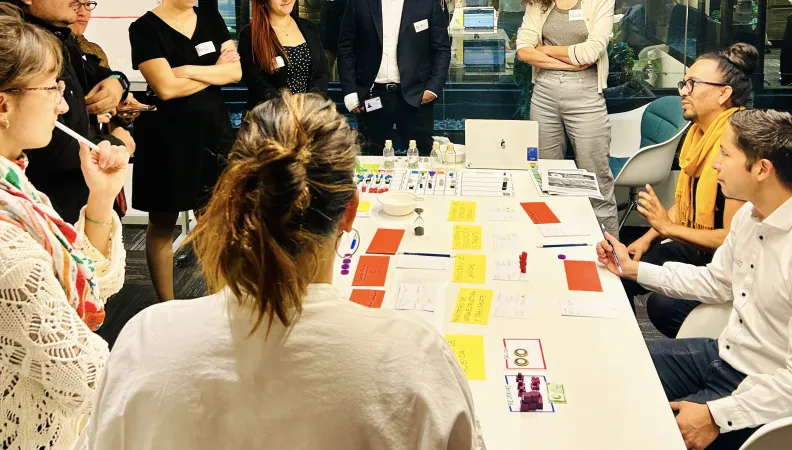 How can we better understand the behavior of the various stakeholders involved in Colombia's low-carbon transition? This project seeks to facilitate and promote high-level strategic dialogue around Colombia's energy transition through the design of a participatory process and the development of an interactive tool. Specifically, it aims to enable the exploration of different scenarios and support informed decision-making.
Context
Colombia, a country heavily reliant on fossil fuel exports, is actively working to complete its low-carbon transition and achieve its Nationally Determined Contribution (NDC) targets under the Paris Climate Agreement.
To support these efforts, AFD has partnered with Colombian authorities to adapt the GEMMES macroeconomic model to Colombia's specific context. The objective was to assess the long-term macroeconomic vulnerabilities and opportunities linked to Colombia's energy transition within the broader global shift to low-carbon economies.
This research work has culminated in a collaborative publication, which outlines the scientific findings and public policy recommendations derived from the GEMMES Colombia project: Modelling low-carbon transitions in Colombia: Macrofinancial risks and opportunities
While macroeconomic modelling is crucial for understanding the impacts of policy decisions and addressing macroeconomic imbalances during transitions, it is equally important to consider the behavioral aspects that shape the decision-making processes and strategies of stakeholders involved in Colombia’s low-carbon transition.
For further reading
Objectives
Based on the empirical results reflected in the GEMMES model scenarios, this project aims to develop a strategy game for the collective exploration of future scenarios. Beyond economic and financial aspects, it also addresses the energy transition by integrating social and climate dimensions, as well as, to a lesser extent, biodiversity-related issues.
This participatory modelling process is designed to facilitate dialogue among key stakeholders in Colombia’s transition (ministries, central bank, entrepreneurs, researchers, etc.), enabling them to anticipate and prepare for the short-, medium-, and long-term macroeconomic impacts that a low-carbon transition may generate.
To this end, the serious game Powershift aims to:
- Familiarize stakeholders in Colombia’s energy transition with macroeconomic issues related to transitions, so they can take ownership of these topics;
- Identify the “mental models” of each category of stakeholders regarding the energy transition, in order to better highlight emerging tensions and synergies and help evolve perceptions;
- Make scientific frameworks accessible and engaging to support informed decision-making;
- Improve coordination between public institutions, economic actors, and researchers around energy transition challenges.
This project therefore seeks to strengthen high-level interministerial and cross-sectoral dialogue and, by extension, enhance coordination among stakeholders (including the private sector) in support of Colombia’s environmental commitments.
Method
The design, modeling, and implementation of the strategy game are grounded in the ComMod methodology, initially developed by CIRAD to facilitate multi-stakeholder processes and support collective decision-making and action.
The process includes modelling workshops with stakeholders, crash-test sessions, and game workshops involving policymakers, financial actors, donors, researchers, private sector representatives, and civil society. Key stages include conceptualization, validation, and scenario exploration. Participants are free to define their own strategies; any crises or tensions that arise during the game result from the collective decisions made throughout the sessions.
An ex-ante and ex-post assessment of stakeholders’ positions makes it possible to measure the effects of the approach on knowledge, interactions among actors, and participants’ strategic capacities. Debriefing workshops have been organized with policymakers to ensure effective ownership of the findings.
Results
The project has led to the creation of a strategy game that is now beginning to be used by Colombian counterparts to explore energy transition scenarios. To date, 3 crash-test sessions and 9 game sessions have been held, bringing together nearly 200 public and private stakeholders involved in the energy transition, as well as more than 50 different institutions. These include Colombian universities, ministries (finance, environment, labour, planning, housing, health, energy, agriculture, tourism), the central bank, financial supervisory authorities, commercial banks, research centres, international cooperation actors, NGOs, business associations, and consulting firms. Some sessions included the participation of vice-ministers.
The workshops helped strengthen dialogue at four levels: interministerial; cross-sectoral (with a strong diversity of public, private, academic, and international actors across all sessions); interdepartmental (notably through the mobilisation of the 14 departments of the Financial Superintendency); and public–private.
By mobilising this wide range of stakeholders, PowerShift has marked an important step in strengthening Franco-Colombian interministerial and cross-sectoral dialogue on the energy transition. Outputs include a project synthesis report, a research paper, policy recommendations, and knowledge-sharing materials. Key insights were shared through debriefing workshops with Colombian partners.
Find out more:
Research findings
Feedback from participants in the sessions indicates an improved understanding of the effects of the energy transition on the real economy of a country heavily dependent on hydrocarbon exports, as well as increased awareness of the associated challenges.
Key comments include:
- Importance of the co-construction process: Developing the game with Colombian partners allowed for the integration of the country’s institutional and economic specificities, which enhanced its credibility and stakeholder engagement.
- Creation of a pedagogical space conducive to dialogue: The sessions facilitated contacts with actors who had not previously been engaged.
- Flexibility and adaptability: The tool demonstrated its ability to adapt to different audiences, making it a valuable asset for a variety of stakeholders.
- Awareness of the complexity of energy transition dynamics: The game highlighted the interdependencies between economic, climate, and social issues, as well as differences in priorities between institutions, helping to better understand potential obstacles to public action.
- Illumination of behavioral dynamics: The sessions revealed that organized collective action primarily emerges in response to urgent issues or shared problems.
- Challenge of a holistic vision: Participants noted that developing a comprehensive view of the energy transition and actors’ strategies is particularly difficult due to the complexity of the subject.
- Success factors for participatory approaches: The involvement of high-level decision-makers and the existence of a safe dialogue space were identified as key factors in fostering participant engagement.
- Limits of the exercise in a short timeframe: While the game facilitates understanding of systemic dynamics, translating this understanding into actionable solutions requires complementary measures and long-term follow-up.
Building on these achievements, potential avenues for extension could include:
- Technical support for potential application of the tool at the territorial level;
- Facilitation of international exchanges to share best practices in participatory dialogue;
- Further strengthening of public–private partnerships through continued use of the tool.
To go further
Contacts
- Annabelle Moreau Santos, Scientific Mediation Officer, AFD
- Antoine Godin, Economist, Head of AFD Macroeconomic Modelling Team
- Julien Calas, Agronomist and Research Officer on Biodiversity, AFD
Discover other research projects
 To what extent do carbon credits and voluntary carbon markets really contribute to the achievement of the objectives of the Paris Climate Agreement? By opening the "black box" of these instruments, this study proposes a critical analysis of the economic paradigm in which they fit and identifies ways to reconceptualize them through an environmental accounting framework.
Context
Voluntary carbon markets (VCMs), created in 2000, are carbon credit trading mechanisms that allow companies, in particular, to voluntarily offset their carbon footprint. They can be traced back to the Kyoto Protocol, which introduced the principle of trading greenhouse gas emission reduction credits (or ‘CO2 equivalents’) in 1997. However, they are distinct from ‘carbon allowances’, which are part of a compliance scheme rather than a voluntary one.
These voluntary markets have grown significantly in recent years. One of the driving forces behind this development has been the implementation of initiatives to achieve ‘Net-Zero’ targets – the vast majority of which are voluntary, although some compliance mechanisms allow the use of carbon credits (e.g. the Corsia mechanism in the aviation sector). All this should contribute to the development of an ecosystem for trading the regulatory environmental service of carbon capture, in support of the objective of reducing consumption of the ‘global carbon budget’, itself set by the IPCC.
However, voluntary carbon markets have been the subject of criticism and controversy since their inception, and questions remain as to whether they will actually help to achieve the objectives of the Paris Agreements.
Goal
Based on an analysis of the existing situation and the conceptual framework that currently structures the voluntary carbon markets and carbon credits, the study identifies the pitfalls not only of these markets and their organisation, but also of the instruments traded and the underlying paradigms that validate the current structuring of these markets.
The aim is to put forward proposals to ensure that the realities of the climate and the available carbon budget are better integrated into the operation of voluntary carbon markets, so that they become genuine tools for helping companies to make the climate transition. For example, it answers fundamental questions such as: should I offset, what part and what volume of my emissions are legitimate for offsetting, should I contribute to maintaining climate regulation services without offsetting?
Method
Using an accounting and management approach, the study questions current approaches to voluntary carbon markets, centred on the neoclassical economic paradigm. It promotes a ‘climate debt’ approach, as well as the management of this ‘climate debt’ through carbon budgets to be managed by means of preservation activities whose primary function must be to reduce greenhouse gas (GHG) emissions.
Using an ecological accounting method, the study describes how companies should contribute to global climate debt reduction beyond the voluntary carbon markets, and, through their organisational processes, addresses the levels of accountability for the various emission sources (scopes 1, 2, 3).
Lessons learned
The study shows that carbon credits and voluntary carbon markets are disconnected from climate and organisational realities. Opening the ‘black box’ of VCMs shows that behind this name lie several conceptions of these instruments, and therefore several ways of using and accounting for them within companies. What's more, the tools used by companies are not linked to the objectives of national or international climate policies, so they cannot be used to steer progress towards a global low-carbon trajectory.
To reconnect these instruments with climate policies, these markets need to be thought outside the neoclassical conceptual framework that gave rise to the other carbon management tools. The study proposes principles for reorganising these markets around a ‘managerial’ approach (using in particular the C.A.R.E. ecological accounting and management framework). It makes it possible to design VCMs to ensure compliance with carbon budgets allocated between companies, based on the global carbon budget defined by the IPCC. It thus gives theoretical and operational meaning to the ‘avoid/reduce/compensate’ sequence and to the use of compensation for ‘residual emissions’.
In other words, in order to collectively stay below 1.5°C of global warming, companies would each have to respect a given carbon budget each year (the carbon credit not being a licence to pollute or an emission right, but rather an instrument to be included in a strategy to limit greenhouse gas emissions). This would make it possible to support businesses while reconnecting the tool (VCMs), businesses and climate policies, from the perspective of global governance of the climate system.
Find out more:
- Download the research paper (in French): Crédits carbone et marché carbone volontaire : analyse critique au regard des politiques climatiques et des sciences de gestion, et proposition d'un cadrage comptable écologique des crédits carbone
- Watch the research webinar (in French): Pertinence des marchés volontaires de carbone : aujourd'hui et dans un futur neutre en carbone