
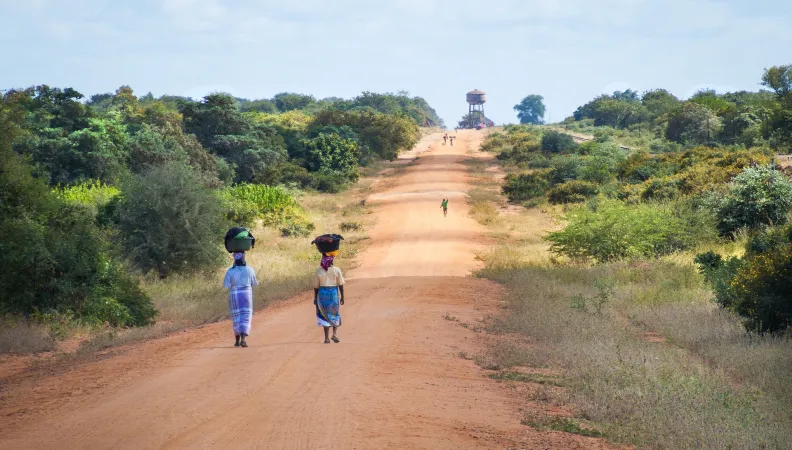
 As part of the ECOPRONAT research programme, AFD is supporting the FARSYMABI project (A Farming System Approach to Mainstreaming Biodiversity in the agricultural sector) in Mozambique. Through the identification of different farming system approaches and their effects on poverty alleviation, food production and biodiversity conservation, this research project aims at facilitating the design of national agricultural policies that mainstream biodiversity, taking into account the local context and successful interventions.
Context
The relationship between the biodiversity crisis and agriculture is complex. On the one hand, the expansion of agricultural systems and conventional agricultural practices threaten biodiversity; on the other hand, agricultural production is dependent on biodiversity and the ecosystem services it provides.
In Mozambique, tensions between poverty reduction targets and biodiversity protection are high. The expansion of small farms leads to the fragmentation of natural ecosystems and it represents one of the main sources of biodiversity destruction for the country. One of Mozambique’s responses to this fragmentation is to save the clearing of new land through a more intensive use of inputs, clearly separating land for nature protection from land for productive agriculture.
The reconciliation of agricultural development and conservation through the use of agricultural techniques respectful of biodiversity is now essential to ensure the sustainability of agricultural systems and secure the food supply of the population.
This project is part of the ECOPRONAT research programme, which supports research on how to better take into account biodiversity and mainstream it into key economic sectors.
Objectives
This research project aims to understand the possible trade-offs and complementarities between poverty reduction, food security and biodiversity in the context of developing countries, where farmland expansion is a major threat to biodiversity. This research will help understand how local landscape/community units function, how they impact biodiversity and its ecosystem services and how they benefit from them.
This knowledge will make it possible to identify the levers to mainstream biodiversity into the agricultural sector. This project also aims to demonstrate the need to create a link between the national policy framework regarding the mainstreaming of biodiversity into agriculture, and the socio-ecological context of successful local interventions.
The project involves a multidisciplinary team of ten Portuguese and Mozambican researchers: two from Observatório do Meio Rural (OMR), two from Eduardo Mondlane University, one from Lúrio University and five from the Instituto Superior de Agronomia in Lisbon (including a doctoral student). In addition, eighteen people (researchers and students) are involved in data collection activities.
Method
The methodological approach is divided into three steps:
- Priorities, analysis and mapping at the country level: carried out at national level, with the aim of producing a broad, national picture of the effects of farming systems on poverty reduction, food security and biodiversity conservation; as well as an understanding of the conflicts and complementarities between these objectives.
- Priorities, analysis and research into local context-sensitive interventions: carried out at the local level, through five case studies, covering the main socio-ecological gradients of Mozambique that should be considered when developing a national strategy to mainstream biodiversity into agricultural policies.
- Link between local initiatives and the national framework for the mainstreaming of biodiversity in agriculture: aims to integrate the results of the first and second steps, to help the mainstreaming of biodiversity in agricultural policy, addressing the conflicting relationships and complementarities between the objectives of poverty, food security and biodiversity.
This research project mobilizes different scientific disciplines in a transdisciplinary way, such as socioeconomics of agriculture, ecology, agronomy or sustainability sciences. This work will result in the production of a mapping of regions characterized by similar biophysical and socio-economic conditions, composition of agricultural systems, landscape mosaic, and levels of poverty, food insecurity, and biodiversity.
Stakeholders (decision-makers and contributors to public policies at the central level, farmers' organizations, environmental protection organizations, local actors) are also mobilized throughout the research work and their knowledge, perceptions and preferences incorporated into the analyses produced. This involvement of stakeholders aims to co-construct policies for mainstreaming biodiversity in agriculture.
Expected results
The main expected results of this project are:
- Production of a policy paper presenting the regional reference framework (socio-ecologically homogenous regions) and guidelines for mainstreaming biodiversity in each region;
- Assessment of the transferability of local success interventions within and across regions;
- Identification of the necessary political conditions at the national level for the implementation of local interventions;
- Comparative evaluation of different policy tools;
- Development of a simulation tool based on a farming system approach, that will allow policy makers to assess ex ante the impacts of alternative policies on the objectives of poverty reduction, and food security and biodiversity and ecosystem services improvement.
Lessons learned
The production of cartographic data at the local level contributes to the development of agricultural and land use policies at the national level. Moreover, the cross-referencing of these local data with participatory approaches (organization of workshops with producers and sharing of public policy options) contributes to the development of more transversal policies.
The project contributed to the training of local young students and technicians in applying surveys using tablets and using the Open Data Kit program. The project contributed to the exchange of knowledge between the researchers members of the project and the fieldwork guides regarding the identification of birds and vegetation species.
Find out more about the project's results: farsymabi.webnode.pt
Contact
-
Julien CALAS
Research Officer on Biodiversity
Discover other projects supported by ECOPRONAT



 As part of the ECOPRONAT research programme, AFD is collaborating with the World Resources Institute (WRI) to develop a strategic framework for identifying and deploying nature-based solutions (NBS) in urban areas, taking Addis Ababa (Ethiopia) and Kigali (Rwanda) as case studies. Natural ecosystems and biodiversity are indeed essential to ensure the livability of cities, especially in the face of climate change and its impacts. Their integration into urban planning processes is also essential.
Context
According to a 2021 OECD report, two-thirds of African cities are at “extreme” risk of climate and water-related shocks. Violent climate events, heat waves and droughts are thus at the top of the risks incurred by urban areas. Rapid urbanization, unsustainable development and degradation of natural ecosystems exacerbate these risks.
Nature-based solutions (NBS), which rely on natural ecosystems and the services they provide to human activities, address these urban challenges, while simultaneously providing benefits in terms of human well-being and biodiversity. However, they are still little integrated into urban planning processes and decision support tools available to planners. The lack of knowledge, data and experimentation on nature-based solutions therefore hampers their adoption and deployment.
This project is part of the ECOPRONAT research programme, which supports research on how to better take into account biodiversity and mainstream it into key economic sectors.
Objectives
The objective of this research project is to enable, through the construction of a strategic framework, the deployment and scaling of nature-based solutions, in particular to address water and heat risks. The challenge is to improve the ecological resilience of cities by helping them identify the risks they must prepare for, to assess the potential of NBS to address them and to develop implementation and funding strategies for these NBS as part of the urban planning process.
A fast, effective and practical methodology for assessing the potential of nature-based solutions will be made available to the cities of Addis Ababa and Kigali, which are the two pilot cities of this research project. The project is led by WRI, in partnership with the Addis Ababa Urban Development Department, the Ethiopian Institute of Architecture and the Rwanda Young Water Professionals Association. This methodology is intended to be adopted by other urban centers to allow a broader appropriation and mobilization of NBS in cities.
Method
At the methodological level, the construction of a strategic framework for nature-based solutions is interesting for two reasons:
- Identification of flood risks, heat islands, water supply and biodiversity potential of cities through the production of composite maps and the mobilization of satellite data;
- Participatory construction of the strategic framework through workshops with stakeholders of both cities to validate the priority areas of intervention and identify the NBS most adapted to the issues of each area.
Results
Developed by the WRI research team with the cities of Addis Ababa and Kigali, the Strategic NbS Framework can support cities in selecting and implementing appropriate nature-based solutions (NbS).
By integrating globally available data sets with local data, it helps identify areas of a given city that are susceptible to extreme flooding and heat, as well as opportunities to expand urban green spaces and create ecological corridors.
To ensure successful implementation, collaboration between public authorities, technical experts, and community leaders is essential. Using this framework, citywide maps can be quickly generated to identify priority areas. After a validation by city stakeholders, field experts then play a key role in designing effective NbS, tailored to local conditions.
Although it has limitations in data detail, the Framework provides a solid starting point to build sustainable cities. Additional guidelines provide technical information on usable NbS, as well as case studies. These guidelines are available for download below:
The scientific article presenting the overall approach and results is available for download below :
Download the scientific article
A webinar from the Research Conversations series was held to present the project's findings, and these research findings are summarized in a policy brief available for download below.
Research findings
The research project identified a series of lessons to facilitate the deployment of nature-based solutions (NbS), taking into account the specific needs of cities. These lessons highlight the potential of nature in urban resilience planning and climate action:
- To increase awareness and institutional integration:
- Set up multi-stakeholder processes to support dialogue and the prioritization of identified NbS.
- Rely on case studies to facilitate understanding and engagement.
- To enhance data availability for more effective planning:
- Combine local and global datasets to carry out multi-hazard assessments (flooding, urban heat islands, etc.).
- Encourage citizen science initiatives for data collection, and ensure it is considered in decision-making.
- To strengthen planning and implementation linkages:
- Establish dedicated governance structures (such as a mayoral committee) to coordinate various technical services involved and mobilize funding.
- Develop common reference frameworks (design standards, guidelines, etc.) to strengthen political and public support.
- To secure long-term financing:
- Integrate NbS into existing city investment programs.
- Include strategies for public-private partnerships and use a multi-benefit assessment framework to demonstrate their long-term value.
- To adapt solutions to the local context and ensure monitoring:
- Launch NbS pilot projects with monitoring systems to track their performance.
- Integrate gender, equity, and inclusion considerations from the selection phase of each NbS.
Learn more

Contact
-
Julien CALAS
Research Officer on Biodiversity
Other projects on Nature-based Solutions supported by ECOPRONAT

 Within the framework of the ECOPRONAT research program, AFD has supported the development of methodologies to assess a country’s environmental sustainability. Among them is the ESGAP framework, a “dashboard” for monitoring the state of several components of the environment. Drawing on the cases of South Africa and Colombia, this research project also explored how ESGAP could help public decision-makers steer environmental policies.
Context
To prioritize their actions to conserve natural capital and assess their effectiveness, public actors need to monitor the state of the environment objectively. To do so, they must be able to rely on science-based reference values.
Developed with this in mind, the ESGAP (Environmental Sustainability Gap) is an innovative method for calculating indicators that assesses the distance between the state of a territory’s critical environmental functions (air or water quality, pollution, forest resources, fisheries, etc.) and their sustainability level.
For several years, AFD has supported research to test this tool in different contexts (New Caledonia, Kenya and Vietnam). With this new project, it sought to refine how ESGAP can reflect the state of biodiversity and serve as a guide for public policies to estimate and preserve the critical functions of the natural capital of a given country.
This project is part of the ECOPRONAT research program, which supported research aimed at improving the consideration of biodiversity and mainstreaming it into key economic sectors.
Objectives
Building on the lessons learned in other countries, the researchers implemented the ESGAP framework in Colombia and South Africa and tested its relevance in fostering dialogue on environmental public policies. To this end, University College London and the Basque Centre for Climate Change partnered with teams from Stellenbosch University (South Africa) and the National University of Colombia (UNAL).
The project had four objectives:
- Improving the ESGAP indicators related to biodiversity and the state of ecosystems that could be used by the Colombian and South African governments, and promoting the use of science-based targets by public authorities;
- Promoting reflection on strong sustainability in Colombia and South Africa through the ESGAP framework, by assessing whether the development of these countries lies within the safe operating space for humanity;
- Clarifying how the ESGAP framework aligns with, complements and adds value to other types of sustainability indicators that both governments already use;
- Beyond the research work, strengthening the capacity of partner countries to use the ESGAP framework, notably through training activities for postgraduate students and awareness-raising activities for policymakers.
Method
The ESGAP framework is based on a dashboard that provides information on changes in the state of 23 components of the environment. These components cover the 4 main categories of critical and essential environmental functions: resource provision, pollution reprocessing, biodiversity maintenance and human health.
Their state at a given point in time is compared with a value that science considers “sustainable” (i.e., compatible with the preservation of life and human activities). The difference between the two is the “environmental sustainability gap”: the wider the gap, the longer the path to environmental sustainability.
The scores for the 23 components are then aggregated to provide an overall picture of the state of the environment, scored out of 100. A score of 100/100 would be achieved if the indicators for all components matched the sustainability reference values.
Learn more about the ESGAP methodology
Results
The research project helped further develop the ESGAP tool by testing its relevance for countries where environmental data may be less accessible and data infrastructure less advanced. It also deepened reflection on how to operationalize the ESGAP framework, particularly its complementarity with other indicators.
In Colombia and South Africa, specific work was carried out to improve the indicators related to biodiversity maintenance because, although both countries had a regulatory framework and natural resource management in place, not all data – particularly on biodiversity – were always available.
In terms of capacity building, five students and early-career researchers – four of them women – took part in this research as part of their training. The results were also presented to the Colombian and South African public authorities.
At the end of the project, a webinar in the “Research Conversations” series presented the results of the articles to the scientific community.
South Africa’s overall environmental sustainability gap score is 42/100. Major challenges remain for indicators related to human health: CO2 emissions, ambient air pollution and microbiological water pollution. However, South Africa scores well on indicators related to biodiversity conservation, indoor air pollution, groundwater use and consumption of ozone-depleting substances.
Key institutional actors – the South African National Biodiversity Institute (SANBI) and the Ministry of Environment – welcomed the research findings at a seminar organized by the South African Institute of International Affairs (SAIIA) to present and discuss the results. The 60 or so participants discussed ways to integrate these results into national strategies (biodiversity strategy, nationally determined contribution and municipal climate plans); they also stressed the need for a formal collaborative process to adapt and operationalize the framework.
Colombia’s overall environmental sustainability gap score is 32/100, showing considerable room for improvement. Good scores are achieved in areas where the country has made international commitments and set clear targets, such as the consumption of ozone-depleting substances. However, the ESGAP framework highlights critical vulnerabilities that require urgent attention: exploitation of forest and fishery resources; CO2 emissions; surface water pollution; coastal ecosystem health; conservation of endemic biodiversity; and conservation of natural World Heritage sites.
In Colombia, the indicator was built from assessments carried out by the Ministry of Environment. The ESGAP framework could only be applied to 17 of its 23 components, highlighting major data availability issues in some areas (such as groundwater resources, monitoring of chemical pollution in terrestrial ecosystems and ecosystem health indicators).
A workshop with several ministries provided an opportunity to present and discuss the results, leading to exchanges on the quality of the data and reference values used, and on how to make better use of these results to formulate concrete public policy recommendations. A summary for decision-makers was written specifically for the Colombian case.
Going further
- Research paper: Assessing environmental sustainability in Colombia: Metrics and policy recommendations, Environmental and Sustainability Indicators n°27 (2025)
- Policy brief: Enhancing Environmental Sustainability Through the Environmental Sustainability Gap (ESGAP) Framework in Colombia (2024)
- Infographic: Assessing the state of the environment in Colombia: What can we learn from the ESGAP analysis

This research project deepened reflection on how to operationalize the ESGAP framework, particularly its complementarity with other international indicator frameworks.
- The limitations of the SDG framework
The research team showed that the framework for monitoring progress toward the Sustainable Development Goals (SDGs), particularly the environmental ones, does not ensure that progress toward environmental sustainability is properly measured: most indicators do not refer to critical environmental functions, and only a minority come with sustainability reference values.
Read the research paper: The SDGs Provide Limited Evidence That Environmental Policies Are Delivering Multiple Ecological and Social Benefits, Earth’s Future, vol. 12 (May 2024)
- The potential of the System of Environmental-Economic Accounting (SEEA)
The team recommends that public decision-makers make better use of the System of Environmental-Economic Accounting (SEEA). Although recommended by the United Nations, it has so far been little used to monitor progress toward the SDGs or the Global Biodiversity Framework. The solution would be to integrate science-based sustainability reference values (such as those of the ESGAP framework) into the SEEA ecosystem accounts. This would make it possible to quantify gaps relative to ecological thresholds and thus make the SEEA more useful for monitoring progress toward the SDG sustainability targets or biodiversity targets.
Read the policy brief: Mobilizing strong sustainability indicators to achieve global durability goals
Read the research paper: Strong sustainability in the SEEA and the wider indicator landscape, One Ecosystem (May 2025)
Lessons learned
The ESGAP framework is a replicable tool for monitoring a country’s environmental sustainability and can inform public decision-makers about the action needed. Complementary to other indicators, it underscores the importance of science-based sustainability reference values for properly assessing the effectiveness of environmental public policies.
The ESGAP approach is recent but is gaining scientific legitimacy. It is currently considered to produce the most credible strong sustainability development indicators (Neumayer, 2025). It has also been cited as a methodology particularly well suited to assessing national policy frameworks for environmental sustainability (by WWF) and to assessing nature-related financial risks (by the NGFS).
While other research has developed the ESGAP approach in several developed countries (notably in Europe and Japan), the research supported by AFD through the ECOPRONAT program has shown that the ESGAP analytical framework can be adapted to countries of the Global South (Kenya, Vietnam, Colombia and South Africa). It thus provides an innovative and meaningful overview of the degree of environmental sustainability in a country.
As not all the data needed for the ESGAP analysis are systematically available, indicators adapted to each country can be developed. The downside is that countries cannot be compared with one another. AFD will launch new research to propose a standardized ESGAP framework that will allow countries’ environmental performance to be compared. This would be a kind of Human Development Index (HDI), but for nature.
In countries of the Global South, the picture of environmental sustainability is often incomplete because the data may be:
- Missing: there are blind spots in the environmental statistics system;
- Available but hard to access (not compiled, scattered, not public, etc.), so they cannot feed into the dashboard needed by public authorities, researchers or the general public;
- Available and accessible, but without a science-based sustainability reference value, which prevents a rigorous assessment of the sustainability of these functions.
Conducting an ESGAP analysis therefore reveals blind spots in some countries’ monitoring of the state of the environment and, consequently, in their assessment of the effectiveness of environmental public policies. This can help a country identify concrete actions to ensure that knowledge is available and accessible to guide action on biodiversity (Target 21 of the Global Biodiversity Framework). More broadly, investing in better environmental data collection systems is essential to accurately assess the state of the environment and the effectiveness of the policies implemented, thereby supporting better decision-making
Testing ESGAP in Colombia and South Africa also made it possible to assess its usefulness in initiating dialogue on environmental policies. The results were discussed between researchers and public decision-makers, and public policy recommendations were formulated for both countries. These discussions showed that, even though the ESGAP analysis is partial due to the lack of data, it can help integrate biodiversity into decision-making (Target 14 of the Global Biodiversity Framework).
The project demonstrated how ESGAP complements other indicators. In particular, it can be integrated into the System of Environmental-Economic Accounting (SEEA) recommended by the United Nations, and it can improve the monitoring framework for the SDGs and the Global Biodiversity Framework.
Discover other research projects


Contact
-
Oskar LECUYER
Economist

-
Julien CALAS
Research Officer on Biodiversity

 As part of the ECOPRONAT research program, AFD is seeking to develop new applications of the ESGAP framework, a methodology for assessing environmental sustainability at the scale of a territory. Focusing on Vietnam, where the ESGAP framework was recently tested, this research project aims to assess the physical risks associated with certain economic activities, based on scenarios of environmental pressures.
Context
Public actors need to monitor the state of the environment in order to assess the effectiveness of their actions, prioritize management policies and measures, and thus objectively establish their contribution to the conservation of natural capital. To do so, they must be able to rely on science-based standards to identify the thresholds at which environmental functions can be considered sustainable.
The ESGAP (Environmental Sustainability Gap) is an innovative tool for assessing the condition of a territory’s environmental functions and how sustainable they are. For all critical components of natural capital in the territory concerned (air or water quality, pollution, forest resources, fisheries, etc.), this indicator calculates the difference between their current state and a state that would be sustainable (i.e., a state compatible with the sustainable functioning of the processes necessary for the preservation of life, human activities and well-being). This allows for the calculation of the “environmental sustainability gap”, which highlights the path to environmental sustainability. This can then serve as a guide for public policies to estimate and preserve the critical functions of the natural capital of a given territory. ESGAP has already been tested in New Caledonia, Kenya and Vietnam.
Within the framework of the ECOPRONAT research programme, AFD aims to develop methodologies for assessing strong sustainability, that is, adopting demanding criteria concerning the non-substituability of natural capital by other forms of capital (physical among others) in a territory or country. AFD also wants to promote their use in international frameworks and contribute to emerging international standards on the good ecological state of ecosystems.
Find out more about ECOPRONAT
Goal
The ESGAP pilot project recently conducted in Vietnam made it possible to measure the state of the environmental functions of this country. It identified fisheries resources, soil erosion, air and water pollution as the most degraded dimensions.
It appears that some economic activities can put pressure on these different environmental functions, while other activities depend on their proper functioning. Developing the ESGAP framework is necessary to go further, by integrating the linkages that exist between the economy and the environment and identifying which human activities are concerned.
In order to do this, the research team will try to link ESGAP measures to socio-economic activities and build a monetary ESGAP. The aim will be to assess the physical risks associated with certain economic activities on the basis of scenarios of environmental pressures (such as the breakdown of supply of certain essential environmental services, for example in agriculture). The development of these new applications of the ESGAP framework aims to guide policy makers in designing more sustainable development paths.
Method
The research project will be conducted in two phases:
- The first step will consist in building a “monetary” ESGAP that measures the cost (expressed in monetary units) needed to achieve a sustainable environmental state. This cost is considered an unpaid ecological debt: it corresponds to the cost of effective measures that society would have to spend to achieve a good ecological state. It will be calculated as an abatement cost, that is, the expenditure necessary for human activities (such as production and consumption) in Vietnam to reduce their environmental pressures to a level that does not result in degradation of natural capital (or to an acceptable level, considering the good condition standards considered by the ESGAP).
- The second phase will use the modeling framework developed in the first phase, and assess how different public policies can improve Vietnam’s environmental sustainability by 2035, as well as mitigate the economic risks associated with the loss of the country’s natural capital. First, the team will develop scenarios to determine which interventions can improve Vietnam’s ecological status. Secondly, it will assess the extent to which economic risks related to biodiversity (due to the dependence of the Vietnamese economy on ecosystem services) can be mitigated through these interventions.
Since this study is considered experimental research, the different elements outlined in the research proposal and intermediate results may be adjusted throughout the study based on different factors – such as access to data, data quality, difficulties in implementing certain aspects of the methodology, or unsustainable or misleading results.
Results
The team will produce a synthesis of the study, that will be used as a working document for communication purposes. The final deliverable will outline the methodology, database used and main results of the monetary ESGAP applied in Vietnam and the physical risk assessment methodology for the Vietnamese economy. This final deliverable will explore the relevance of ESGAP for the implementation of public policies aimed at achieving a good state of environmental conditions and future research pathways to link ESGAP measures to socio-economic activities.
Contact
-
Oskar LECUYER
Economist