
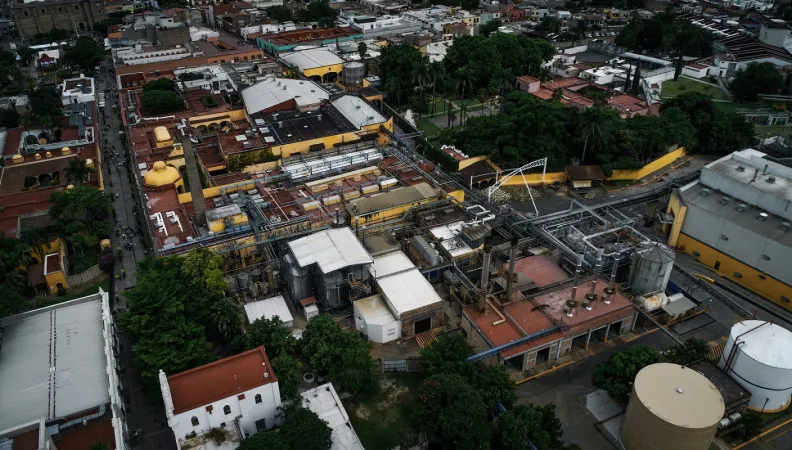
 Legal notice EU (project) The phenomenon of relocation of value chains not only presents a set of challenges but also a unique opportunity to harmonise regional development throughout Mexico and to reduce inequalities. This research project, in partnership with Monterrey Institute of Technology and Higher Education, will examine this phenomenon in greater depth, focusing on the components of energy and human capital.
Context
Trade integration has been very beneficial for Latin America and the Caribbean (LAC) over the past 30 years. However, multiple crisis (the financial crisis of 2008, the Covid-19 pandemic, the climate crisis, etc.) have generated uncertainty about the future of the multilateral trading system. For example, the Covid-19 pandemic highlighted the fragility of certain value chains due to the vulnerability of a system in which factories are located at the other end of the world from where these goods are consumed. All this is leading to reconfigure global value chains, which tend to shorten, becoming less global and more regional – a phenomenon known as the “nearshoring model”. This new context creates an opportunity for LAC countries, and especially for Mexico, which identify themselves as the best alternative for the relocation of value chains under the nearshoring model.
Historically, the Mexican North-Central states have benefited most from the processes of integration into global value chains. This is natural, since it is where the manufacturing export base is located due to its proximity to the United States. On the other hand, the South-South-East of the country presents historical lags that make it significantly difficult to integrate it into global value chains and, therefore, to take advantage of change in the current international context.
In this regard, it is imperative to design strategies to take advantage of the opportunity presented by the nearshoring phenomenon, taking into account the particular problems of each region. This two-speed strategy is essential to define public policy interventions that can achieve more equitable regional development.
This project is part of the Extension of the EU-AFD Research Facility on Inequalities. Coordinated by AFD and financed by the European Commission, the Extension of the Facility will contribute to the development of public policies aimed at reducing inequalities in four countries: South Africa, Mexico, Colombia and Indonesia over the period 2021-2025.
This research project complements the work carried out by the Extension of the Research Facility on Inequalities in Mexico on the national care system and on the redistributive impact of environmental policies.
Objectives
This project aims to deepen the study of the phenomenon of relocation of global value chains to Mexico, recognising the challenges and opportunities it generates:
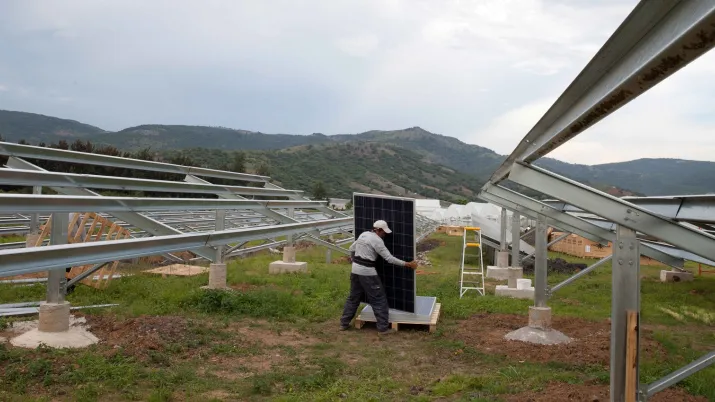
- First specific objective: To present a proposal to overcome one of the most critical bottlenecks identified by the productive sector, which is electricity generation. It is suggested to close the investment gap in electricity in the short term, through investment in distributed generation with solar panels, as well as exploring sustainable and equitable options, with a particular focus on the State of Nuevo León (North of the country).
- Second specific objective: To identify economic sectors with potential to benefit from the phenomenon of relocation of value chains and to address existing gaps in the formation of talent and human capital, emphasising social inclusion and gender equity. This will include a detailed analysis for the states of Oaxaca and Veracruz (South of the country), aiming to develop skills in emerging and traditional sectors, and prepare the workforce to take advantage of opportunities in the medium and long term.
- Third specific objective: To develop a strategic plan for the implementation of a portfolio of solutions based on the recommendations identified in the first and second specific objectives.
Method
- First specific objective: Scenario analysis will be used to measure the gap between demand and capacity for electricity generation. Solar distributed generation capacity scenarios will use Geographic Information Systems spatial analysis tools, while the estimates on the redirection of subsidies will be taken from official public sources.
- Second specific objective: Generated using a combination of international and national databases, economic metrics will serve to identify opportunities to boost productive diversification. A preliminary analysis will suggest industry clusters to prioritize. This will allow to select economic sectors with the potential to trigger industrial development, through interventions in the field of talent training. Talent gaps will then be identified through quantitative analysis. This cabinet analysis will be complemented with qualitative information (interviews, focus groups with key actors…).
- Third specific objective: The strategic plan will follow a mission-oriented policy approach, including a detailed action plan to be presented to the Mexican Federal Government. The plan will consist of a map of possible executing units within the federal, state and/or municipal governments, an analysis of the regulatory and institutional constraints that the plan could face, as well as strategic alternatives to overcome them.
Results
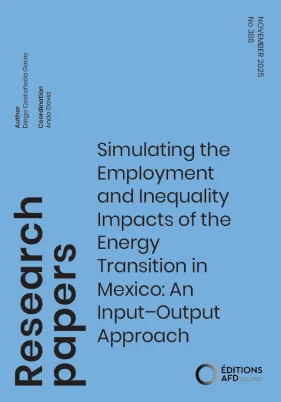
The project resulted in 3 research papers:
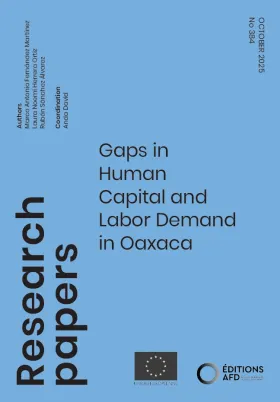
- Gaps in Human Capital and Labor Demand in Oaxaca
- Redesigning Electricity Subsidies for Distributed Generation in Mexico: A Fair Transition Model Applied to Nuevo León
- Institutional Implementation of In-Kind Subsidies for Distributed Generation: Multi-Level Governance and Policy Design in Nuevo León
For further reading

Contact
-
Anda DAVID
Economist, scientific coordinator of the EU-AFD Facility on Inequalities

Discover other research projects on inequalities


 Legal notice EU (project) What has been the redistributive impact of social and fiscal policies in Mexico and Colombia, in the context of the policies implemented during the Covid-19 pandemic? The EU-AFD Research Facility on Inequalities will seek to answer this question in collaboration with the Institute for Inequality Studies (INDESIG).
Context
While there is mounting evidence that the Covid-19 pandemic has increased socioeconomic inequality, there is still a need to understand the exact channels of impact and what role the policy response has played in different contexts. It is also necessary for governments to be clear about the efficiency of the type of policies they have implemented throughout this period, in terms of the redistributive and/or regressive effect both from an inequality and poverty perspective. Indeed, we know that the amount of additional social spending (excluding health) implemented during the pandemic reached almost 3% of GDP in Colombia and only 0,2% in Mexico. However, research has not yet demonstrated whether the redistributive policies introduced by the Mexican and Colombian governments in response to the Covid-19 crisis have had any positive effect on the distribution of economic and social resources in these two countries.
This project is part of the call for research proposals “Advancing the inequality agenda through collaborative research: identifying the priorities for a global Team Europe approach on inequalities”, launched by the Strategic Committee of the Research Facility on Inequalities. It is coordinated by AFD and co-financed by the European Commission, AECID and ENABEL.
Objective
The project will seek to understand what has been the redistributive impact of social and fiscal policy in Mexico and Colombia, in the context of the policies implemented during the Covid-19 pandemic.
Method
This research project will be conducted as follows:
- Using the framework of the Commitment to Equity (CEQ) methodology, an analysis aiming to differentiate what has been the progressivity or regressivity of the policies implemented during the Covid-19 pandemic will be conducted. This analysis will take into account the main beneficiary groups of these policies and will include a comparison between the budget amount and the efficiency of the policies identified in terms of inequality and poverty reduction.
- A desktop analysis of the decision-making will also be carried out to understand how the redistributive effects of the policies implemented were envisaged by the governments.
Results
The results of this project are presented in the following research paper: Promoting a More Progressive Approach - Evaluating the Impact of Social and Fiscal Policies in Mexico and Colombia amidst the Covid-19 Pandemic (2025)
This research paper analyzes the redistributive impact of some fiscal policies and social programmes (direct taxes and transfers) before and after the pandemic Crisis in Mexico and Colombia, following the CEQ methodology.
Contact
-
Anda DAVID
Economist, scientific coordinator of the EU-AFD Facility on Inequalities
Discover other research projects
Analyzing the employment effects of the “green economy” transition in South Africa
Completed
2023 - 2024
 Legal notice EU (project) What are the distributional effects of green taxes in Mexico and how can they be quantified? The Extension of the EU-AFD Research Facility on Inequalities program seeks to answer this in collaboration with RIBOS and the researches of the Laboratorio National de Politicas Publicas (LNPP) to provide to Mexican policymakers and stakeholders timely analyses of the effects of environmental tax policies on inequalities.
Context
This research project proposes to estimate the distributive effect of gasoline taxes using a fiscal incidence considering these effects in the context of Mexico´s fiscal system, including the principal tax and spending instruments.
In 2014, Mexico’s Finance Ministry (SHCP) introduced a special tax (IEPS) on carbon as a green tax aimed at reducing the green gas emission associated with fossil fuels, mainly gasoline and diesel. However, the tax revenue (4699 million pesos in 2014) and the environmental impact of this tax are marginal: in the past decade, until 2014, this tax had a negative value, thus working as a subsidy. Since that year, it became a tax, which has grown significantly in recent years, representing close to 300 billion pesos in 2019 and 2020. This is therefore in effect by far the most important green tax implemented in Mexico today.
This analysis is of particular interest for Mexico at present because the transition from fuel subsidies to fuel taxes represents in effect the principal tax reform implemented in Mexico over the last decade in terms of both tax revenue (from -300 to +300 billion pesos in tax revenue) and distribution. Gasoline taxes have significant impacts on all the population, both directly on middle- and higher-income households through private transport, but especially indirectly for lower income households through public transport and transport costs for all goods and services, notably food. Preliminary analysis at the Fiscal Policy Equity Lab (FPEL) reveals that the increase in the indirect tax burden for the poor associated to gasoline taxes may reverse the effect poverty-reduction effect of direct transfers, even after their recent expansion.
Quantifying these impacts precisely will allow the design of compensatory instruments to protect the poorest and most vulnerable groups from the regressive effects of these taxes.
This project is part of the Extension of the EU-AFD Research Facility on Inequalities. Coordinated by AFD and financed by the European Commission, the Extension of the Facility will contribute to the development of public policies aimed at reducing inequalities in four countries: South Africa, Mexico, Colombia and Indonesia over the period 2021-2025.
Objectives
This project is a joint undertaking between RIBOS, CEQ Institute and LNPP. It seeks to estimate the effect of green taxes in the context of the overall Mexican tax system through the international methodology developed by the Commitment to Equity Institute (CEQI), using INEGI data from the Encuesta de Ingresos y Gastos de los Hogares (ENIGH) for 2014-2020, among other data sources.
This methodology will allow an estimation the effect of green taxes in the context of the overall fiscal system. This methodology facilitates comparability in time and space, and generates a wide variety of incidence indicators, including effects on the income Gini coefficient as well as income poverty using national and international poverty lines.
This project ultimately aims to provide Mexican policy makers and stakeholders with timely analyses of the effects of tax policies on inequality and poverty. The research conducted will therefore result in:
- a research paper,
- a policy brief whose analysis is based on the collaborative intelligence technique. Two sessions in which the model calibration and hypotheses will be discussed following the collaborative modeling framework. Participants in the sessions will be members of the expert network and key tax policy makers.
Research findings
You will find below the research paper related to this project:
- Distributive impact of green taxes in Mexico (July 2024)
The policy brief related to this project will be published here soon.
Contact
-
Anda DAVID
Economist, scientific coordinator of the EU-AFD Facility on Inequalities
Discover other research projects
 Legal notice EU (project) The Extension of the EU-AFD Research Facility on Inequalities in partnership with CEEY will design proposals for the design of care systems at level of federal states and of municipalities, which will further support the progress in reducing the inequalities and foster social mobility.
Context
This project is a follow-up of the research project developed by CEEY and El Colegio de México in the first phase of the EU-AFD Research Facility on Inequalities. The results showed the need for structural changes to break the bottlenecks of social mobility and reduce inequality in Mexico.
Based on the above, the new phase of the project focuses on the knowledge base that will inform the setting up of care systems in the states of Guanajuato and Nuevo Leon and in the municipality of San Pedro Garza Garcia.
Guaranteeing the right to care in the Constitution is essential to advance on the basis of social consensus. In order to define the articulation mechanisms in a law, it is necessary to understand the care systems at different levels as transversal and multipurpose policies that are worth discussing collectively, as they imply much more than the already great challenge of expanding the existing infrastructure of services and social spending. The Care Economy also implies creating fiscal strategies to redistribute paid and unpaid work, adapted policies for those who require care and for caregivers, social co-responsibility and co-responsibility of the private sector.
Therefore, it requires more and better statistical information, strengthening surveys and data systems, as well as developing studies to make visible the interdependence of care with multiple agendas, identifying care needs and their characteristics, available supply and unmet demand, allowing for strategic planning and follow-up from the short to the long term, starting with priority groups that include children, people with disabilities, the sick and elderly, and their caregivers.
This project is part of the Extension of the EU-AFD Research Facility on Inequalities. Coordinated by AFD and financed by the European Commission, the Extension of the Facility will contribute to the development of public policies aimed at reducing inequalities in four countries: South Africa, Mexico, Colombia and Indonesia over the period 2021-2025.
Objectives
Given the above context, the objective of this project is the construction of two products that address two identified needs:
- a design proposal for a state and municipal-level care system: it is necessary to develop a care system designs that address the structural inequalities for which their creation is sought. In this sense, it is necessary to establish a complete, functional and sustainable design.
- a proposal for the collection and systematization of primary information for the design and/or monitoring of the care system: a second need arises from the above in terms of systematization of primary and administrative information that feeds, as far as possible, the original design of the care systems, as well as their monitoring over time.
Research findings
You will find below the research papers related to this project:
- Social mobility, care policies and social protection (August 2024)
- Social mobility, care policies and social protection policies in Nuevo León (September 2024)
Contact
-
Anda DAVID
Economist, scientific coordinator of the EU-AFD Facility on Inequalities
Discover other research projects

 Latin America is one of the regions with the highest economic inequality in the world. Moreover, Mexico shows one of the highest levels of such kind of inequality within the region. Even public official data report a decrease in such level for the last 25 years, such reduction was less than insignificant. It has to be noted, as well, that right now an academic and public discussion related to potential underestimation of economic inequality is taking place in the country.
Context
In Mexico, more than 40 percent of the population is under the official poverty line. At the same time, Mexico is characterized by a society in which the socioeconomic origin condition is highly related to life achievement, especially on the extremes of the socioeconomic distribution (Vélez-Grajales et al, 2014). On this matter, empirical evidence shows that once the population is divided by quintiles, 48 out of 100 that were born in the lowest quintile stay there for the rest of their lives. Above the rest of them, i.e. those who are able to move to another quintile, 22 reach the second quintile. In summary, previous result leaves in poverty 70 percent of those with origin in the first quintile. It has to be noted that only 4 out of 100 that were born in the lowest quintile will move up to the top quintile.
On the other hand, above those that were born in the top quintile, 52 out of each 100 stay there for the rest of their lives. Moreover, above those that experience downward mobility, 28 out of each 100 move to the fourth quintile, i.e., 80 out of each 100 that were born in the top quintile will stay at least in the fourth quintile. Finally, it has to be noted that only 2 out of 100 that were born in the top quintile will move down to the lowest quintile. This means social mobility is very low.
This project is part of the first phase of the Research Facility on Inequalities, coordinated by AFD and funded by the European Commission's Directorate-General for International Partnerships over the 2017-2020 period. The first phase of the Facility has led to the conduct of 22 research projects and the publication of around 100 research papers and policy briefs.
Goal
How are economic inequality and social mobility related? Is it possible that the highest levels of socioeconomic persistence (lower social mobility) in terms of origin determined, in part, both perception and tolerance against economic inequality? The Mexican case, which is one where socioeconomic regional disparities are significant, represents a good option to analyze if such relationship holds. Moreover, there is still a gap in the literature for explaining the mechanisms behind the observed negative relationship.
Additionally, an important and relevant unanswered question for the Mexican case is the perception of Mexicans about inequality and social mobility levels. What if Mexicans think that the country is one of equal opportunities and results for all? Policy implications should be different among different perception scenarios. In any case, it is necessary to get information in order to understand the mechanisms at household and local level that explain the potential distance between perception and reality.
Method
First, using a multivariate analysis method, relative intergenerational mobility can be estimated for each macro-region of the country. Several inequality measures will be estimated, but for several points in time. The researchers have chosen to do so because it is possible that not current but origin economic inequality is the relevant one for intergenerational social mobility. Once the relationship is estimated, a discussion on the mechanisms behind it should be developed. The empirical analysis will be mainly based on the “Encuesta ESRU de Movilidad Social en México 2017”.
Additionally, work with groups in 4 different cities with different levels of socioeconomic performance will be held. The researchers expect to do fieldwork in at least two different spots within each city: one for a group of medium-high socioeconomic level and one of medium-low socioeconomic level. The interview will include a measure for both inequality and social mobility. In such a way, the researchers will be able to understand in a better way the relationship between perceptions and objective measures on the variables of research interest.
See this project's 2 minutes pitch from Alice Krozer, researcher at Colegio de México:
Results
You may find the research papers and the policy briefs linked to this project here :
Research papers:
- Social mobility in Mexico. What can we learn from its regional variation?
- Perceptions of inequality and social mobility in Mexico
Policy briefs:
- Wide regional differences in social mobility across Mexico
- Inaccurate public perceptions of inequality and social mobility in Mexico
Find the presentation of the research paper "Perceptions of inequality and social mobility in Mexico" by Aurora Ramirez Alvarez (Colegio de Mexico) during the first webinar of the Research Facility on Inequalities:
Contact
-
Anda DAVID
Economist, scientific coordinator of the EU-AFD Facility on Inequalities