
 Ukraine is today at the heart of the priorities of many French public and development actors, yet academic expertise on the country remains scattered and has little visibility. Backed by AFD, the Observatory of Contemporary Ukraine supports Francophone academic research around one central question: how can we think about and prepare for the post-war period in Ukraine?
Context
The war in Ukraine, ongoing for more than a decade, is generating a growing need for knowledge about the country. Indeed, in order to act, many French public, civil-society, and media actors – including AFD – must draw on solid, up-to-date expertise. Yet while many researchers work on contemporary Ukraine, they are scattered across different research units with varied geographic and thematic focuses. Moreover, a significant proportion of them are in precarious employment situations, which reduces their visibility. The challenge is therefore twofold: to structure and strengthen an academic network, while better mobilizing its members' expertise to address the challenges of the post-war period.
Read also (in french)

Objectives
Supported by AFD, the French Ministry of Armed Forces, and the French Ministry for Europe and Foreign Affairs, the Observatory of Contemporary Ukraine was launched to address a twofold challenge: structuring a network of Francophone researchers in Ukrainian studies, and mobilizing their expertise to better respond to requests from French public authorities. For AFD Group, which operates in Ukraine, this high-quality expertise is essential to inform its action.
The Observatory of Contemporary Ukraine organizes its work around one central question: what are the key issues for understanding Ukraine’s post-war future? Two complementary strands seek to decode the country's profound transformations:
- Military dimension and the transition out of war: the complexity of mobilization and demobilization processes; changes in the practices and means of warfare; and issues relating to reconstruction, demographic trends, and memory work;
- Structural transformations (economic, social, etc.) of Ukrainian society in this context of war.
The Observatory will seek both to better disseminate and to deepen existing work, while encouraging the exploration of emerging topics that remain little documented
Method
To carry out its mission, the Observatory will develop a range of tools:
- Scientific monitoring of knowledge produced on Ukraine;
- Mapping of Francophone researchers in Ukrainian studies to build a network of specialists;
- Organization of events to foster dialogue between academia and public authorities and public-interest actors;
- Expertise: facilitating and coordinating the production of studies and other forms of expert input at the request of public authorities;
- Information: producing analytical briefs, organizing scientific and outreach events, and promoting researchers to the media.
Expected results
Over two years, the research team will produce or organize, in coordination with AFD:
- Three seminars a year, one of which will be hosted at AFD and will result in a policy paper;
- Ten briefs a year for the general public, published on the Observatory of Contemporary Ukraine's website;
- An annual thematic conference, for both academic and operational audiences.;
At the end of the project, a joint discussion will be organized with the Observatory on Reconstruction in the Middle East, another AFD-supported research project on post-conflict reconstruction issues.
Learn More (in french)

Contacts
- Anna Colin Lebedev, Associate professor of political science at the University of Paris-Nanterre and scientific director of the Observatory on Contemporary Ukraine
- Bertrand de Franqueville, Ph.D. in political science from the University of Ottawa and chief operating officer of the Observatory on Contemporary Ukraine
- Elodie Riche, Research officer, AFD
Want to stay up to date with AFD’s research news?

Discover other research projects

When Research Informs Public Action: A Toolkit to Rethink Monitoring and Evaluation
Completed
2020 - 2025

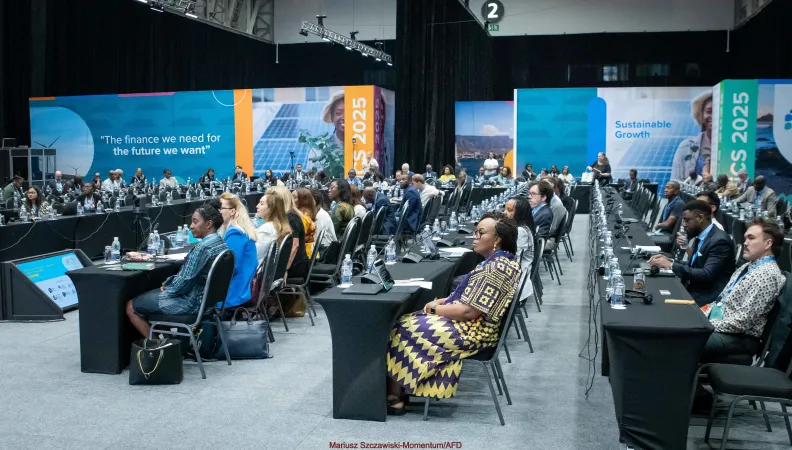 Through this research program on public development banks (PDBs), AFD helps build knowledge on the role, intervention models, and effectiveness of these key players in development financing. By supporting scientific production and coordinating an international community of researchers, the program aims to inform public policy and strengthen PDBs’ capacity to mobilize long-term financing in support of transitions.
Context
For decades, economists have debated the role and necessity of public banks in development financing. In 2020, the creation of the Finance in Common System (FiCS), which brings together more than 540 PDBs worldwide, has reinvigorated these debates, placing these actors at the heart of academic thinking and international policy dialogue.
For AFD Group, PDBs are strategic partners. Strengthening financial systems is one of the Group’s top priorities: expanding access to financing, supporting the transition toward more sustainable financial models, and strengthening the resilience and stability of financial institutions.
In 2024, AFD Group committed close to €3 billion to financial systems and PDBs account for nearly half of the financing devoted to this area. Beyond the volumes mobilized, the challenge is to strengthen the collective ability to better understand how development financing can respond to increasingly complex and interconnected challenges.
Objectives
AFD supports the production and dissemination of research aimed at analyzing the role of public development banks in the development financing architecture.
This activity, which falls under the priority research area “Geopolitics and Development Finance,” is structured around two complementary pillars:
Pillar 1 – Producing original research on development financing
Whether conducted internally or in partnership with universities and research institutions, AFD supports the production of original work that contributes to the literature on development financing. This research work focuses in particular on:
- the definition, mandates, and typologies of PDBs;
- their business models and their effectiveness in terms of development impact;
- the analysis and development of innovative financial instruments;
- synergies among PDBs, and their integration into local and international financial systems;
- the conditions for strengthening joint financing mobilization, including through the mobilization of private investment;
- governance issues, regulatory frameworks, and the constraints PDBs face.
AFD coordinates the Global Research Network on Public Development Banks (GRN), an international network bringing together academic and institutional researchers specializing in these issues. A genuine platform for exchange and dialogue, the GRN fosters interdisciplinary approaches and North-South and South-South collaboration, and disseminates research findings. By bringing researchers and practitioners together, it helps inform public policy and strengthen the effectiveness of public development banks in support of the Sustainable Development Goals.
Results
Since 2020, members of the Global Research Network (GRN) have collectively published nearly 100 original research articles. To structure and consolidate this work, AFD supported the production of the Public Development Banks Reference Book (2025), with support from the United Nations Department of Economic and Social Affairs (UNDESA) and the Finance in Common (FiCS) secretariat. Published by Pearson on the occasion of the 4th International Conference on Financing for Development (FfD4), this book is a landmark contribution to the academic literature on public development banks.
The program also enabled the development of the first database dedicated internationally to public development banks, co-designed by Peking University, the Fondation pour les Études et Recherches sur le Développement International (FERDI), and AFD. This resource is now a reference tool for researchers, financial institutions, and policymakers. By offering a harmonized typology of public financial institutions and internationally comparable data, it facilitates comparative analysis, strengthens transparency, and helps better track the evolution of public development banks and development finance institutions.
Findings from the program are regularly presented at international conferences and dialogues, particularly at Finance in Common (FiCS) summits. As part of France’s G7 presidency, AFD organized the first conference international academic dedicated exclusively to public development banks in 2026.
Discover also: Public Development Banks: What Research Tells Us, and Why It Matters
Research findings
The 2026 research conference provided an overview of current knowledge and research perspectives on public development banks. Drawing on the most recent academic work, a publication prepared following the conference provides a synthesis of the main lessons from the literature and highlights the current challenges these institutions face.
It sets out recommendations for key stakeholders, in particular finance ministers (in their capacity as shareholders and supervisors of PDBs), PDB leaders, and regulatory authorities. These recommendations aim to strengthen the role of public development banks as catalysts for long-term investment in support of national priorities and the delivery of global public goods.
Resources at a Glance
Contact
-
Jean-Baptiste JACOUTON
Research Officer on Sustainable Finance

Découvrir d'autres projets de recherche


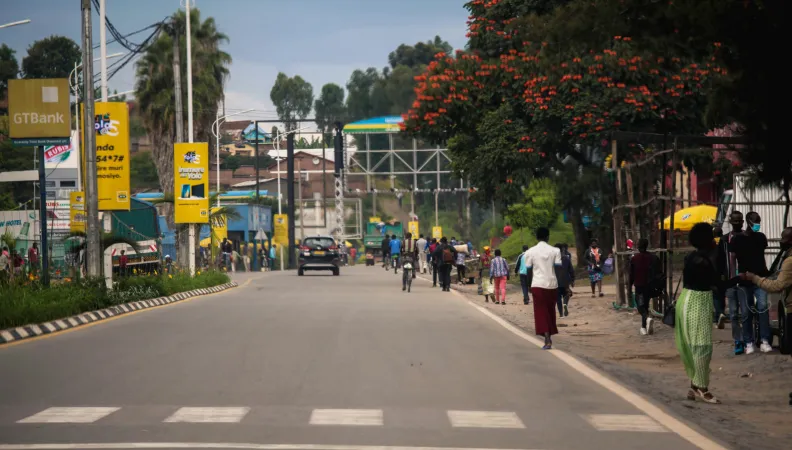 Carried out in partnership between the National Bank of Rwanda (BNR) and AFD Group as part of the 2050 Facility, the ESTEEM Rwanda project aims to build a better understanding of how climate change is affecting Rwanda's economy, in particular the agricultural sector, and to equip Rwandan decision-makers with tools to anticipate and manage these impacts.
Context
Rwanda, a landlocked and densely populated country in the Great Lakes region, has sustained strong growth for more than two decades, accompanied by significant improvements in living conditions for its population. Committed to climate action, the country has set ambitious measures to support a development path that is sustainable, inclusive, and growth-oriented. In 2025, Rwanda updated its climate commitments under the Paris Agreement, with a strengthened target to reduce greenhouse gas emissions by 53% by 2035.
Although its contribution to global emissions is very low, Rwanda is highly vulnerable to the impacts of climate change. The Rwandan economy relies heavily on climate-sensitive sectors, particularly rainfed agriculture. This type of non-irrigated farming is especially vulnerable to variations in temperature and rainfall, as well as to the growing frequency of extreme weather events (floods, droughts, landslides, etc.). Rainfed agriculture accounted for 20% of GDP in 2025 and supports roughly 55% of the working-age population, whether through formal employment or as a secondary or subsistence activity. If harvests are affected, agricultural productivity, prices, and ultimately households could all suffer. For policymakers, the challenge is therefore to better understand and measure interactions between the economy and climate in order to anticipate and manage their consequences.
Objectives
Using economic modeling, the ESTEEM Rwanda project aims to deepen understanding of the macroeconomic impacts (inflation, fiscal, external, and socioeconomic vulnerability, as well as inequality) that different climate shocks can have on the agricultural sector, as well as the levers that public authorities can use to mitigate these shocks.
Developed together with partner teams from BNR – who contribute to building the model through their expertise on agricultural and macroeconomic issues, as well as by providing data – the ESTEEM model will strengthen BNR's capacity to analyze the interactions between economy and climate dynamics.
Based on the ESTEEM model, the first phase of the project analyzes the impact of agricultural damage caused by extreme weather events on various economic sectors, with particular attention paid to inflation and its consequences for macroeconomic vulnerabilities and inequalities.
Understanding and measuring the distributive consequences of these shocks is an important part of the analysis, since not all households are affected in the same way by a shock to agricultural production, depending on their characteristics (type of activity, income level, geographic location). For example, a rural household may experience a direct loss of agricultural production, while an urban household may primarily face a decline in purchasing power due to rising food prices. This analysis can thus reveal the need for targeted support measures.
It is also essential to understand these shocks in interaction with external and fiscal channels. For example, the loss of export crops combined with higher import demand could unbalance the trade balance and affect the exchange rate. By making it possible to analyze such impacts, the model fits squarely within BNR's mandate, which sets its monetary policy based on inflationary pressures, exchange rates, and the domestic economic situation.
The second phase of the project will improve the model based on lessons learned from the first phase.
It will focus in particular on better accounting for the effects of extreme weather events on different agricultural crops, more accurately representing how the agricultural sector functions through exchanges with local experts, and incorporating the consequences of climate change on poverty.
The model could also be enhanced to better analyze certain economic and financial mechanisms, such as the effects of rising interest rates on the productive, fiscal, and external spheres of the Rwandan economy.
Finally, this second phase will allow research to continue on other technical issues, such as the empirical validation of the model.
Method
Depending on the structure of their economy, their fiscal room for maneuver, and the strength of their social protection system, countries are more or less exposed to the risks and vulnerabilities generated by a transition to a low-carbon economy: these are known as "transition risks." Developed by AFD, the ESTEEM model helps identify these risks and thus supports anticipating them in order to foster a successful transition. It is tailored to the specific situation of each partner country to serve as a decision-support tool.
In previous projects, ESTEEM was mainly used to assess transition risks linked to climate change at a given point in time. As part of the ESTEEM Rwanda project, the models have been expanded to allow for detailed economic analysis of short-term physical risks (a five-year horizon).
Multisectoral and incorporating the constraint of limited resource availability, the ESTEEM Rwanda model is based on the input-output method and the theoretical model developed by the team. It is built by a team of AFD modelers working closely with BNR's research team, who will be able to use the model to refine their decision-making tools for monetary policy and to model various shock or adaptation scenarios.
Expected results
By the end of the project, the National Bank of Rwanda will have a short-term macro-sectoral model, co-developed with the AFD team, to help understand the economic consequences of extreme natural events. Training sessions and workshops will enable BNR to use this tool to explore different scenarios. In addition, the project will lead to research publications, produced in partnership with BNR, as well as dissemination activities to share the results.
Contacts
- Guilherme MAGACHO, Economist, AFD
- Élise CHRÉTIEN, Research Officer, Expertise France
- Laurent DÉJARDIN-VERKINDER, Economist, Expertise France
- Faustin MANIRAGUHA, Economist, BNR
Want to stay up to date with AFD’s research news?
Discover other research projects


 The Track Adapt research project aims to develop a new methodology, based on the GAP-Track monitoring system, to closely assess progress on urban adaptation to climate change. It will help build a shared understanding of adaptation challenges with local stakeholders in the cities of Cape Town and Nelson Mandela Bay (South Africa), and identify effective, context-specific adaptation pathways.
Context
Heatwaves, intense rainfall, prolonged droughts… As climate risks intensify, it is increasingly important to know whether adaptation measures implemented at the local level are actually reducing vulnerabilities and risks. Yet international debate remains largely focused on global indicators, such as the proportion of agricultural area using climate adaptation practices and technologies, or the proportion of population using climate-resilient water services. These indicators are useful but insufficient to capture local contexts, long-term trade-offs, and the risk of maladaptation—that is, measures that, paradoxically, may increase vulnerability rather than reduce it—faced by these territories.
In South Africa, Cape Town and Nelson Mandela Bay are particularly exposed to climate risks: both cities face significant pressures linked to water scarcity, heatwaves, coastal erosion and coastal flooding. Beyond the material consequences of these risks, the challenge is also political: how can the visions, values, and interests of multiple stakeholders—municipalities, scientists, practitioners, civil society, communities, and the private sector—be reconciled to build robust and equitable adaptation pathways?
Objectives
To track progress on urban climate change adaptation, the Track Adapt research project aims to adapt the GAP-Track methodology (developed by IDDRI with support from AFD and ADEME), making it relevant at the urban scale, usable by relevant stakeholders, and replicable. To this end, the research team is working with stakeholders in two pilot cities: Cape Town and Nelson Mandela Bay.
Track Adapt focuses on three main questions:
- How can the tool be adapted to the metropolitan scale?
- What progress, gaps and needs emerge in two priority areas for these two cities: water security in the face of drought and heat, and coastal adaptation to erosion and flooding?
- How can regular assessment of adaptation measures make it possible to compare progress over time and across cities?
This action-research will be particularly valuable to development actors, as it enables a shift from monitoring focused on plans and indicators toward a shared understanding of what actually reduces risk. It will help municipalities, AFD and their partners prioritize actions, strengthen capacities, guide financing, and inform dialogue on more equitable adaptation pathways.
Track Adapt contributes to AFD's efforts to strengthen urban adaptation, inform public policy dialogue, and direct financing toward relevant and effective solutions
Method
In Cape Town and Nelson Mandela Bay, technical, institutional, and academic experts, as well as civil society and economic actors, will assess the progress and limitations of adaptation using a matrix structured around six dimensions: risk knowledge, plans, actions, capacities, evidence of risk reduction and adaptation pathways.
The project will bring together complementary expertise:
- The African Climate & Development Initiative, affiliated with the University of Cape Town (ACDI-UCT), will lead local engagement, stakeholder dialogue, and methodological development;
- IDDRI will provide methodological expertise on GAP-Track;
- Local stakeholders will validate the methodology and share experiential knowledge;
- AFD will provide scientific input to adapt GAP-Track to the local context, facilitate scientific outreach toward concrete adaptation projects—in South Africa and other regions of operation—and share experience with French cities.
Learning Labs will translate research findings into priority actions, financing options, and replicable lessons.
Expected results
Expected outcomes include a methodological note on applying GAP-Track at the urban level, participatory assessments on water and coastal issues in Cape Town and Nelson Mandela Bay, publications (project report, policy brief, research article, etc.), and multi-stakeholder workshops.
The project also aims to strengthen the capacities of municipal actors on adaptation; create a space for dialogue among scientists, practitioners, and decision-makers; and support the identification of investment priorities to bridge the gap between adaptation needs and the responses currently in place.
Want to stay up to date with AFD’s research news?
Contact
-
Christophe BUFFET
Research Officer on Adaptation

Discover other research projects

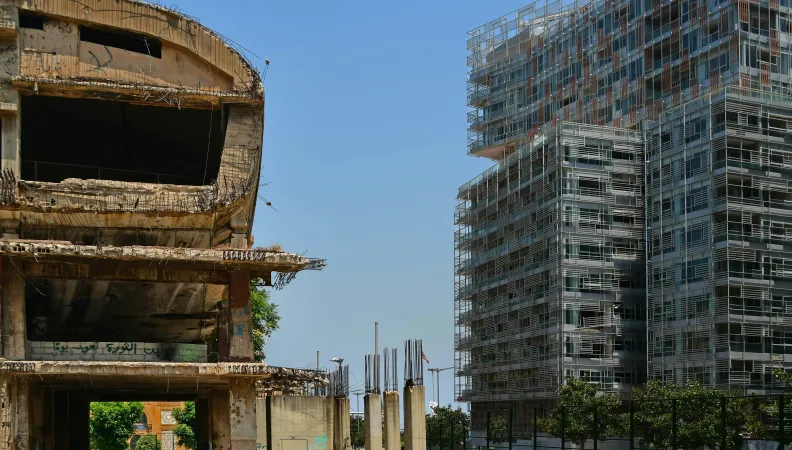 In a Middle East undergoing profound reconfiguration, while Lebanon, Syria and Gaza face massive destruction across their territories, this observatory aims to analyse the dynamics and modalities of the reconstruction processes currently taking shape. These comparative insights will enable AFD and its partners to better understand these operating environments and the dynamics among the actors involved, in order to act effectively.
Context
Lebanon, Syria, Gaza: the Middle East is home to some of the world's most complex reconstruction efforts, taking place in conflict and post-conflict settings and involving significant financing challenges. For Syria alone, the World Bank estimates reconstruction costs at 216 billion dollars.
However, the challenges are not solely financial or technical: these reconstruction processes unfold within complex political, economic and social environments, involving many stakeholders whose interests and approaches may sometimes diverge. To engage effectively in this complex geopolitical landscape, a thorough understanding of the operating environments is essential – not only for AFD Group, but also for other development actors.
Objectives
Led by IFRI and coordinated by AFD, this observatory project analyses the state of destruction and the prospects for reconstruction across three territories: Gaza, Lebanon and Syria. Its aims to :
- Understand the local dynamics (social, political and economic) of reconstruction : What are the actual needs? What is the state of the social fabric? Who are the key stakeholders and how do they interact?
- Identify practical and feasible reconstruction pathways : What positions are the governments of these countries taking? What role can the private sector play, and how can public-private partnerships be structured? What role can civil society organisations and diasporas play?
- Compare the positioning of external actors (European institutions and states, Israel, the United States, Gulf countries, Turkey, China, Iran and Russia) : What reconstruction plans are being proposed, and what is the level of their involvement? How do diplomacy, reconstruction and economic interests interact? Do these actors prioritise humanitarian assistance or reconstruction? What is France’s position?
Method
To stay as close as possible to developments in this fast-moving context, a monitoring system will be established to map reconstruction projections and track decisions made by the various countries involved. IFRI will produce maps whenever relevant to support a better understanding of the broader challenges.
Three field missions will be carried out directly by IFRI researchers and/or researchers based in the region. The methodology will primarily rely on interviews, conducted either in person or remotely when travel is not possible. Syria is a particularly relevant case in this regard, as territorial disparities pose a major challenge for operators.
Operating in an interactive manner, the observatory will remain open to regular and on-request exchanges with French institutions that share an interest in these questions.
Expected results
The project deliverables will include:
- Field mission reports with an oral presentation of findings;
- Publications on cross-cutting themes within IFRI’s publication series;
- A final report, covering all three reconstruction efforts and framed around a central research question, published in the collections of Éditions Agence française de développement;
- A final conference that may introduce comparative perspectives (Ukraine, Africa).
Contacts
- Dorothée SCHMID, Program Manager for Turkey/the Middle East, IFRI
- Elodie RICHE, Research Officer, AFD
Want to stay up to date with AFD’s research news?
Discover other research projects
When Research Informs Public Action: A Toolkit to Rethink Monitoring and Evaluation
Completed
2020 - 2025